Oni: The Absolute Other and the Portrait of Human Obsession
Among the myriad spirits and monsters of Japan, none are as multi-faceted or as powerful as the Oni .
While modern fiction often depicts them simply as “physically strong monsters,” their essence lies in the “Excluded Other,” the “Threat of Nature” beyond human control, and the manifestation of the “Karmic Obsession (Gō)” lurking within the human heart.
1. Etymology: From the Invisible “Onu” to the Monstrous Oni
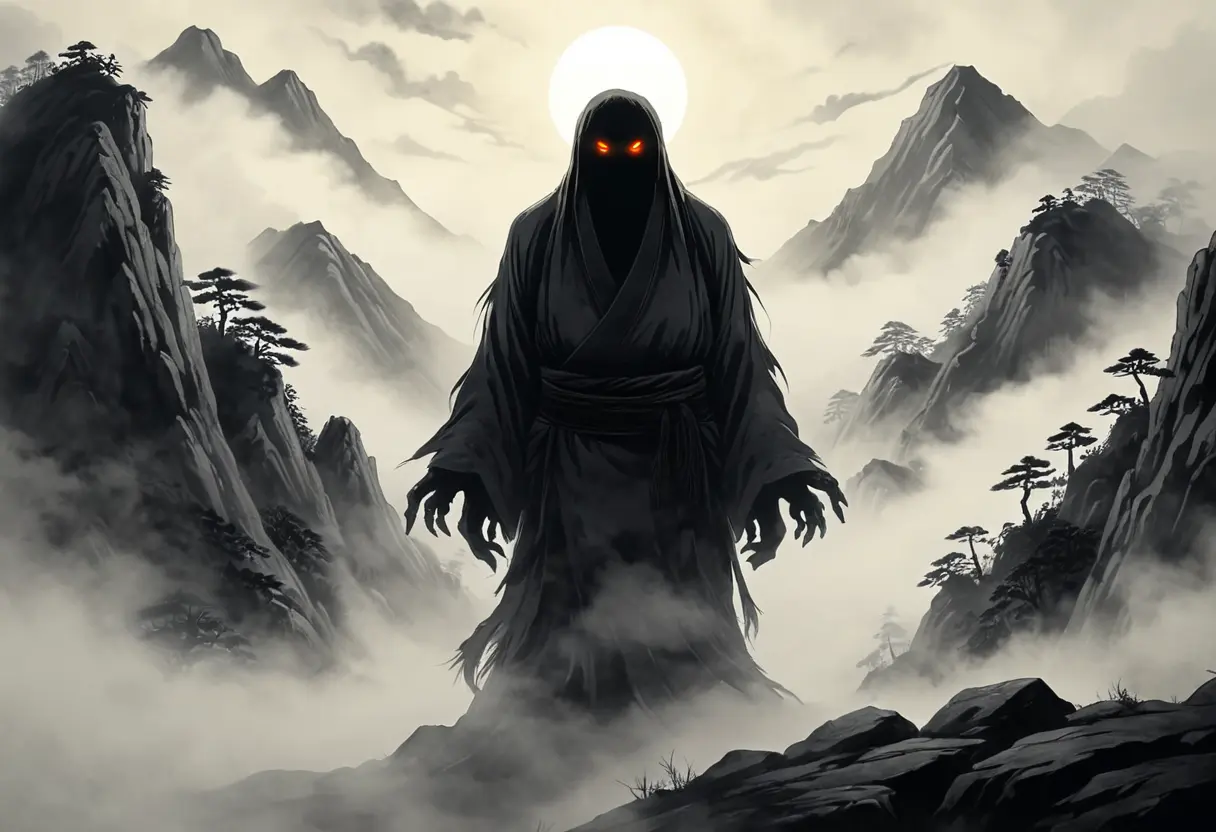
The evolution of the word “Oni” is directly linked to the primal, unexplainable fears held by the ancient Japanese. *The Invisible “Onu” : Originally, the term “Oni” was derived from “Onu,” meaning “to hide” or “invisible.” It referred to unseen spiritual entities that existed outside the laws of the world. *The Formless “Mono” : Before the arrival of Buddhism, malicious spirits that brought disaster were called “Mono.” As reflected in the word “Mononoke,” the Oni was initially a “formless energy of malice.” *Acquiring a Form : Over time, through contact with continental iconographies, Oni acquired their characteristic visual identity: horns, fangs, tiger-skin loincloths, and iron clubs (Kanabō).
2. Historical Shadows: Ironworkers and the “Untamed”
From a historical perspective, the “Oni” served as a vessel for the image of those who were excluded by the centralizing Japanese state. *The “Untamed” (Matsuro-wanu-tami) : The Oni were often the legendary counterparts of those who lived in the mountains and refused to submit to the Imperial court. *Metaphor for Metallurgy : Many scholars suggest Oni were inspired by foreign metallurgical groups (Tatara) . Their skin, scorched red by the heat of the furnace as they forged iron, appeared monstrous to agricultural people. The “Iron Club (Kanabō)” they brandished was a symbol of the overwhelming military power granted by their advanced technology.
3. Religion and Psychology: From Hell’s Jailers to “Hannya”
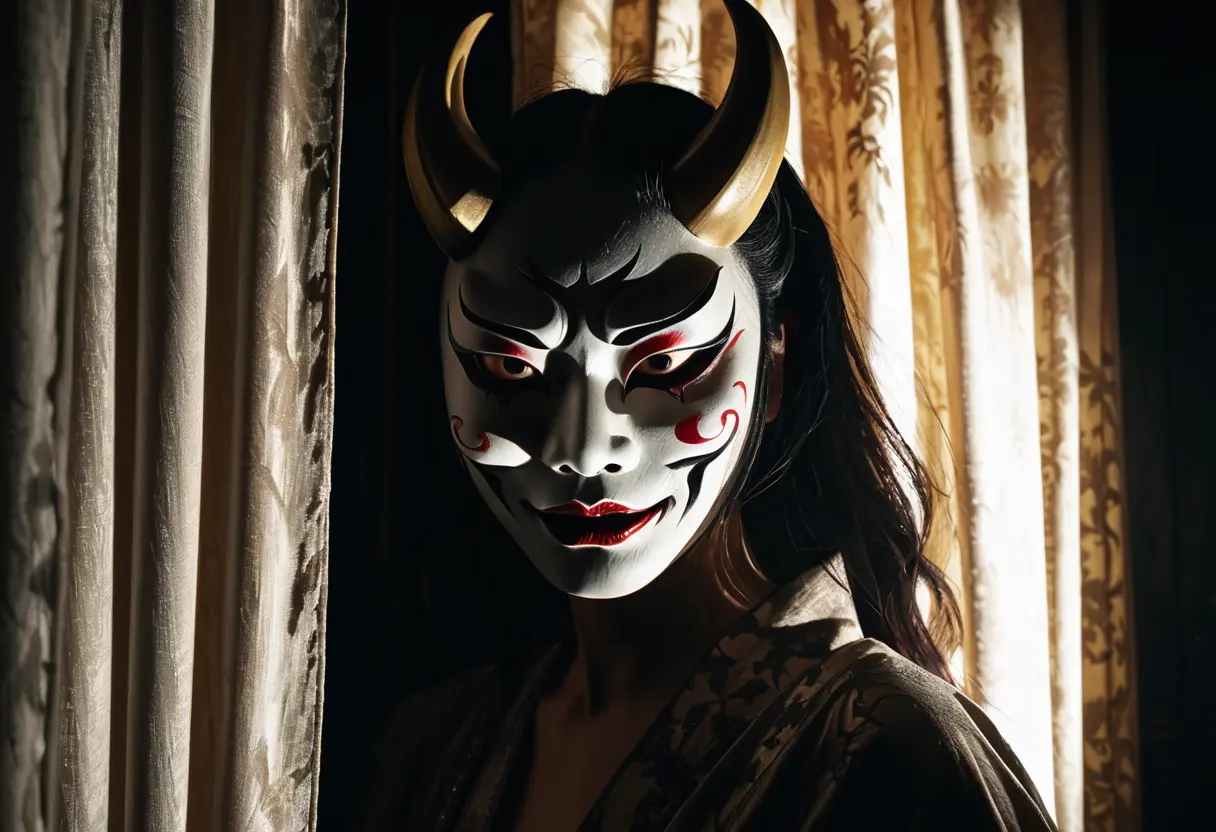
The Oni also functions as a “punishment device” to regulate human morality. *Jailers of the Underworld : With the introduction of Buddhism, Oni were repositioned as jailers in Hell serving Lord Enma. They became the enforcers of “Causality (In-ga)” against the sins of the dead. *The Transformation of the Soul : An Oni is also something one “becomes.” As seen in the Hannyamask of Noh theater, a human can transform into an Oni through extreme jealousy or rage. The Oni is the “raw obsession” that appears once the skin of civilization is stripped away.
4. Cultural Context: The Ambivalence of Fear and Awe
The Japanese people chase away Oni during theSetsubun festival, yet in some regions, they worship them as “Guardian Deities,” seeking their indestructible strength.
The Oni is the “Shadow” that society severed to function normally. When we speak of the Oni, there is not only a disgust for the monster but also a hidden envy for its “absurd vitality” that we can never attain.
*Tengu : The masters of the sky and the mountains, contrasting with the earthbound Oni. *Kappa : The inhabitants of the river-side otherworld. *Hannya Origins : A record of the “obsession” that turns a human into a demon. *Hell (Jigoku) : The bureaucratic domain where Oni serve as enforcers.