The Yokai are more than just characters from nursery rhymes. They are the “names” and “forms” given by the ancient Japanese to the “Holes in Reality”—the unexplained phenomena occurring in nature and society.
While Western “monsters” are often portrayed as “Evil to be conquered,” Japanese Yokai are “Neighbors with whom one must coexist while maintaining a respectful fear.” They possess a unique animistic character, often being the “Fallen forms of ancient gods.”
1. The Three Sources of the Yokai Mind
The weirdness of Japan was born from three spiritual backdrops: *Fear of Nature (Animism) :
Mountains, rivers, seas, and even old tools. From the belief that spirits reside in all things, creatures like the Kappa or phenomena like the wind-driven Kamaitachi emerged. *Transformation of the “Untamed” (Historical Other) :
Regional clans who refused the central government or skilled foreigners. Those excluded from society were mythologized into “Oni” or “Tsuchigumo” (Earth-spiders). *Buddhist Causality (Obsession and Rage) :
Intense jealousy, attachment, or pride. These human passions act as psychological devices that cause a soul to fall into a demonic state, such as Hannya or Tengu .
2. Archives of the Otherworld: Core Yokai Explained
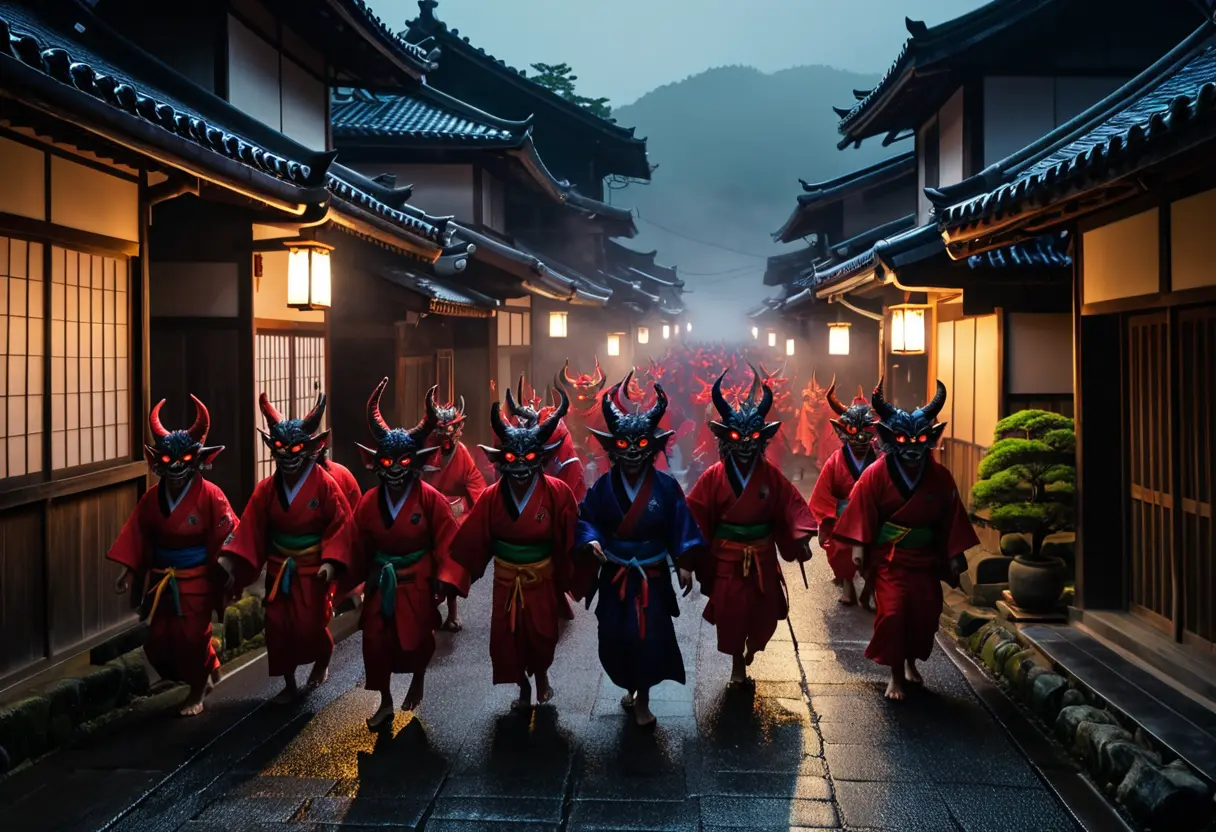
This category explores the details of the iconic entities that have shaped the Japanese spiritual history, along with their mystic and historical contexts. *Kappa : The “Inhabitant of the Threshold” governing the water’s edge. A dualistic existence that can both kill and save humans. *Oni : The “Absolute Other” ruling the earth. A reflection of the sorrow of outcasts and the ultimate “bug” in the human soul. *Tengu : The “Demon King of Asceticism” governing the mountains. A master of supernatural power born from the pitfall of hubris.
3. Inheritance as Urban Legends: Modern Yokai
Yokai are not relics of the past. In an internet society where information spreads instantly, Yokai continue to multiply and evolve in the form of “Internet Lore” and “Urban Legends.” Urban Legends & Net Lore Hub : From the Mouth-Split WomantoKisaragi Station*, explore the new weirdness birthed by modern Japan.
▲ Back to Fantasy Dictionary Top