Mjölnir: The Hammer of Thunder and Hallow
The most feared and beloved weapon in Norse mythology is Mjölnir , the warhammer wielded by the Thunder God Thor. Its name in Old Norse means “The Crusher,” a fitting title for the artifact that relentlessly thwarts the giant-hordes threatening Asgard. While a staple of modern entertainment, the mythological Mjölnir possesses a divine sanctity and a diverse array of powers that far exceed mere physical destruction.
1. Birth: An “Imperfect Masterpiece” Born of a Wager
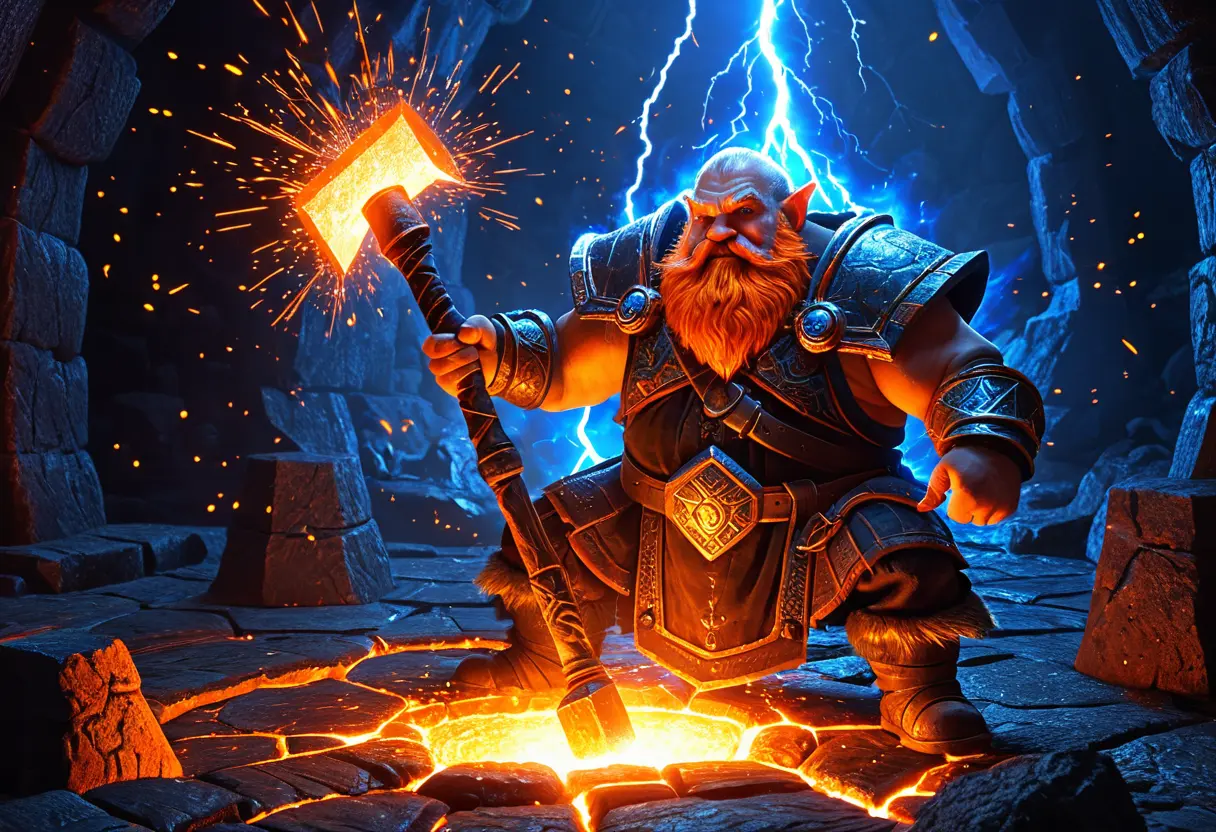
The creation of Mjölnir was inextricably tied to the mischief of the trickster god Loki. *The Dwarven Duel : Loki made a wager with the dwarf brothers Brokkr and Eitri that they could not create treasures better than the “Sons of Ivaldi.” Mjölnir was the final, supreme result of this competition. *The Short Handle : Disguised as a fly, Loki bit Brokkr’s eyelid during the forging process to distract him. Consequently, the hammer was finished with an unnervingly “Short Handle.” Thor, however, mastered this eccentricity, and the unique shape only added to the weapon’s iconic presence.
2. Attributes: The “Absolutes of the Cosmos”
Mythology grants Mjölnir three specific magical traits that define its absolute power: *Indestructibility and Accuracy : No matter how hard the target, the hammer never breaks. No matter how far it is thrown, it never misses and always returns to its master’s hand like a boomerang. *The Size Variable : Mjölnir can be shrunk down to the size of a small trinket to be concealed inside a tunic. Thor utilized this trait often when infiltrating the lands of the giants as a spy. *Lethal Weight : The hammer’s weight is so immense that Thor requires two other artifacts to control it: the “Iron Gauntlets” (Járngreipr) and the “Belt of Strength” (Megingjörð), which doubles his power.
3. The Dual Face: The Hammer of Destruction and “Hallowing”
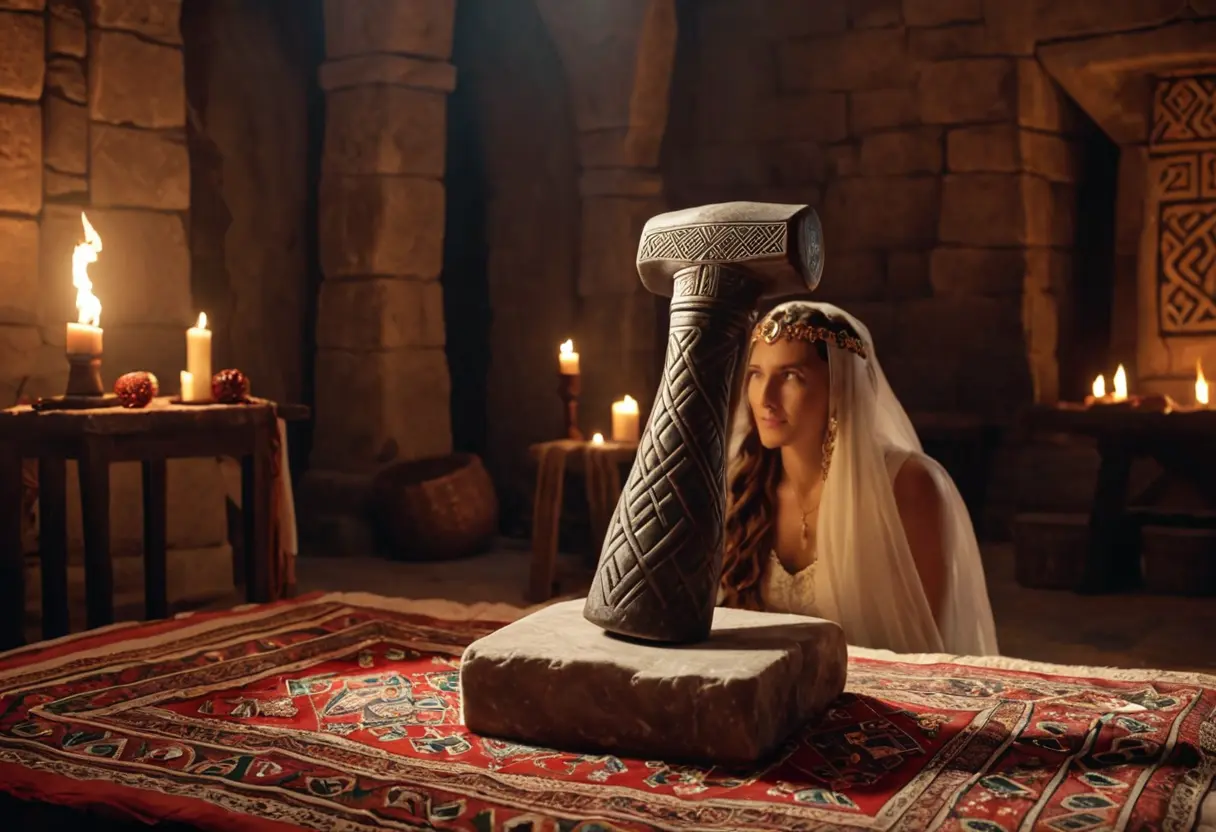
A crucial side of Mjölnir often forgotten in modern times is that it was a tool for “Hallowing” (Sanctification and Blessing) . *Guardian of Marriage and Birth : Mjölnir was used in sacred rituals to bless weddings and the birth of children. To be “struck” by the hammer signified the removal of chaos and one’s acceptance into the “Rightful Order” of society. *The Ritual of Resurrection : Thor would often kill and eat the two goats that pulled his chariot to satisfy his hunger. By waving Mjölnir over their bones the next morning, he could fully rejuvenate and resurrect them. The hammer of death was also a “Hammer of Creation.”
4. Cultural Context: The “Bulwark for Humanity”
In mythology, Thor was not only the protector of the gods but also the “Patron of the Peasants.”
The stories of Mjölnir crushing giants are a projection of the desperate wish of ancient Norse people to protect their communities (Midgard) from the harsh, chaotic natural environment (Jotunheim). Mjölnir was the only symbol of hope allowed to counter “Reasonless Violence” with “Sacred Violence.” — *Thor : The strongest of the Aesir, patron of thunder and farmers. *Dwarves : The master smiths who forged the treasures of the gods. *Gungnir : The spear of Odin, commissioned by Loki alongside Mjölnir. *Ragnarök : The final battle where Thor’s sons inherit Mjölnir to build the next order.