Laevateinn: The Twig of Ruin Forged by Malice
Among all the artifacts of Norse mythology, none is more elusive yet more iconic in modern fiction than Laevateinn .
Primary sources on its nature are extremely limited, but its name—a composite of Læ(Ruin/Blight) andVateinn(Staff/Twig)—literally translates to “The Twig of Destruction.” Forged by the trickster god Loki, this object is the literal “Poison” designed to dismantle the peaceful order of the gods.
1. Origins: The “Key of Death” Behind Nine Locks
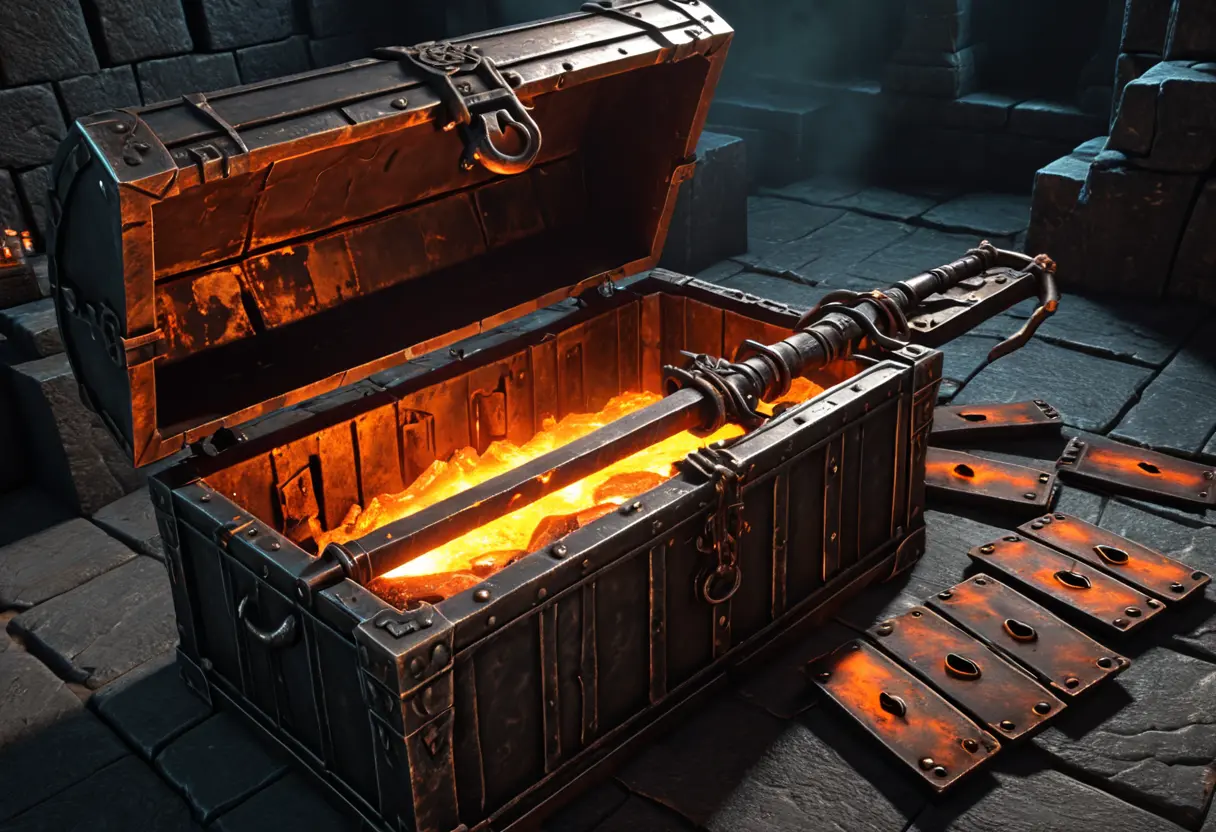
Descriptions of Laevateinn appear only in a single passage of the Eddic poemFjölsvinnsmál. *Loki’s Workshop : Loki is said to have forged this weapon “beyond the gates of death.” He created it for a very specific, cold purpose: to kill the giant bird Vidofnir, who perched atop the World Tree and guarded the divine realm. *The Iron Chest : The weapon is kept in an iron chest named Lægjarn, held by the giantess Sinmara and secured with nine sturdy locks. This extreme level of security speaks to the inherent danger of letting this “Twig” loose upon the world.
2. Evolution: The “Fiery Fusion” with the Sword of Surtr
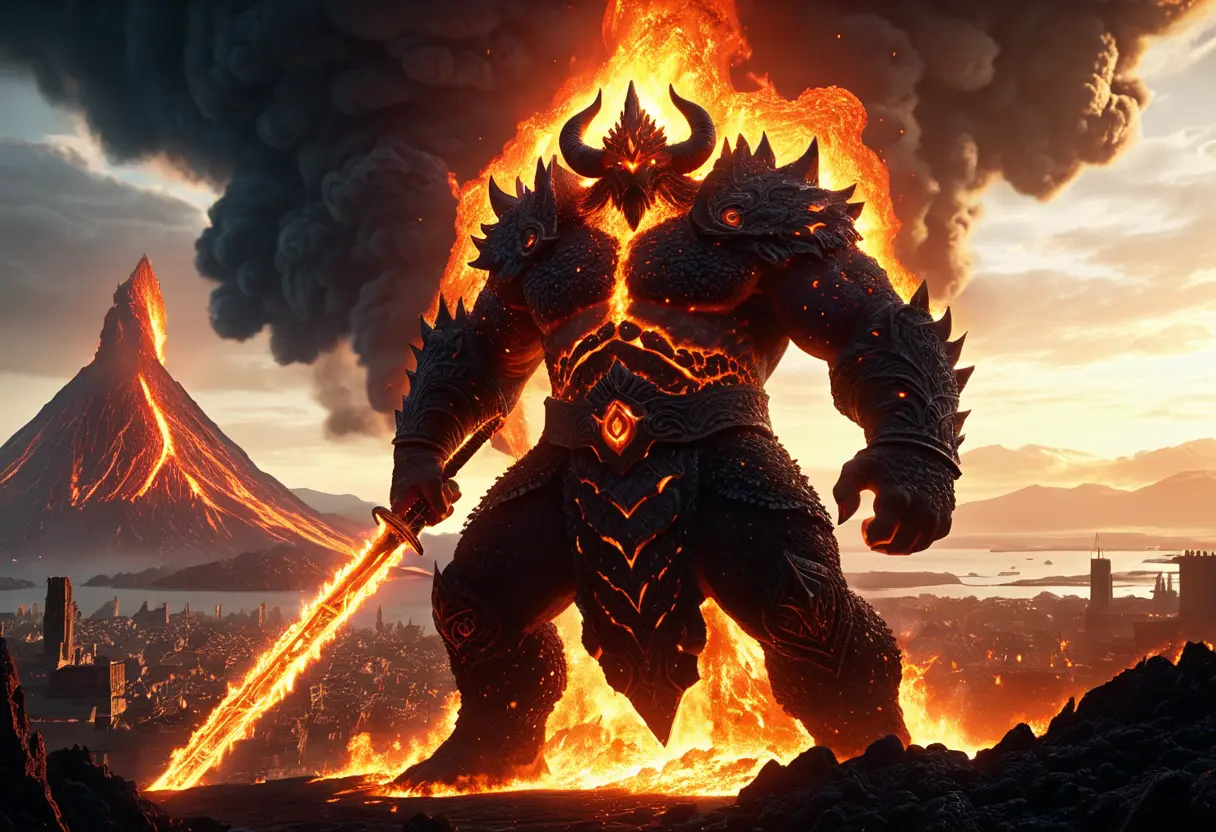
In modern games and anime, Laevateinn is firmly established as the “Ultimate Flame Sword.” This image stems from a historical blurring or identification with the Sword of Surtr , which burns the world at Ragnarök. *End-Times Identification : Some mythologists proposed that the “Flaming Sword” wielded by the fire giant Surtr—which shines brighter than the sun—was, in fact, the Laevateinn Loki made. This theory was embraced by subcultures, solidifying its status as an “Apocalyptic Armament.” *An Amorphous Weapon : The word Teinn (Twig) could refer to a sword, a spear, a staff, or even an arrow (much like Mistilteinn, the mistletoe). This “Blank Space” in its description has provided endless inspiration for creators to shape the weapon according to the needs of their stories.
3. Significance: The Silent Trigger for Ragnarök
The essence of Laevateinn lies not in its direct destructive power, but in its role as a “Crucial Fragment for Collapse.” *Severing the Peace : By being the weapon meant to kill the bird that warns of incoming disaster, Laevateinn serves as the tool that blinds the gods’ “Watchful Eye,” making Ragnarök an inevitable, crushing fate. *The Chain of Intellect : Loki crafts it through wit, a giantess guards it, and a giant of fire eventually wields it. This chain symbolizes how cold intellect can be converted into catastrophic violence—a tragic theme central to Norse thought.
4. Cultural Context: The Aesthetic of Mysterious Absence
Because so little is known about it, Laevateinn has been mythologized as the “Ultimate Weapon for those in the know.”
In contrast to the perfectly documented Excalibur, Laevateinn always remains in the shadows. When we hear its name, we don’t feel the comfort of a completed legend, but rather the dark premonition of an “Unknown Ruin” that might one day reduce our own world to ashes.
*Loki : The trickster god who forged this weapon to bring disaster to the Aesir. *Surtr : The giant of fire and his world-burning blade. *Gungnir : The symbol of authority and law, often positioned as the antithesis to Laevateinn. *Ragnarök : The Twilight of the Gods where Laevateinn’s true purpose is realized.