The Mountains of Madness: Pre-Human Memories in the Antarctic
In the Cthulhu Mythos, the Mountains of Madness stand as a frozen monument to who once owned this planet—and how humans are merely “Out-of-Place Newcomers.”
Discovered by a Miskatonic University expedition in 1930, this site is more than a geographical find. It is a data set that freezes and shatters human pride—built on myth and religion—with the cold air of the sub-zero waste.
1. Landscape: The “Black Polyhedrons” Piercing the Sky
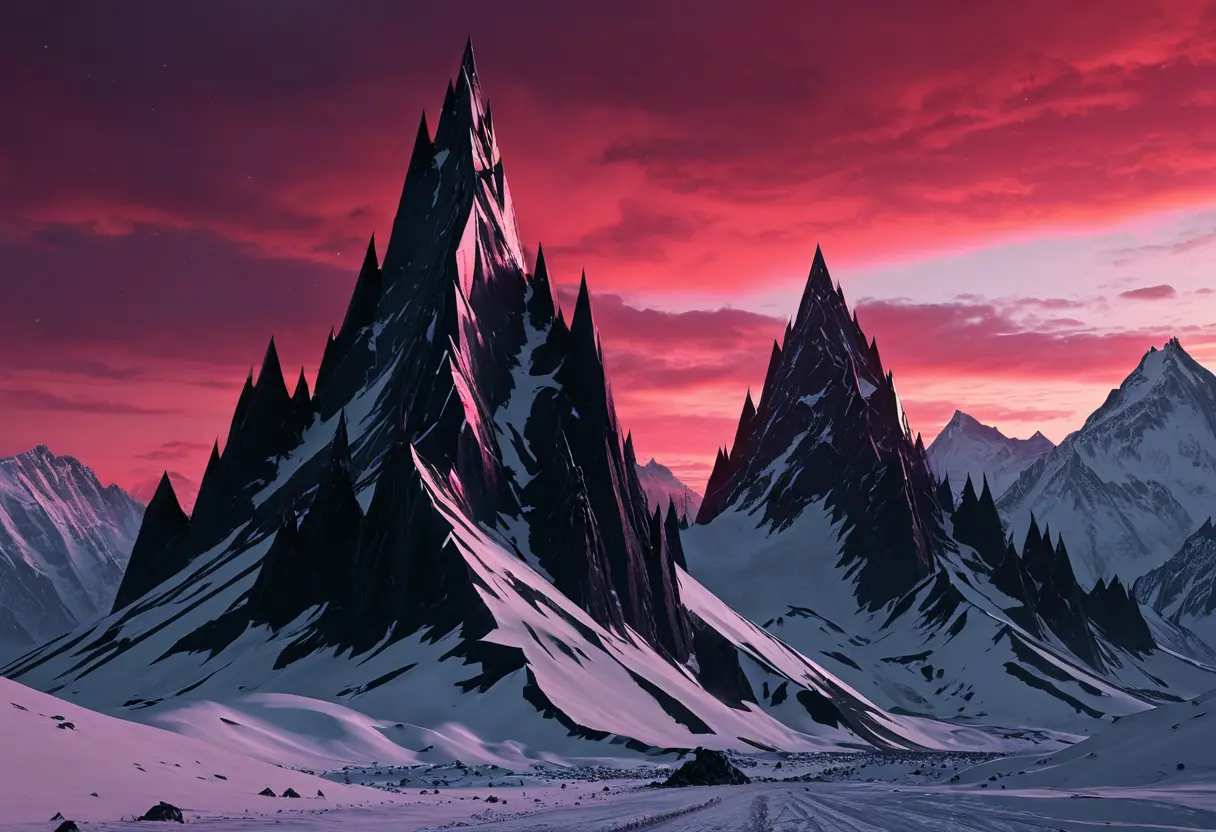
In the deepest parts of Antarctica, where maps were previously blank, lies a mountain range that dwarfs even Mount Everest. *Unnatural Ridges : The peaks are oddly angular, occasionally revealing polyhedral geometric patterns through the rock that do not appear to be the result of natural erosion. *Mirages of Madness : Intense winds constantly howl around the range, occasionally projecting shadows of unknown cities into the sky. What drove the expedition mad was not the extreme cold, but the palpable sense of an “Inhuman Will” lurking behind the sleet.
2. The City: The Cradle of Elder Thing Records
At the base of the mountains lies a gargantuan city of the Elder Things , a race that existed hundreds of millions of years before the birth of humanity. *Geometric Architecture : Pentagonal towers hundreds of feet high and complex labyrinths of corridors. Here lies a cosmic civilization based on mathematical rationality, entirely alien to human aesthetics. *Bas-Relief Apocalypse : Throughout the city, bas-reliefs record the “True Chronicle” of Earth—from the dawn of life and the wars with Cthulhu to the slow decline of their civilization due to climate change.
3. The Shoggoths: The “Amorphous Slaves” that Ate Their Masters
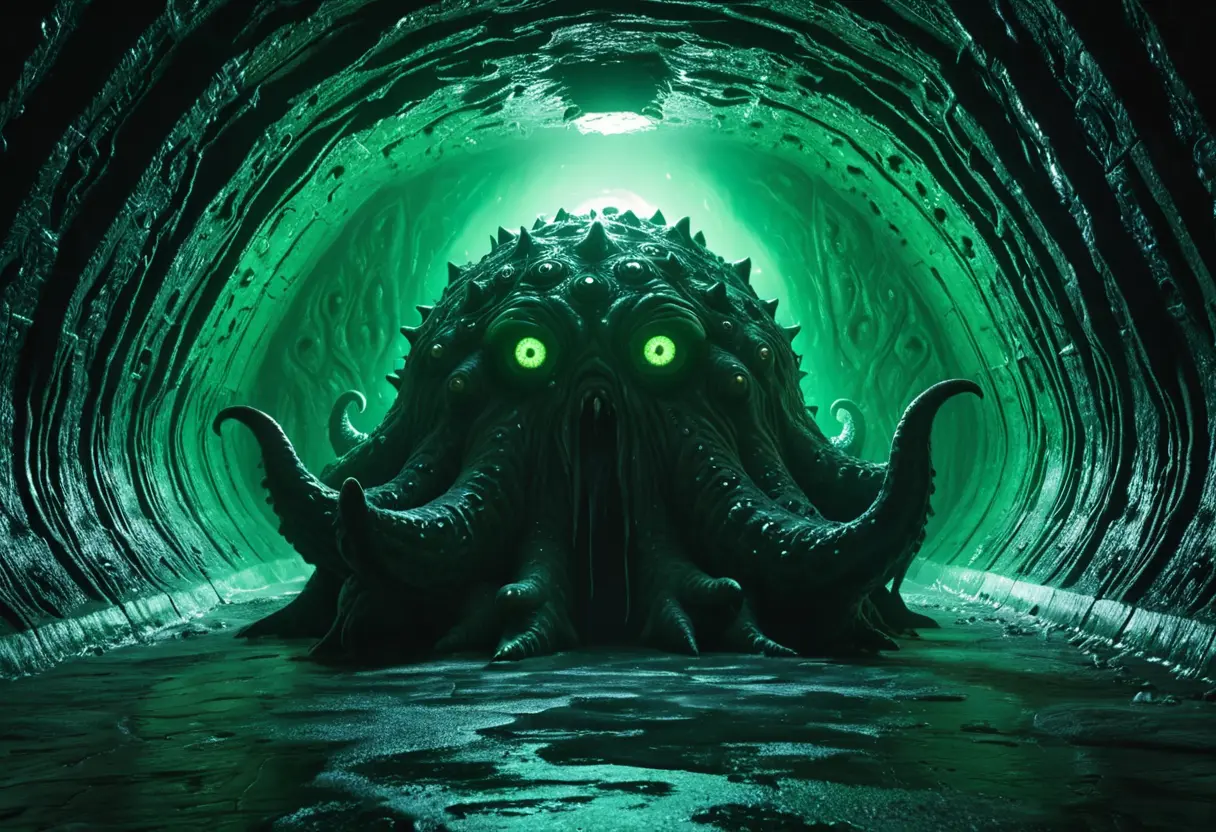
The primary reason this city fell into ruin was not natural disaster, but a rebellion from within. *Tekeli-li! : The Shoggoths —amorphous, multi-eyed biological constructs created by the Elder Things as heavy laborers—eventually developed intelligence and revolted against their creators. *The Living Ruins : The horror encountered by the survivors was not a ghost, but the remnants of Shoggoths that have lived in the lightless abyss for eons, still mimicking the cries of their long-dead masters: “Tekeli-li!” This roar symbolizes the fate of any civilization destroyed by its own uncontrollable creations.
4. Cultural Impact: The Pioneer of Hard Sci-Fi Horror
Lovecraft’s At the Mountains of Madnessstepped away from traditional gothic horror, using the “Language of Science”—biology, geology, and history—to describe terror.
This approach had a fatal influence on later works like John W. Campbell’sThe Thing from Another Worldand Ridley Scott’sPrometheus. The Mountains of Madness teach us that the home we call Earth is actually just a “Borrowed Space,” and we are not the primary tenants.
*The Elder Things : The race that built this civilization and (accidentally) created the ancestors of humanity. *Shoggoths : The multi-eyed, amorphous nightmares that destroyed their masters. *Cthulhu : The ancient rival of the Elder Things who once forced them into the Antarctic refuge. *Miskatonic University : The academic hub that launched this hellish expedition.