
The Cthulhu Mythos: The Abyss of Cosmic Horror

“The most merciful thing in the world, I think, is the inability of the human mind to correlate all its contents.”

This opening sentence from H.P. Lovecraft , the 20th-century visionary of weird fiction, defines the core of the Cthulhu Mythos: “Cosmic Horror.” It is a world where the comforting illusion of human-centricity is stripped away, revealing a vast, cold, and indifferent universe.

1. What is Cosmic Horror?

In the Cthulhu Mythos, horror is not about ghosts or demons who take an interest in humans. *Absolute Indifference : To the gods of this mythos, humanity is like the ants under our feet—neither loved nor hated, simply ignored. *The Defeat of Reason : Human tools like science and ethics are useless against them. To truly understand the universe is to process information that exceeded the limits of the human brain, leading inevitably to madness.
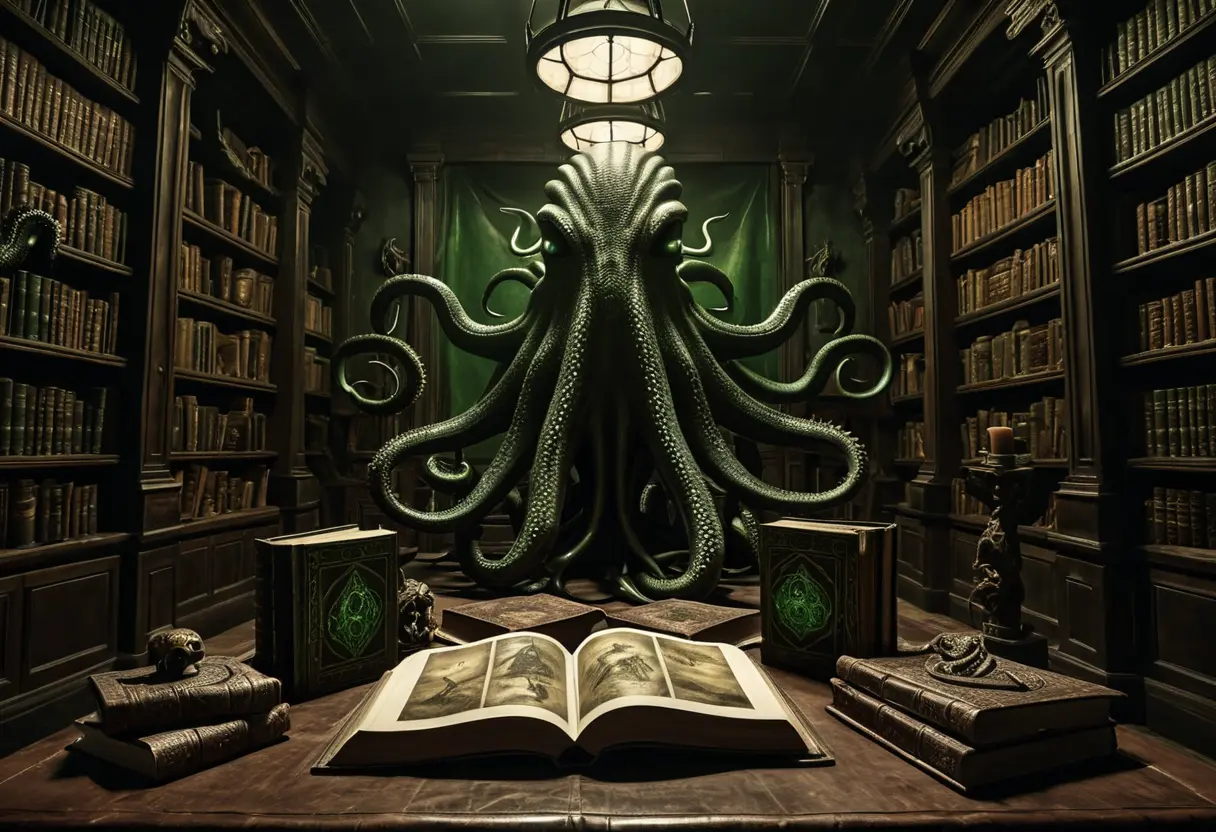
A dark, ancient library with shadows of eldritch gods on the walls.

2. The Pantheon: Masters of Chaos

The structure of the mythos is broadly divided into two tiers (based on later classifications by August Derleth and others).

The Outer Gods

Entities that represent the fundamental physical laws of the universe. *Azathoth : The blind idiot god at the center of the universe. *Yog-Sothoth : The gate and the key. *Nyarlathotep : The only god who actively “crawls” toward humanity with malice.

The Great Old Ones

Ancient entities from the stars who ruled Earth before humanity. *Cthulhu : Waiting in the sunken city of R’lyeh. *Hastur : The Unspeakable King in Yellow. *Dagon : Father of the Deep Ones.

3. The Forbidden Legacy: Information as Poison

The tools to interact with this abyss are equally dangerous. *Grimoires (The Necronomicon) : Cursed manuscripts that reveal the “Other Side” of the world. *Servitor Races : Deep Ones, Mi-Go, Elder Things—alien intelligences that serve the gods and observe humanity.
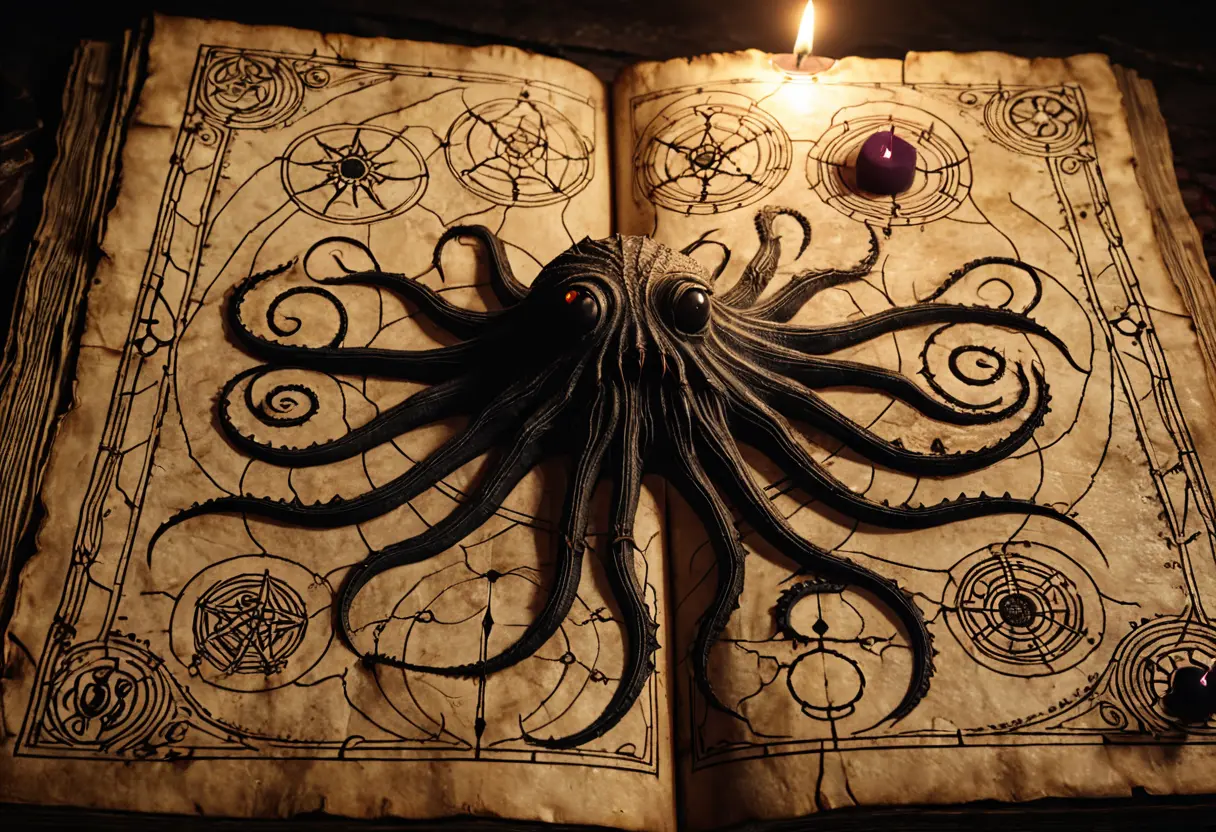
A close-up of a disturbing illustration from an ancient occult book.

Why does the Mythos continue to expand from Bloodborne to modern anime? Unlike many literary properties, most of the Cthulhu Mythos is in the Public Domain . *The Expansion of the Abyss : Exploring how the “Open Source” spirit of Lovecraft allowed this horror to infect every corner of global pop culture.


⚠️ Warning: Sanity Check Required

As you browse these archives, remember: “When you gaze long into an abyss, the abyss also gazes into you.”*Guide to Sanity (SAN Values) : Why information can be a neurological hazard. *Miskatonic University Library : For those seeking academic protection. *Pantheon Directory : Begin your descent.
Mythos Races: The Inhuman Neighbors of the Void

In the Cthulhu Mythos, humanity is not the center of the universe, nor even the primary tenant of this planet. We are merely a temporary species thriving in the interval between the reigns of far more ancient and powerful entities. The “Races” of the Mythos are not merely monsters; they are scientific pioneers, evolutionary masterpieces, and cosmic laborers. Understanding them is a ritual of recognizing our own absolute insignificance in the face of the infinity of space and time.

Locations & Domains: The Geography of Cosmic Horror

In the Cthulhu Mythos, a “Location” is more than a backdrop; it is a character in its own right—often more eloquent and more malicious than the entities that inhabit it. H.P. Lovecraft and his successors obsessively mapped the cracks in our reality where inhuman powers physically bleed through. These spots are not merely “Scary”; they are the frontlines of a battle between our fragile reason and the absolute indifference of the cosmos.

Forbidden Legacies: The Items and Grimoires of the Abyss

In the Cthulhu Mythos, items are never just “equipment.” They are Anchors of Reality —objects that bridge the gap between human perception and the crushing truth of the universe. Whether they are “Toxic Grimoires” that destroy the reader’s mind or “Dimensional Keys” that offer a path of no return, these forbidden legacies are the most dangerous tools humanity has ever handled. 1. Forbidden Grimoires: The Information of Madness Books that contain truths too heavy for the human brain to carry.

TRPG Guidelines: Navigating the Living Cthulhu Mythos

In the modern era, the most active “Frontline” of the Cthulhu Mythos is not in literature, but in Tabletop Role-Playing Games (TRPGs) . Through games like Call of Cthulhu, the Mythos has transformed from a static classic into a dynamic, interactive folklore. This page outlines the history of this evolution and the guidelines for those who wish to create their own stories within the abyss. 1. The Call of Cthulhu

The Pantheon: Archive of Cosmic Chaos and the Great Old Ones

The entities called “Gods” in the Cthulhu Mythos have nothing to do with human mercy or justice. They are manifestations of the physical laws of the universe—or the distortions of them. From the “Outer Gods” ruling the void to the “Great Old Ones” who once ruled Earth and are now sealed away, here is the record of their madness and terrible wisdom. 1. The Outer Gods: Principles of the Universe Gods that embody fundamental cosmic forces or absolute chaos.

The Cthulhu Mythos & Modern Media: Why the Abyss Keeps Expanding

The reason the Cthulhu Mythos is so beloved and widespread today is not just the strength of its “Cosmic Horror” concept. It is deeply tied to its status as Public Domain . 1. Copyright Status: A Shared Nightmare The core writings of H.P. Lovecraft are largely treated as public domain in most jurisdictions today. *Expiration of Protection : Lovecraft died in 1937. In many countries, the copyright has expired, allowing anyone to use iconic names like “Cthulhu,” “Azathoth,” or “The Necronomicon” without paying royalties.