The Wizard: The Hacker of Reality and the Science of Magic
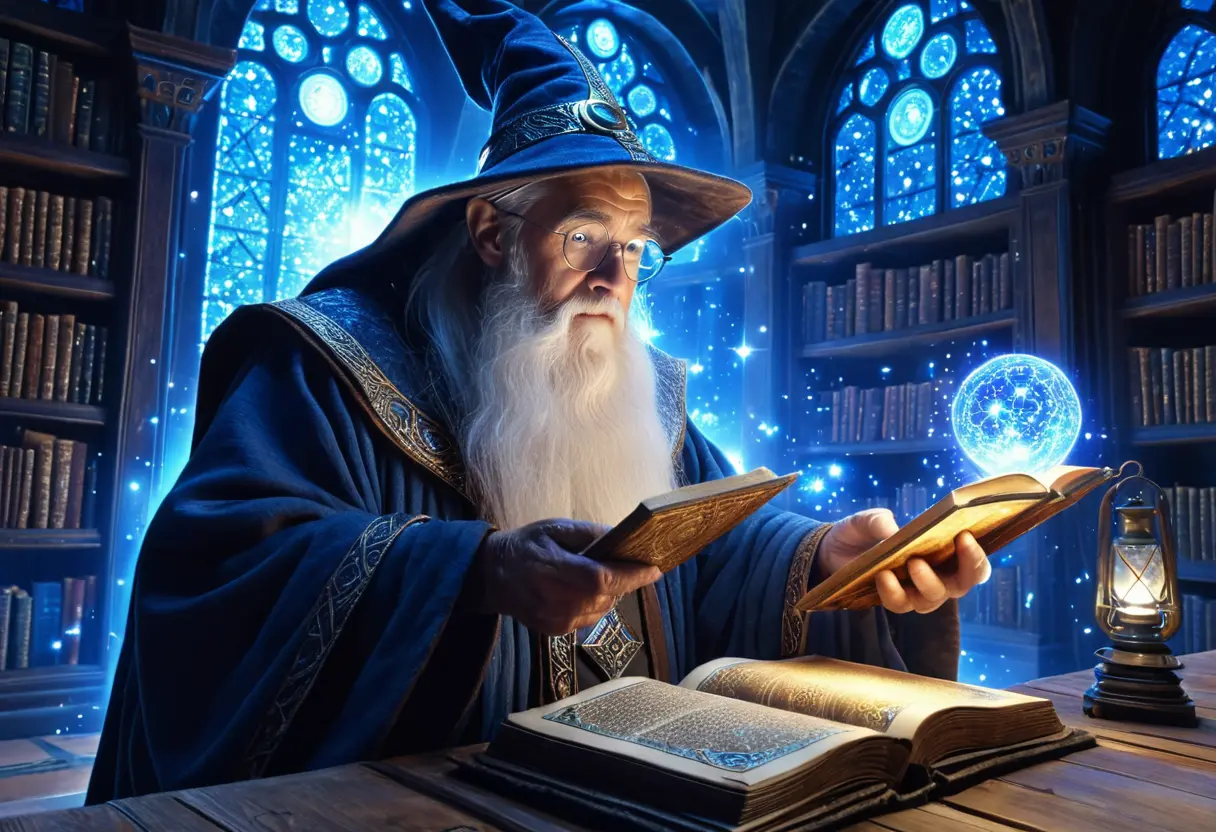
In a world of monsters and miracles, the Wizard is unique. They don’t rely on innate talent or the mercy of the gods. Instead, they rely on Study (Research) and Decryption .
To a Wizard, magic is not a supernatural mystery; it is a Science to be understood and a Technology to be mastered. Carrying an external storage device called a “Spellbook” and compiling complex linguistic algorithms (Incantations), the Wizard is the ultimate Reality Hacker —exploiting the vulnerabilities in the physics engine of the universe.
1. Prototype: The Sage who Sacrificed for the “Code”
The word “Wizard” comes from “Wise” + “-ard” (one who does). Their roots are found in the guides and mentors of myth who paid a heavy price for knowledge. *Odin: The Seeker of Runes : In Norse myth, the All-Father sacrificed his own eye and hung from the World Tree for nine days just to learn the secrets of the magic alphabet. This embodies the Wizard’s Obsessive Intellectual Drive —the willingness to trade humanity for a glimpse of the “System’s Backend.” *Merlin & Gandalf : The classic mentors. They aren’t just combatants; they are Network Administrators of the world’s fate, using their knowledge to maintain the cosmic balance.
2. Mechanics: The Vancian Logic of “Read & Burn”
The magic system adopted by early RPGs (like D&D) is known as Vancian Magic , based on Jack Vance’s The Dying Earth. It introduces a cold, technical logic to sorcery: *Memorize and Cast (Execution) : A Wizard loads a spell from their book into their brain, word-for-word. Once the spell is cast (executed), it is immediately Deleted from their short-term memory. *Knowledge as a Resource : Spell slots are not physical stamina; they are Mental Bandwidth . Magic is a “Library of Expendable Munitions,” and the Wizard’s proximity to their book is their only way to “Reload” their arsenal.
3. Specialization: The Architecture of the Schools
A Wizard cannot know everything. They must specialize in a specific “Development Track” to reach the highest levels of authority: *Evocation (The Physicist) : Focusing on the direct generation and direction of destructive energy. *Necromancy (The Biotic Engineer) : Playing with the boundary between life and death—science without ethics. *Illusion (The Hologram Architect) : Manipulating light and sound to overwrite the sensory input of others. *Abjuration (The Security Specialist) : Mastery of wards, firewalls, and the decryption of enemy spells.
4. Cultural Reflection: The Zenith of Human Curiosity
The reason we love the Wizard is that they represent the Humanity of the Superhuman .
They don’t have bloodline cheat-codes (Sorcerers) or divine patrons (Warlocks). They have only their brain, their ink, and their time. While they are often feared as “Mad Scientists,” their struggle to turn the “Unknown” into the “Known” is the ultimate celebration of human curiosity—the drive that built civilization itself.
*Archaeology of Grimoires : How real-world occult books shaped the fantasy spellbook. *King Solomon & the 72 Demons : Controlling higher entities through knowledge. *The History of Magic Academies : From Hogwarts to magic universities in modern Isekai. *The Sorcerer : The antithesis—one who wields raw, unstudied power.