The Fighter: Master of Arms and the Zenith of Human Discipline
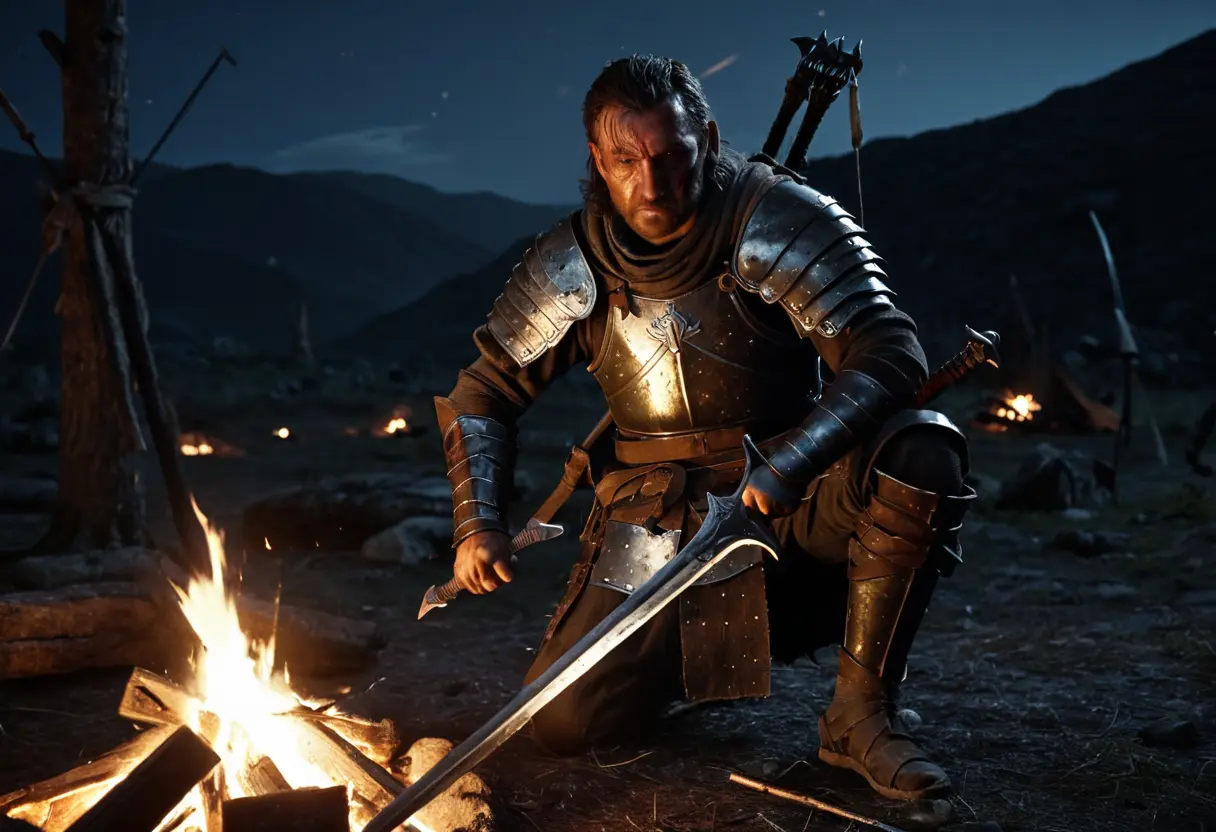
In many fantasy worlds, the Fighter is seen as the “Default” choice. However, they are far more than just a “Warrior who can’t use magic.” A true Fighter is an expert in anatomy, physics, and tactical engineering—a Professional of Combat who has turned the act of violence into a refined “Art.”
The essence of the Fighter is the triumph of the Human Will . While others rely on divine gifts or ancestral bloodlines, the Fighter reaches the level of gods and monsters through nothing but blood, sweat, and thousands of hours of repetition.
1. Definition: The Specialist of Physical Engineering
A Fighter’s strength lies in their Versatility and Precision .
They don’t just “swing a sword.” They manage the center of gravity of their opponent, target the micro-vulnerabilities in a suit of armor, and execute perfect feints. In the logic of RPGs, a Fighter’s “Combat Maneuvers” are not just game buffs—they are the Highly Logical Algorithms of War extracted from centuries of battlefield survival.
2. Origins: From Mythic Heroes to Historical Manuals
the Fighter archetype is built on two primary foundations: *The Indomitable Mythos : Achilles, Hercules, Beowulf. These heroes often lacked “Magic” in the traditional sense. Instead, they focused their divine lineage or extreme mortal talent into the Zenith of Physical Violence . They are the ancestors of the Fighter who proved that “Force” is a legitimate way to solve the problems of fate. *The Science of the Duel : The masters of the medieval Fechtbuch (Combat Manuals) like Liechtenauer or Talhoffer. They elevated martial arts into a scholarly discipline. Their surviving theories on spacing, momentum, and body-leverage are the “Code” upon which all modern fantasy Fighter classes are built.
3. Philosophies: The Three Paths of the Blade
How a Fighter controls the battlefield is determined by their core philosophy: *The Champion (Zenith of Personal Prowess) : The lineage of the gladiator and the duelist. They hone their one body into a perfect machine for delivering critical, world-ending strikes. *The Battlemaster (The Architect of Conflict) : One who treats war as an Intellectual Puzzle . Like Sun Tzu or Clausewitz, they use tactics and manuevers to manipulate the environment and lead their allies to victory. *The Eldritch Knight (The Harmonic Mechanic) : One who treats magic as a “Support Tool.” They don’t seek to be wizards; they simply “Tune” their weapons with basic spells to extend their physical reach.
4. Cultural Impact: The Pride of the Ordinary
The reason the Fighter remains the most beloved class is its Relatability .
Unlike the Sorcerer (born with power) or the Cleric (chosen by a god), the Fighter is (usually) a person who chose their path. They represent the ultimate human heroism: that an “Ordinary” person, through sheer intellect and effort, can stand toe-to-toe with the horrors of the abyss.
*The Barbarian : The antithesis—shedding technique for raw, primal rage. *The Paladin : Adding the “Firewall of Faith” to the steel of the blade. *Archaeology of Arms: Real-world Legendary Weapons : From Excalibur to the Masamune. *The World of Fechtbuch : How real-world combat manuals shaped fantasy.