The Bard: The Weaver of Worlds and the Magick of Resonance
In many modern fantasy games, the Bard is seen as a versatile jack-of-all-trades or a simple musician providing support. However, if you step into the deep history of this class, it becomes clear that they were once the Guardians of Knowledge with authority equal to kings.
A Bard is not just a performer; they are a magician who interprets the world as a “Song” and uses music as a code to re-weave its reality.
1. Roots: The Sacred Poets of the Celts
The term “Bard” is deeply rooted in the class systems of ancient Celtic society .
They were a branch of the Druidic order, tasked with memorizing history, laws, genealogy, and mythology in the form of verse. In an age where oral tradition was more sacred than written records, they functioned as “Living Libraries” of civilization.
Their words were believed to hold actual, physical power. Specifically, their “Satire” was feared as a lethal curse. It was said that if a master poet exposed a king’s corruption in song, the king would develop boils on his face and eventually lose his prestige and fall to ruin. The modern game mechanic of a Bard’s “Vicious Mockery” finds its origin in this historical, ritualistic linguistic assault.
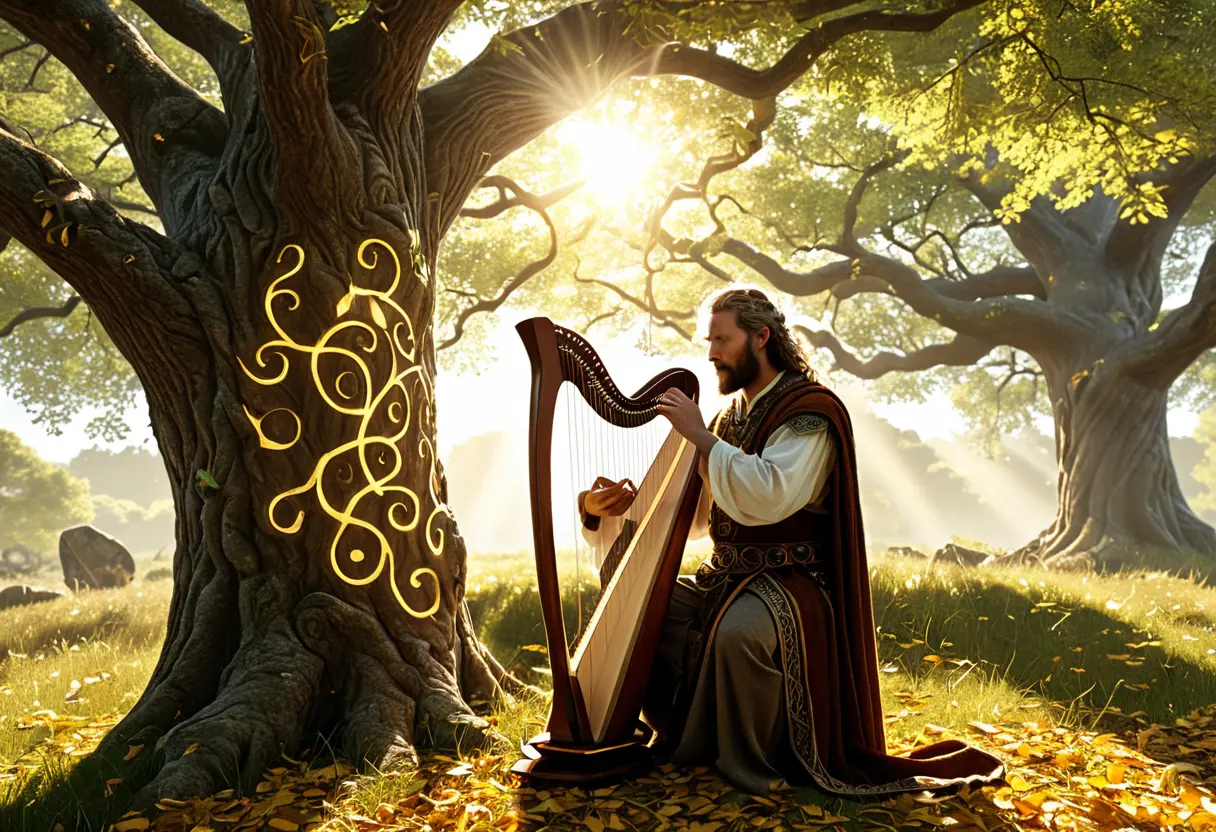
2. The Skalds: Warriors of the Spoken Word
In Viking society, the Skald was the northern counterpart of the Bard. They served kings and lords, composing immediate, intricate poetry to honor feats on the battlefield.
A Skald was often a warrior themselves, wielding both an axe and a complex metaphor (known as a Kenning). To be a Skald required extreme intelligence and a deep knowledge of Norse myth—their intellect was valued as highly as their physical bravery.
3. The Professional Information Broker: Troubadours and Spies
By the Middle Ages, the Bard evolved into wandering performers like the Troubadours or Minstrels .
They traveled from court to court, carrying news, singing of courtly love, and often serving as Diplomats or Spies . The fact that “a man with a lute can go anywhere” made them the ultimate masters of information. In fantasy, a Bard’s high “Skill Checks” and “Charisma” reflect this historical role as a social hacker.
4. The Essence: Sound as the World’s Source Code
The technical definition of a Bard in fantasy relies on the mythic idea that the world was Created through Song . *Universal Resonance : By aligning the tone of their instrument with the “fundamental frequency” of a physical object, the Bard can alter reality. *The Calibration of Morale : By manipulating brain chemistry through sound, they remove fear from allies (Buff) and delete the concentration of enemies (Debuff). *The Living Record : A Bard understands that a hero only exists as long as their story is told. They are the Administrators of Immortality , ensuring that names are not deleted from the database of history.
*The Druid : The origin—the sacred priests of the Celtic world. *The Rogue : The partner in crime, sharing the world of guile and intelligence. *The History of Magic Academies : Where the Bard’s intellectual training meets the Wizard’s science. *The Philosophy of Sound Horror : Why voices and music can trigger the deepest fear.