Fantasy Dictionary: Uncovering the Strata of Myth

The “Fantasy” we encounter in our games, novels, and films is a grand dream. Beneath its surface lies a geological layer of human mythology, legend, and meticulous thought built up over millennia.

The “Fantasy Dictionary” is more than a simple glossary. It is an archive dedicated to uncovering how the “Standard” of modern entertainment was shaped, tracing every concept from its Origins to its contemporary transformation.

1. The Doors of Inquiry: Five Primary Strata

From here, step into the depths of the unknown according to your interests:

From ancient myths and folklore to the Cthulhu Mythos and the roots of modern RPGs. The story of every “Beginning.”

Excalibur, Mjölnir, and the cursed objects that carve the destiny of heroes.

Elves, Dwarves, and Dragons. The denizens of otherworlds who live by a logic different from our own.

Knights, Wizards, and Thieves. The history carried by each “Job” and the truth of their roles.

Mana, Spells, and the World Tree. Explaining the fundamental “Logic” that moves fantasy worlds.

2. Special Archive: The Cosmic Abyss

A specialized encyclopedia of the “Indescribable Horror” birthed by Lovecraft and nurtured by countless successors.


How to Navigate This Archive

This dictionary is compiled with an emphasis on “Narrative Beauty” and “Respect for the Source.” It is not merely a list of data; it is an editorial exploration of the human imagination. Each entry is accompanied by “Landscape of the Fantastic” visualised by advanced AI, allowing you to experience the atmosphere of these worlds as you read.

Please, wander at your leisure through this labyrinthine forest of myth.
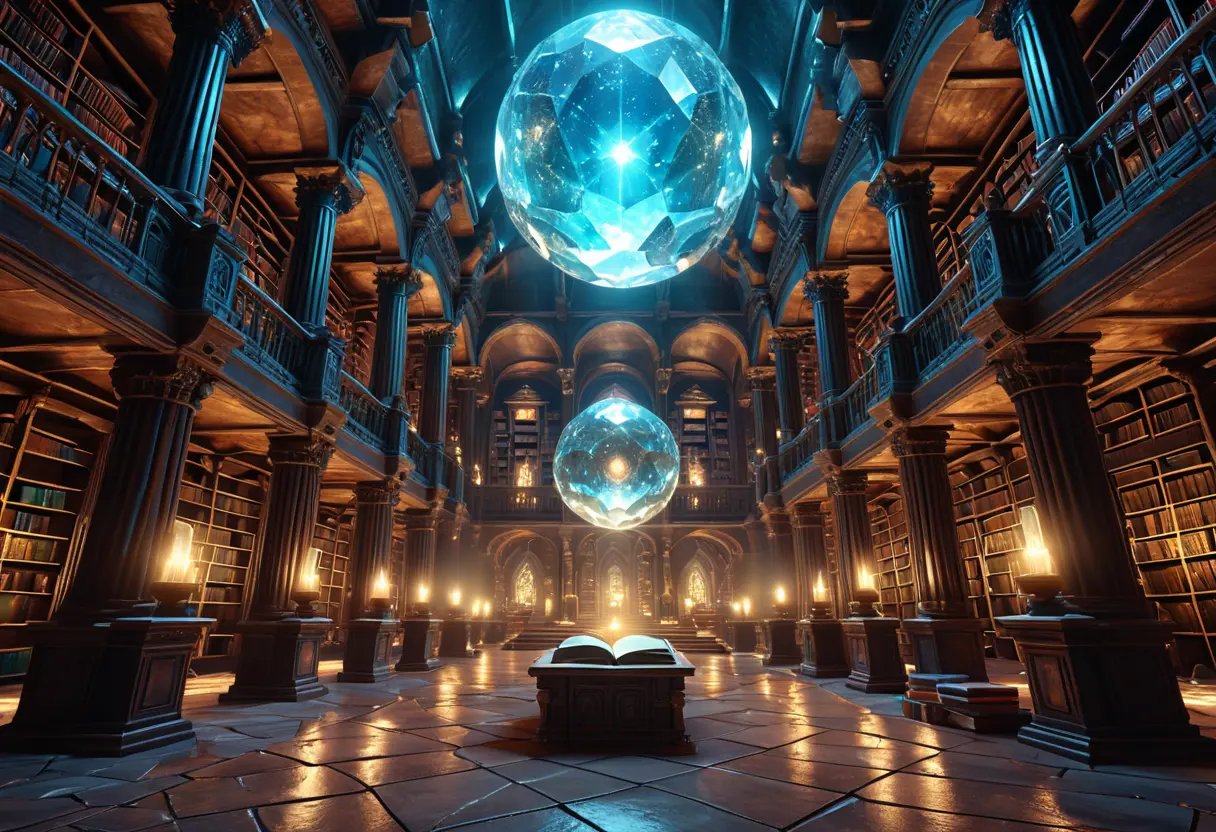

A majestic ancient library carved inside a giant glowing crystal cavern.

Fantasy Origins: A Journey to the Source of Imagination

When we grip a game controller or open a thick fantasy novel, elements like magic, dragons, and status screens exist as “matters of course.” However, these elements were not born from nothing. The massive tree of modern fantasy stands upon a rich soil—centuries of historical accumulation known as “Origins.” In this category, we delve into these strata to explore where the “embers” of the imaginary worlds we love first ignited.

Races: The Diverse Mandala of Life in the Fantasy World

In the tapestry of fantasy, a world is defined not just by its history or magic, but by the Peoples who inhabit it. “Races” in fantasy are more than just biological differences. They represent different Philosophies of Survival , different Perceptions of Time , and different Ways of Interacting with the Divine . To understand a race is to understand a fundamental aspect of how that fantasy world functions. 1. The Triad of Heritage: How Races are Born The myriad peoples of the Otherworld generally spring from three mythic roots: *The Immortal Elder Folk (Residue of Creation) :

Japanese Yokai: The Neighbors from the Otherworld of Boundaries and Animism

The Yokai are more than just characters from nursery rhymes. They are the “names” and “forms” given by the ancient Japanese to the “Holes in Reality”—the unexplained phenomena occurring in nature and society. While Western “monsters” are often portrayed as “Evil to be conquered,” Japanese Yokai are “Neighbors with whom one must coexist while maintaining a respectful fear.” They possess a unique animistic character, often being the “Fallen forms of ancient gods.

Fantasy Terms: The Laws and Destinites that Define the World

When we dive into a fantasy world, we see more than just beautiful landscapes or terrifying monsters. Behind them lies a network of “Logic (Kotowari)” designed to order the world and advance the story. Why does magic require a cost? How does a hero climb to higher heights? And where is the world heading? To know these “Terms” is to understand the “Philosophy” the author has embedded in that world.

Legendary Items: Symbols of Power and Destiny

In every great legend, a weapon is more than a tool of war; it is a manifestation of the hero’s soul, the proof of a king’s right to rule, or the shadow of a god’s law. From the mist-shrouded lakes of Britain to the volcanic forges of the Dwarven masters, these items are the “Anchors of Reality” that define the stakes of a mythic era. They represent the “Sacred Violence” required to maintain order and the “Tragic Cost” of wielding power beyond human measure.

The Cthulhu Mythos: The Abyss of Cosmic Horror

“The most merciful thing in the world, I think, is the inability of the human mind to correlate all its contents.” This opening sentence from H.P. Lovecraft , the 20th-century visionary of weird fiction, defines the core of the Cthulhu Mythos: “Cosmic Horror.” It is a world where the comforting illusion of human-centricity is stripped away, revealing a vast, cold, and indifferent universe. 1. What is Cosmic Horror? In the Cthulhu Mythos, horror is not about ghosts or demons who take an interest in humans.

The Lineage of Classes: Archetypes that Drive the Narrative

In the world of fantasy RPGs, a Class is more than just a collection of game statistics. It is the crystallization of a Mythological Archetype that humanity has shared for millennia. Whether it’s the hero of a forgotten epic, a historical master of the blade, or a solitary wanderer—each class represents a specific “Lens” through which we view and interact with the world. To understand the origin of these roles is to understand the very “Specifications of Heroism.