The Uncanny Valley: The Fear of the Almost-Human
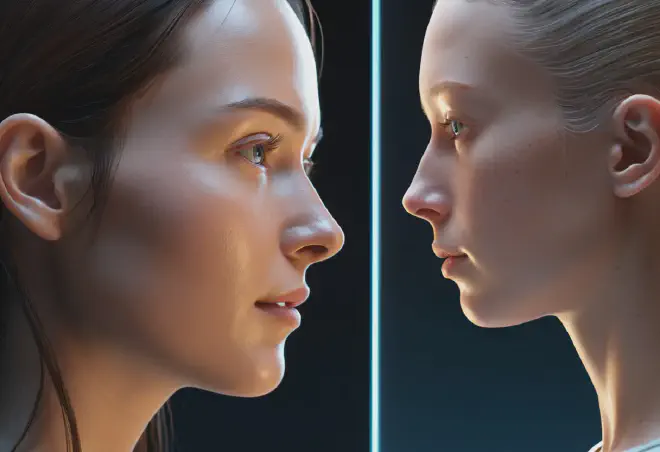
At that point—where the object is almost human, but not quite —our empathy suddenly turns into a profound sense of revulsion and visceral fear. This bottomless drop in emotion is known as the Uncanny Valley .
1. The Survival Instinct: Why We Recoil
Why does an “imperfect human” trigger such a violent reaction in our brains? Evolutionary biology and psychology offer several theories: *Pathogen Avoidance : Our brains may misinterpret a non-moving or unnaturally moving human-like figure as a corpse or a person with a terminal disease. We evolved to recoil from these things to avoid infection. *Genetic Filtering : Subtle facial asymmetries or “wrong” skin textures might be flagged by our survival instincts as signs of severe genetic anomalies, triggering a deep-seated urge to isolate or exclude. *Cognitive Dissonance : Your eyes say “Human,” but your subconscious says “Object.” The inability to categorize the entity causes a “logical glitch” in the brain, resulting in a flight-or-fight response.
2. The Digital Evolution: New Depths in the Valley
Once the domain of ventriloquist dolls and porcelain masks, the Uncanny Valley has found a new home in the age of AI and CGI.
We see it in the “dead eyes” of early 3D films like The Polar Express, and in modern AI-generated images that produce skin that is too smooth, or hands with “too many fingers.” These digital artifacts pull from the same biological root of fear that our ancestors felt when looking at a mask.
3. The Weaponization: Valley-Based Horror
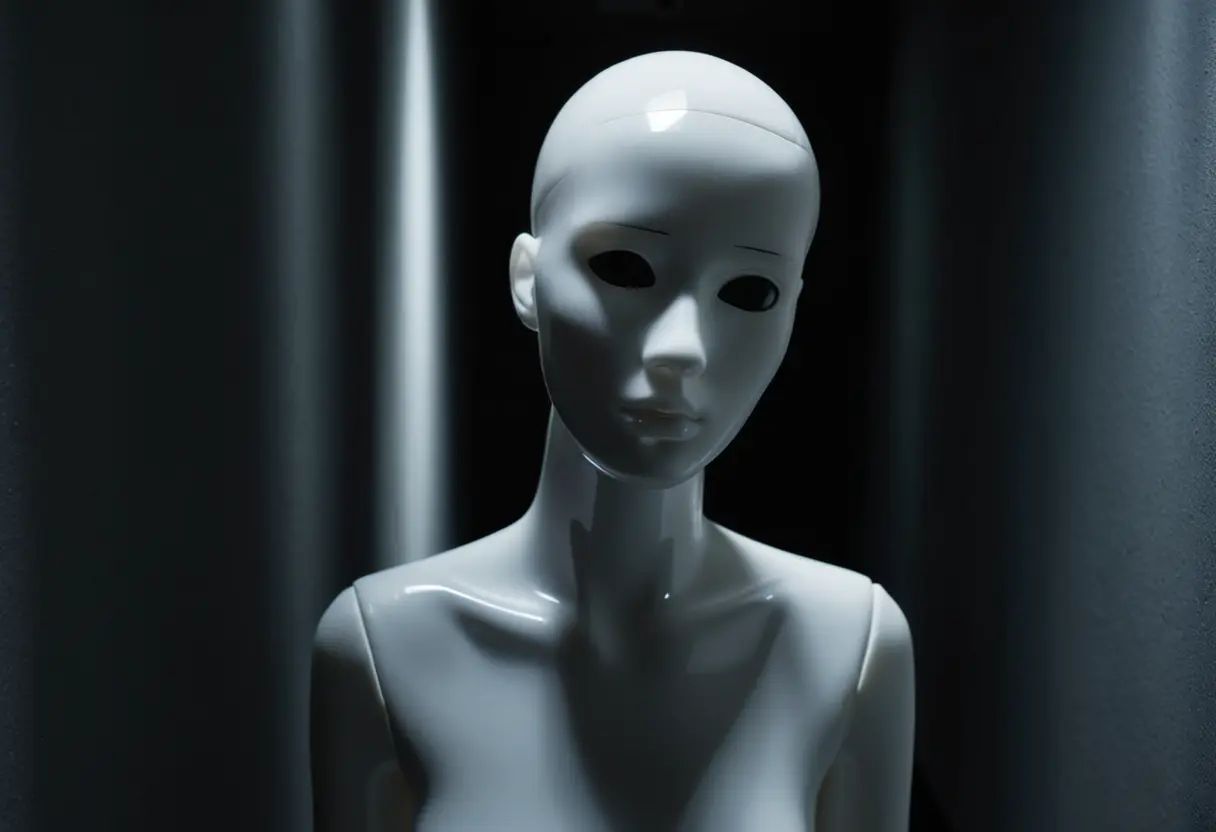
Modern digital horror—specifically “Analog Horror”—uses the Uncanny Valley not as a mistake to be fixed, but as a weapon to be used against the viewer. *The Mandela Catalogue : Creating “Alternates” with elongated faces or misplaced features to force the viewer into the bottom of the valley. *Loab : An AI-generated face that statistically combines the most unsettling human features found in datasets. *This Man : A face that feels universally familiar yet distinctively “other,” inhabiting the peak before the drop.
4. The End of the Valley?
As technology reaches the point where we can no longer distinguish between a human and a program, the “Valley” may disappear. But what happens then?
When we can no longer rely on our biological “Uncanny” alarm, we enter a state of True Digital Solitude . We may find ourselves smiling at a companion, unable to ever truly know if they possess a soul or if they are simply a perfectly rendered shell.
The next time you look in the mirror and think your reflection blinked just a fraction of a second too late… remember that the bottom of the valley is a very lonely place to be.