Zalgo: The Corruption of Order
1. Origin: The Corruption of the Mundane
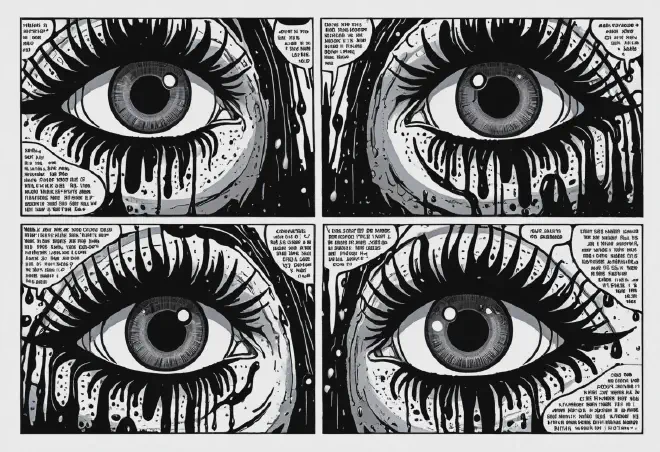
The Zalgo myth began around 2004, initially manifesting through the subversion of classic newspaper comics like NancyorGarfield. In these “corrupted” strips, the characters would suddenly develop hollow, black eyes and mouths, screaming about a darkness that was coming to consume the world.
Every corrupted image bore the signature: “ZALGO” or the ominous warning: “He comes.” The power of Zalgo lies in the “Uncanny Valley” of the digital age—taking the safe, nostalgic imagery of childhood and infecting it with a malevolent, ink-like decay.
2. Zalgo Text: The Hacking of Language
The most iconic manifestation of this entity is Zalgo Text (or Glitch Text). By over-layering Unicode diacritical marks, users created text that physically “leaked” into the lines above and below it, making it look as though the words were screaming in pain or being possessed by an unseen force.
Example: H̶e c̶om̶e̶s̶ This turned Zalgo into a “Cognitive Virus.” It wasn’t just a story you read; it was a phenomenon that visually broke the medium you were using to view it. It suggested that Zalgo wasn’t inside the story, but inside your monitor, trying to claw its way out.
3. The Seven Mouths of the Void
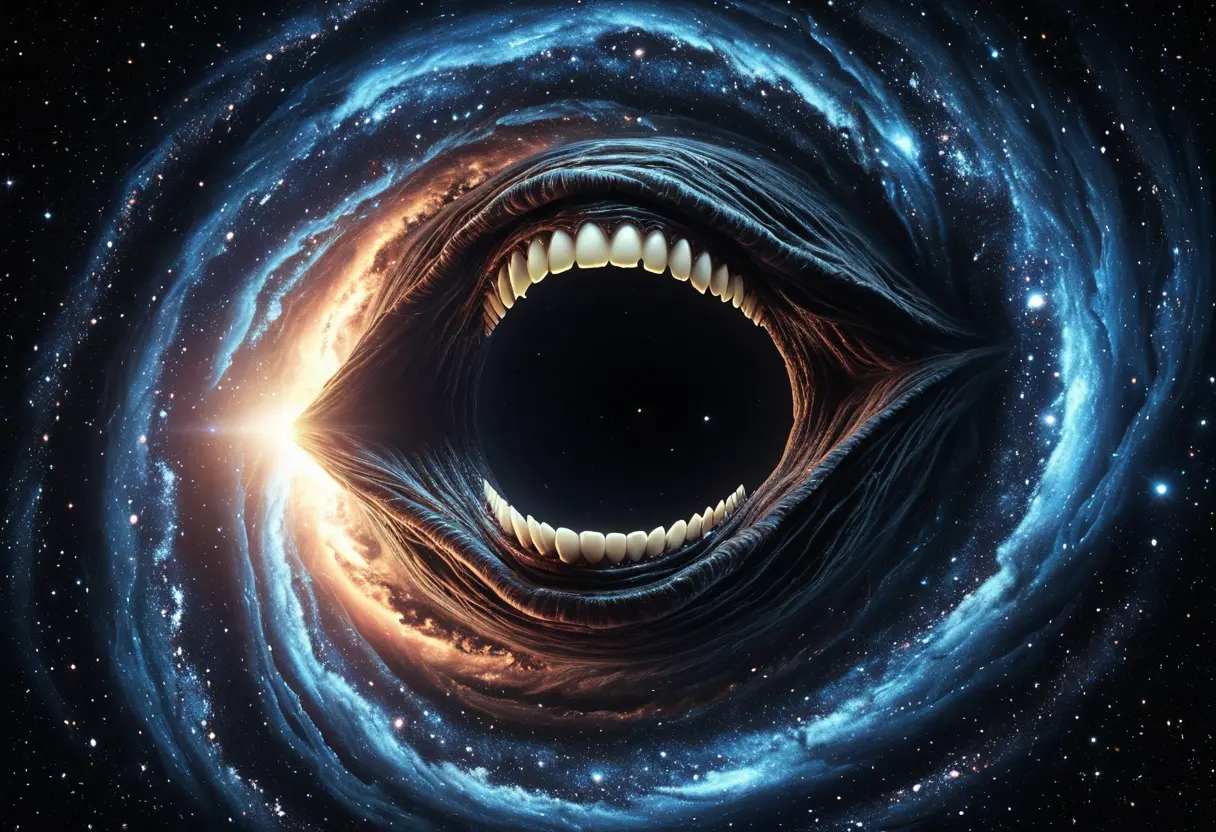
The lore of Zalgo is sparse and fragmentary, echoing the cosmic dread of H.P. Lovecraft. He is described as a being who “holds a dead star in his right hand and a candle that casts shadow in his left.” Most famously, he is said to possess Seven Mouths : *The Sixth Mouth : Sings the song that kills planets and silences the universe. *The Seventh Mouth : Will sing the final song that heralds the end of all existence.
Zalgo is not a monster that wants to kill you; he is an entropic event that wants to erase the very structure of the information that makes up your reality.
4. The Curse of the Data
Zalgo taught us that in the 21st century, the “haunted” object isn’t a cursed doll or a VHS tape—it is the data itself. When your screen flickers, when the text doesn’t display correctly, or when a file is corrupted beyond recognition, it might not just be a bug.
It might be a sign that “He who waits behind the wall” has finally found a gap in the code.