SCP-3008: The Infinite IKEA
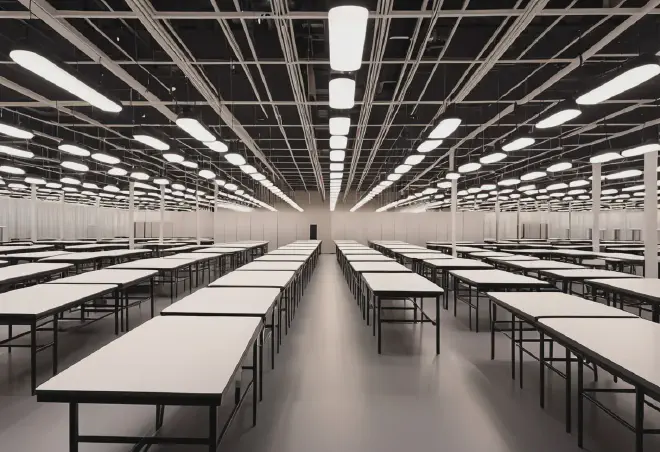
1. The Environment: The Consumer Labyrinth
The interior of SCP-3008 is vastly larger than its exterior and appears to be infinite. *Non-Euclidean Layout : Showrooms, living areas, and massive warehouse sections are arranged in a chaotic, looping pattern. One can walk in a straight line for weeks and never find a wall, let alone an exit. *Automated Supply : The store’s cafeteria areas spontaneously restock with Swedish meatballs and drinks at fixed intervals. This “infinite food” is the only reason survivors can stay alive, but it also ensures their imprisonment is permanent.
2. Survivor Society: The Fortress of Swedish Design
Thousands of “Lost Ones” are trapped inside SCP-3008. To survive, they have built complex societies using the only resources available: furniture.
Survivors stack beds, sofas, and shelving units to create massive, walled cities known as “The Borgs.” In these forts, they trade meatballs as currency, share maps that are constantly changing, and try to maintain a sense of humanity in a world made of particle board and instruction manuals.
3. The Night Shift: Face-less Employees
The true horror of the Infinite IKEA is SCP-3008-2 , known as “The Staff.” They wear the familiar yellow polo shirts and blue trousers of the brand, but their bodies are unnaturally elongated, their limbs out of proportion, and most disturbingly, they possess no facial features . *Day Cycle : While the lights are on, the Staff roam the aisles aimlessly, showing no aggression toward survivors. *Night Cycle : When the lights go out, the Staff become lethal predators. They hunt survivors with incredible strength, repeating a single, mechanical phrase in a low, monotone voice: “The store is now closed. Please exit the building.” Survivors spend every night huddled in their forts, listening to the Staff trying to tear down the furniture walls, waiting for the “morning” lights to return.
4. The Terminal Point of Consumerism
SCP-3008 is a sharp critique of the modern world. It is a place where every physical need is met—food is free, beds are everywhere—but freedom is impossible. You are trapped in a cycle of consumption and survival, ruled by faceless workers who manage you with cold, polite violence.
The next time you visit a massive retail store and follow the arrows on the floor, pay close attention. If the arrows lead you into a section that doesn’t seem to end, don’t keep walking. Turn back. Because in the Infinite IKEA, the only thing they are truly selling is your soul.