The Man in the Suit: The Fusion of Flesh and Rubber
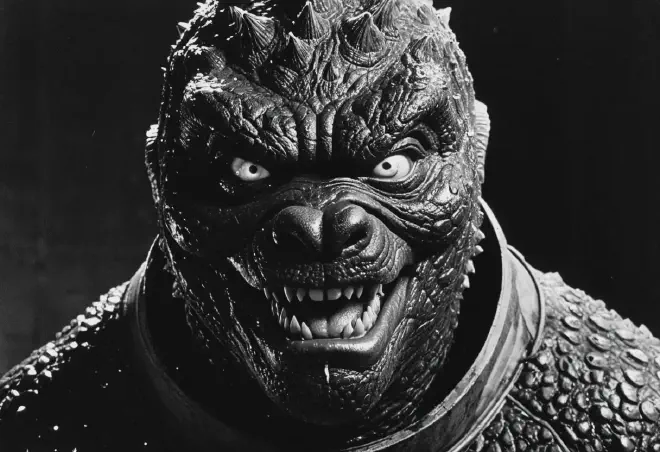
It reveals the process by which a man became a “monster” not through acting, but through a horrific biological transmutation.
1. 1954: The Meltdown of Identity
The story begins on the set of the firstGodzilla. The suit actor playing the monster began reporting strangeness during the grueling shoots. “The suit is hot,” he complained. “I cannot get out.”
What was initially dismissed as exhaustion or a skin reaction to the heavy latex became something far worse. In this alternate history, a combination of on-set radiation (used to simulate the monster’s aura) and the intense biological heat inside the suit triggered a cellular reaction. The actor’s skin and the rubber lining of the suit began to fuse at a molecular level.
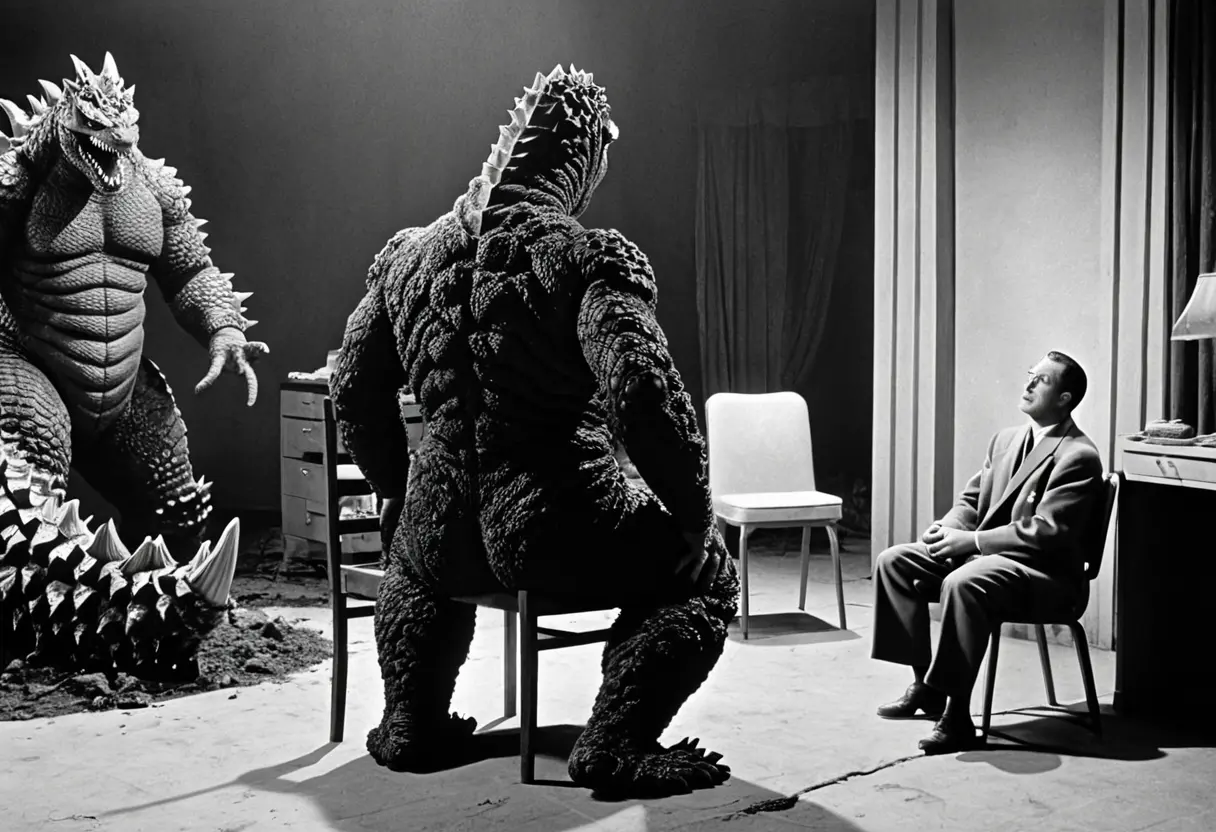
2. The Body Horror: The New Skin
The man was no longer “wearing” the suit; he was evolving into the species of the suit. His muscles became entangled with the hardened rubber, and his skeletal structure shattered and reformed to fit the monster’s hunped-back silhouette.
The gaps in the suit began to leak a thick, black fluid, and his human screams eventually morphed into the iconic, metallic roar we recognize as Godzilla. Ironically, the more he became the monster, the better the film looked. Every pained movement and every drop of real blood added a realism that the world had never seen.
3. The Silence of Toho
The most terrifying aspect of the series is the response of the studio. Rather than stopping the production to save the actor, the creators saw an opportunity. They kept him imprisoned in a cage in the basement, dragging him out only for the necessary scenes.
The implication is devastating: the most iconic shots of the 1954 masterpiece are not special effects—they are the recorded agony of a man who has been physically erased by his role. The suit actor didn’t die; he just stopped being a man.
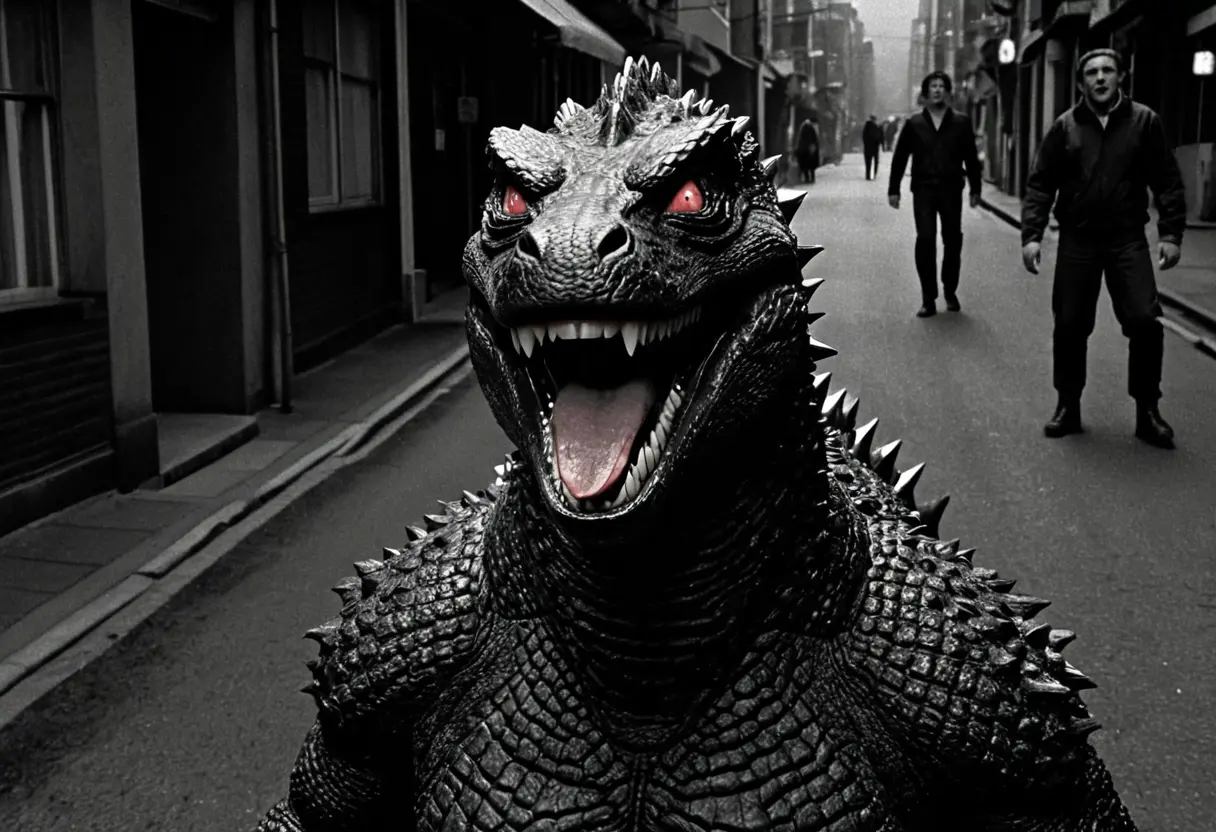
4. Reconstructing the Kaiju Myth
The Man in the Suit re-imagines Godzilla not just as a symbol of nuclear war, but as a tragedy of human loss. It reminds us that icons are often built on the suffering of those who portray them. Every time we see the silhouette of the monster on screen, we are now forced to remember the voice of the man trapped behind the rubber, screaming for a release that never came.