Local 58: This Broadcast is Not For You
1. The passive Observer: Broadcast as Found-Footage
Before Local 58, internet horror mostly lived in text-based forums (Creepypastas). Straub revolutionized the medium by removing all narration and explanations. Instead, the viewer is presented with raw, “captured” footage of a master control room being subverted by an unknown, malicious force.
We watch as nostalgic 1980s weather reports and children’s programming shift into disturbing warnings and hypnotic, brainwashing messages. This “passive terror”—the feeling of witnessing a historical event that has already ended in tragedy—is what makes the series so intoxicatingly bleak.

2. ‘The Moon’: The Absolute Despair
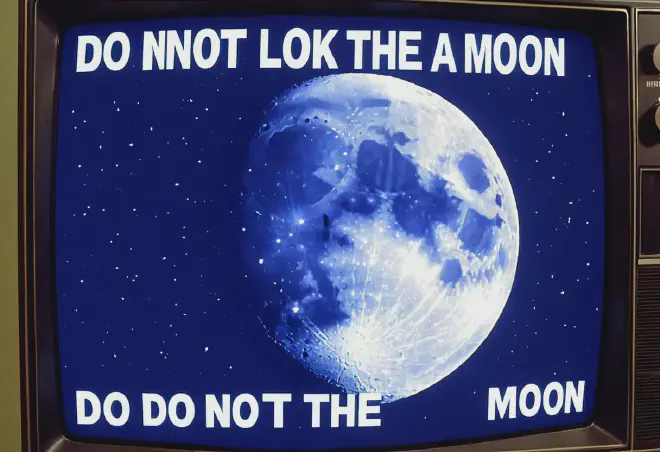
The recurring mystery of the series is the Moon . In the episode Weather Service, a standard meteorological alert is hijacked by a voice that commands the audience to “go outside” and “look at the moon.”
Meanwhile, the original system (or a desperate operator) fights back, flashing warnings: “DO NOT LOOK AT THE MOON” and “DO NOT LOOK AT THE MIRRORS.” The familiar celestial body is re-imagined as a “Compelling Other”—a cosmic horror that monitors humanity and lures them into madness directly through their television screens.
3. ‘Contingency’: The Betrayal of the State
Perhaps the most famous episode is Contingency. It presents as a pre-recorded government broadcast intended for a scenario where the United States has been defeated by a foreign power. Its instruction to the citizens is simple and horrifying: Mass suicide for the sake of patriotism. By weaponizing the inherent trust we place in public infrastructure, Local 58taps into a deep-seated fear that the systems designed to protect us can easily be turned into the instruments of our destruction.

4. The Aesthetic of Silence
The success ofLocal 58 lies in its refusal to explain itself. Straub’s commitment to the silence of the machine and the decay of the tape invites the viewer to imagine the horrors occurring just off-screen. It suggests that the monsters are not in the woods, but in the very wires and signals that connect our society.