Analog Horror: Decayed Memories


The Grammar of Digital Decay *Introduction: The Nightmare in the Static : Why does low-resolution footage terrify us more than high-definition? Understanding the ‘Uncanny Valley’ of the VHS era. *Local 58: The Progenitor : (Coming Soon) Experience the broadcast history of a station that saw too much of the night sky. *The Mandela Catalogue: Psychological Infestation : (Coming Soon) Be careful who you let into your home. The ‘Alternates’ are already among us.


The Threshold of the Screen

Analog Horror is more than just a style; it is a way of seeing the world as a series of fragile, physical records that can be infected by the supernatural. As you browse these archives, remember: the noise isn’t just on the screen. It’s in the memory.


Welcome Home: The Neighbor in the Walls

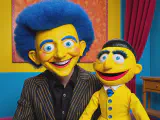
1. Wally Darling: The Silent Center The protagonist of the neighborhood is Wally Darling , a soft, yellow puppet with a permanent smile and a penchant for painting. Unlike his energetic neighbors, Wally often feels still, observing the world with an intensity that borders on predatory. He is the only character who seems aware of “us”—the viewers. In the hidden corners of the Welcome Home Restoration Project website, Wally’s messages can be found, suggesting that he is not just a character on a film reel, but a conscious entity reaching out to the “Neighbors” on the other side of the screen.
Marble Hornets: The Architect of the Digital Shadow

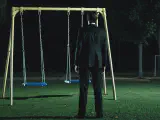
1. The Entry # Archive The story begins with Jay, a young filmmaker, who acquires the unedited raw footage of a failed student film titled Marble Hornets from his missing friend, Alex Kralie. During the shoot, Alex had spiraled into an intense, violent paranoia, obsessively filming his every move before eventually abandoning the project and vanishing. As Jay reviews the tapes—uploading them as “Entries” on YouTube—he discovers that Alex was being stalked.

The Oldest View: The Giant Beneath the Mall

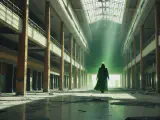
1. The Abyss of Valley View Center The series is set in the Valley View Center in Dallas, Texas, a massive mall that was completely demolished in 2023. The story follows a young urban explorer who discovers a hidden, impossibly deep hole in the floor of the mall’s basement. Stepping into it, he finds himself in a subterranean recreation of the mall itself. Through Kane Pixels’ masterful VFX, the viewer is swallowed by the “Liminal Space” of the dead mall—a place that feels nostalgic, vacant, and fundamentally wrong.

The Man in the Suit: The Fusion of Flesh and Rubber

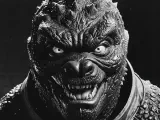
It reveals the process by which a man became a “monster” not through acting, but through a horrific biological transmutation. 1. 1954: The Meltdown of Identity The story begins on the set of the firstGodzilla. The suit actor playing the monster began reporting strangeness during the grueling shoots. “The suit is hot,” he complained. “I cannot get out.” What was initially dismissed as exhaustion or a skin reaction to the heavy latex became something far worse.

The Monument Mythos: The History of the Cage

1. Deanverse: The World that Diverged The story takes place in a timeline that mirrors our own but has fatal, structural differences: *James Dean did not die in a car crash; instead, he became the 37th President of the United States, ruling with an increasingly autocratic and mysterious agenda. *Alcatraz Island has its own consciousness and is physically “replicating,” threatening to consume the West Coast. The Rockefeller family rules from the shadows, utilizing a supernatural energy source known as “Special Trees.

Vita Carnis: The Biology of the Living Meat

1. The Crawl: A New World of Flesh The foundation of the Vita Carnis universe is a mass of living meat that appeared after the chaos of the First World War. Initially dismissed as organic debris, “The Crawl” evolved at an impossible speed, branching into diverse and functional forms that now inhabit every corner of the globe. In this reality, “The Meat” is a part of everyday life. Some forms are kept as pets, while others are used as food sources or seasonings.

The Walten Files: The Ghost in the Machine

1. ‘Bon’s Burgers’: The Rotting Dream The story begins in the 1970s with two men: Jack Walten and Felix Kranken. Together, they opened “Bon’s Burgers,” a dream restaurant filled with state-of-the-art animatronics designed to bring joy to children. However, a horrific car accident caused by Felix’s negligence shattered their dream, leading to the death of Jack’s youngest children. This tragedy triggered a spiral of guilt, concealment, and the eventual disappearance of Jack Walten himself.

Gemini Home Entertainment: The Planetary Predation

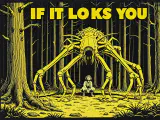
1. The Corruption of Learning The brilliance of GHE is its commitment to the “Training Video” format. It uses the language of education to normalize the abnormal: *‘Wildlife Guide’ : It describes the anatomy of the “Woodcrawler”—a creature that mimics human appendages—as if it were a common, albeit dangerous, endangered species. *‘Backyard Camping Guide’ : It provides a clinical checklist for identifying “Skin-Walkers” (Nature’s Mockery) that might be watching your family from the edge of the firelight.

The Mandela Catalogue: The Invasion of the Self

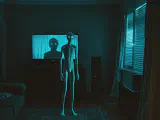
1. The ‘Alternates’: The Mimics of the Abyss The central threat of the series is the Alternates —unknown entities whose goal is to replace and erase human beings. They are not simple monsters; they are mimics that exist within the cracks of our perception. Their terror is defined by the Uncanny Valley : a distorted transformation characterized by elongated limbs, hollow black eyes, and a physiological “wrongness” that triggers an immediate instinctual flight response.

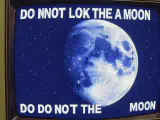
Local 58: This Broadcast is Not For You

1. The passive Observer: Broadcast as Found-Footage Before Local 58, internet horror mostly lived in text-based forums (Creepypastas). Straub revolutionized the medium by removing all narration and explanations. Instead, the viewer is presented with raw, “captured” footage of a master control room being subverted by an unknown, malicious force. We watch as nostalgic 1980s weather reports and children’s programming shift into disturbing warnings and hypnotic, brainwashing messages. This “passive terror”—the feeling of witnessing a historical event that has already ended in tragedy—is what makes the series so intoxicatingly bleak.