The Crying Boy: The Portrait that Defies the Inferno

In 1985, a headline from Britain’s largest tabloid, The Sun, transformed peaceful breakfast scenes into landscapes of terror: “Blazing Curse of the Crying Boy!”
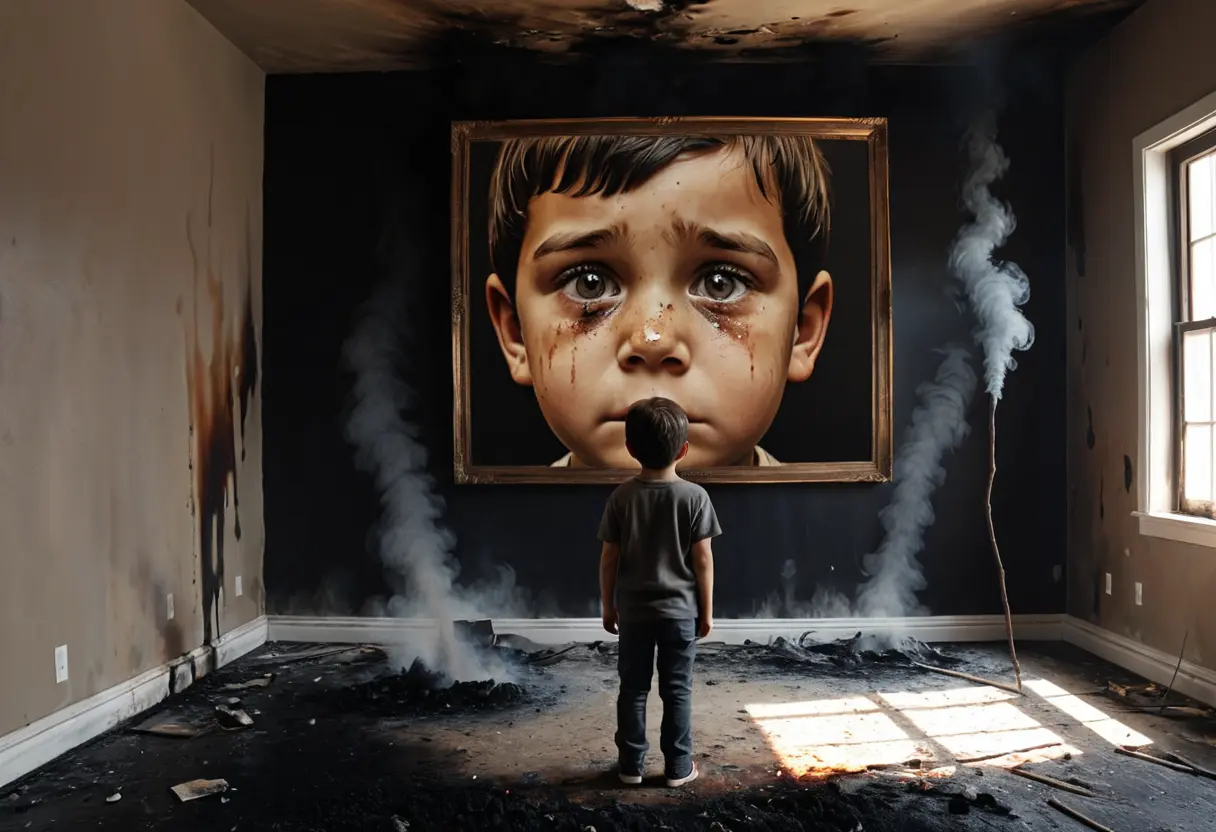
It was an indictment of an inexplicable phenomenon: at fire scenes across the country, where everything else had been reduced to ash, one cheap mass-produced print—the portrait of a weeping orphan—was consistently found “unsinged,” without a single speck of soot on its surface.
1. The Heritage: The Proliferation of Maimed Innocence
The artist behind these paintings was the Italian painter Bruno Amadio (also known as Giovanni Bragolin). In post-war Europe, he produced a series of “Crying Children” intended to evoke nostalgia and pity. Millions of these prints were distributed worldwide as affordable interior decor. *The Inauspicious Backstory : Rumors claimed the model was a young orphan named “Don Bonillo,” whose parents died in a fire and who was cursed so that fires would break out wherever he went. He eventually died in an explosion, and it was believed his dying resentment inhabited every copy of the “Crying Boy.”
2. The Implementation: Mass Hysteria and the “Holy Bonfire”
Driven by The Sun’s reporting, a nationwide panic erupted. The paper was flooded with letters from readers claiming they had experienced persistent misfortune or that the painting had “fallen from the wall” of its own accord since they purchased it. *The Festival of the Bonfire : To quell the panic, the newspaper collected thousands of the prints from its readers and organized a massive, televised bonfire on Halloween night. This event became a symbolic moment where the media maximized “Terror as Entertainment” while simultaneously digesting the public’s anxiety.
3. Analysis: The “Miracle” of Fire-Retardant Varnish
Later investigations, including those by the BBC, revealed a clear scientific basis for why the prints often survived fires. These mass-produced copies were treated with a thick layer of cheap, flame-retardant varnish. Furthermore, the string holding the frame would often burn through first, causing the painting to fall face-down on the floor, effectively protecting the boy’s face from the intense heat and soot.
However, the reason this “specific image” garnered such intense attention at fire scenes lies in the primal uncanny nature of the boy’s face. It looks as though he is “warning the viewer of something,” a look that paralyzes our rational centers. Science can explain “why it didn’t burn,” but it cannot lift the psychological curse of why we feared it so much in the first place.
*The Anguished Man: The Legacy of Blood and Madness : A contrast with art that was hidden rather than mass-produced. *Media and the Urban Legend: The Architecture of Panic : Analyzing how The Sun fueled a nationwide obsession. *Interior Occultism: The Gaps in Daily Life : Is the painting on your wall truly safe?