The Hope Diamond: The Deep Blue Malediction of the Elite

Behind the thick, bulletproof glass of the Smithsonian Institution, the gem sits in quiet regality, bathed in its mysterious “Hope Blue.” At 45.52 carats, it is the world’s most famous diamond, but its record of “Death and Ruin” is as vast as its brilliance.
When exposed to ultraviolet light, the diamond glows a blood-red phosphorescence in the dark. While science explains this as the presence of boron atoms, former owners viewed it as the “Anger of the Goddess Sita” or the “Flames of the Curse,” watching it with trembling eyes.
1. The Heritage of Sin: The Blue Eye Stolen from a God
Legend states that the diamond was originally embedded as the “eye” of a goddess statue in a temple in India. It was reportedly stolen by the French merchant Jean-Baptiste Tavernier. *The Inception of the Foul : Tavernier, the one who desecrated the sacred site, is said to have met a gruesome end, reportedly torn apart by wild dogs in Russia. From that moment on, the gem cast a shadow of despair over every hand that held it. *The End of Royalty : King Louis XIV died of smallpox after acquiring the stone, while King Louis XVI and Marie Antoinette faced the guillotine before its brilliance could fade. The collapse of the French Monarchy was merely a milestone in the diamond’s long journey of tragedy.
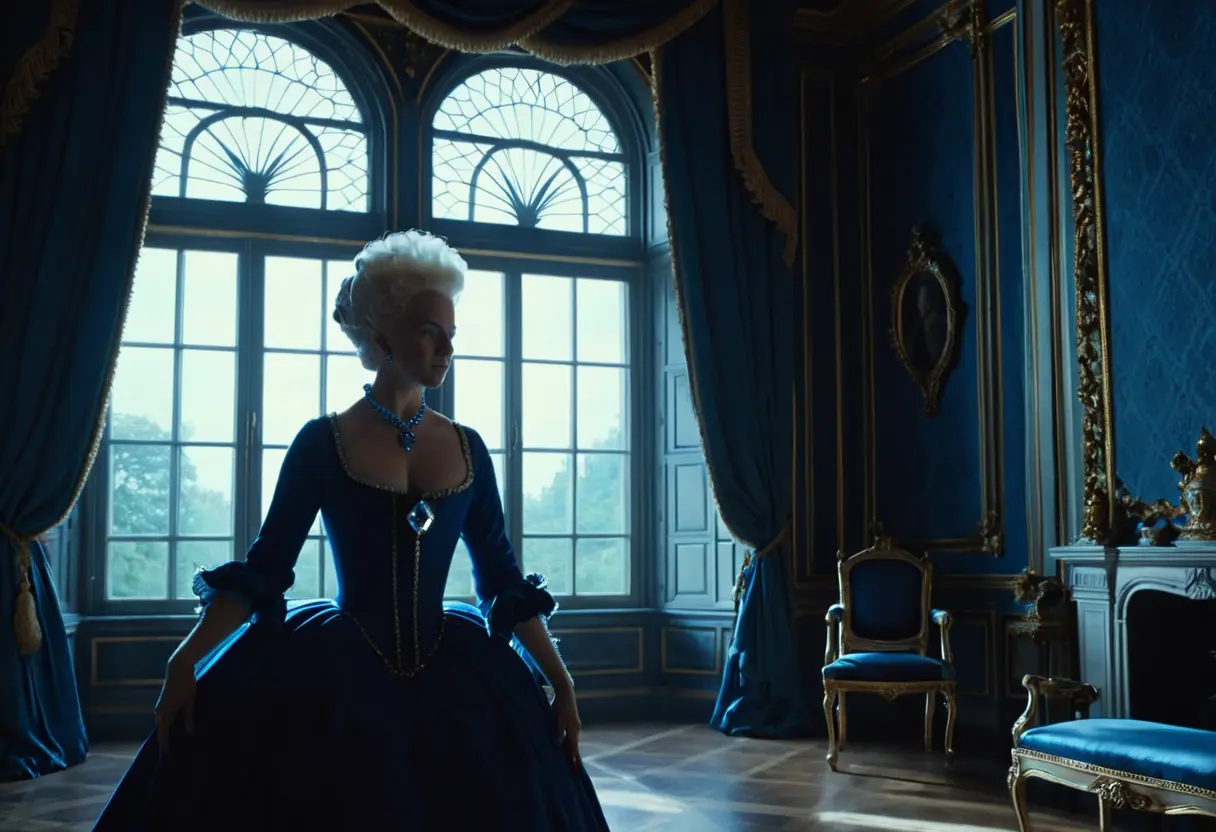
2. The Cycle of Ruin: From Bankers to Billionaires
In the 19th century, the London banker Henry Philip Hope purchased the diamond, giving it its current name. However, his lineage faced bankruptcy and eventual dissolution. *The Tragedy of Evalyn Walsh McLean : In the early 20th century, American socialite Evalyn McLean acquired the stone. She witnessed the total collapse of her family: the accidental death of her son, her husband’s institutionalization for insanity, and her daughter’s suicide. She refused to part with the diamond until the end, but the price she paid was far heavier than its weight in carats.
3. The Seal: Public Ownership as a Grave
In 1958, the legendary jeweler Harry Winston donated the diamond to the Smithsonian Institution, effectively ending the cycle of personal ownership. Even then, the curse offered a final resistance—the delivery driver of the gem suffered a horrific accident, and his home burned to the ground shortly after. Since integrated into the national collection, the stone has had no individual master to prey upon.
Beauty is, at times, a form of violence. The deep blue glow of the Hope Diamond serves as a cold reminder of how powerless human desire is against the tides of fate. When you visit the museum and find yourself captivated by its sparkle, remember: your small flicker of desire was perhaps calculated by the gem long ago.
*The Registry of Real Curses: Collections of Death : A global map of warnings left by inanimate objects. *Annabelle: The Conduit of the Profane : When the vessels of play become agents of possession. *Historical Mysteries: The Relics of Power : Tracing the treasures that brought down empires.