The Dybbuk Box: A Digital Legend of Ancient Malice

In 2003, a listing appeared on eBay that would change the landscape of modern occultism: “A Cursed Jewish Wine Cabinet.” This seemingly ordinary piece of antique furniture quickly spread through the internet’s neural pathways, evolving into one of the most infamous cursed objects in history.
Allegedly designed to contain a Dybbuk —a malevolent spirit from Jewish folklore—the box was blamed for hair loss, pneumonia, and electrical failures in the homes of its owners. However, the true horror of the Dybbuk Box lies not in the ghost, but in the power of the “Narrative” that gave it life.
1. The Props: Supplementing Reality
The creator, Kevin Mannis, did not release the box as a mere product but as “Interactive Horror.” To stimulate the imagination of his audience, he filled the cabinet with symbolic items designed to evoke a visceral reaction. *Hair and Coins : Two locks of hair (one blonde, one brown) and two 1920s pennies. These items provide a physical trace of “former owners,” creating a sense of historical weight and physiological discomfort. *The Dried Rosebud : A symbol of death, decay, and the end of beauty. This item succeeded in granting the box a “magical” or “ritualistic” aura that transcended its wooden origin.
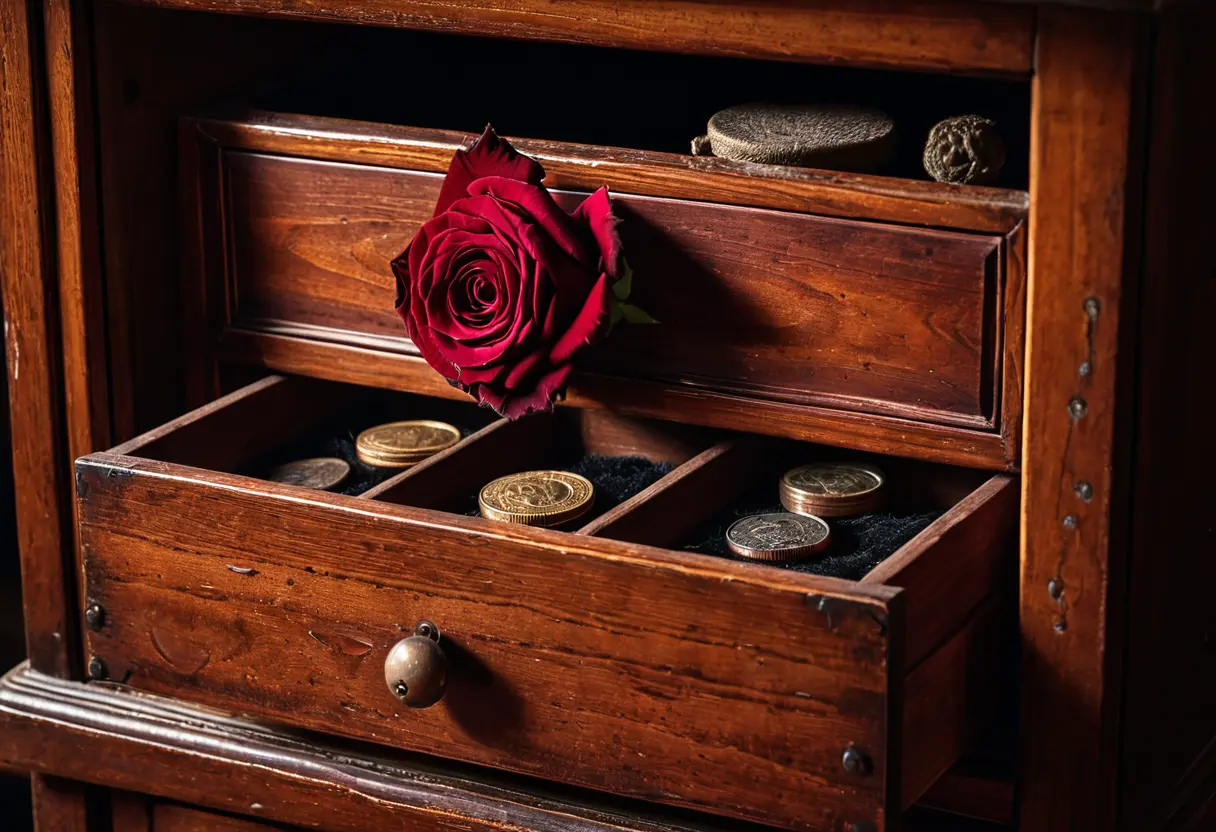
2. Viral Persistence: When the Story Outruns the Creator
In 2021, Mannis confessed that the entire story was a “hoax”—a creative writing project intended for the digital age. Yet, the curse did not disappear. The “Implementation” of the fear remained social and persistent. *The Post Malone Incidents : When the popular singer Post Malone experienced a string of misfortunes—a car accident, an airplane emergency, and a home invasion—after coming into contact with the box, fans doubled down on the belief. For them, Mannis’s confession was the lie, and the curse was the reality. *Log-Based Truth : In the digital space, “Fact” is not something to be verified; it is a phenomenon that is “implemented” once enough people believe it. The fear, once logged into the collective memory of the internet, becomes nearly impossible to erase.
3. Analysis: Consuming the “Desire to Believe”
The Dybbuk Box reveals that modern occultism is no longer confined to dusty grimoires; it is being “generated” right now behind your browser.
When faced with irrational misfortune or illness, many find it easier to believe in the “work of a named spirit” rather than accepting the world as a series of indifferent coincidences. The box provided the perfect container for this psychological void—a 21st-century puzzle box that offered explanation through terror.
*Slender Man: The Entity Born from Pixels : Investigating the first generation of digital anomalies. *Kotoribako: The Box of Stolen Children : A Japanese parallel to the cursed cabinet archetype. *The Architecture of the Hoax: From Lie to Legend : How stories transition into the realm of the “Real.”