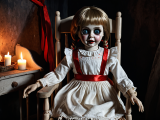
Real Cursed Objects: The Mass of Death behind the Glass

If folklore represents “Fear that is Told,” then real-world cursed objects represent “Despair that is Present.”

These are not products of imagination; they have been touched by human hands, ruined lives, and continue to occupy physical space in our three-dimensional world. They exist as unsolvable “Errors” in the infrastructure of reality.


Negative Attraction: When Matter Consumes Will

Real-world cursed objects often hide behind beauty or “cuteness.” A curse’s circuit is established through physical contact or prolonged emotional attachment—often triggered when a person desires to own or pity the object. *Contracts of Ownership : Objects like the Hope Diamond or Busby’s Stoop Chair rewrite legal and social ownership into a binding contract of death. *Toys as Vessels : Dolls such as Annabelle or Robert , once childhood friends, acquire a distinct “Will” when attachment turns into resentment, eventually dominating or contaminating their environment. *The Digital Witness : In the cases of The Anguished Man or The Dybbuk Box , phenomena are recorded and amplified by modern technology. These curses no longer remain in one location; they can infiltrate the psyche of anyone observing them through a screen.
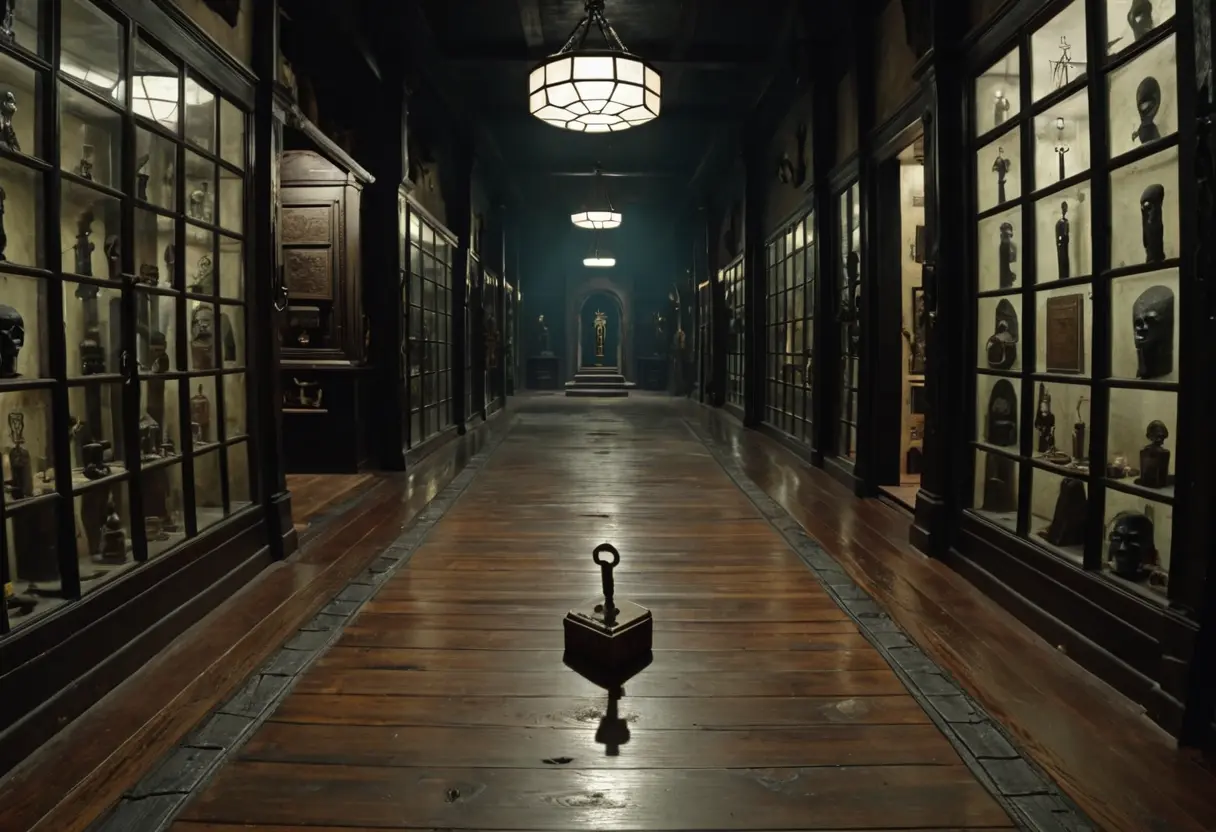
A dark interior of an occult museum department.


The Prison of the Museum

Many of these objects are now “Housed”—or rather, incarcerated—within specific museums or temples.

This is less of an exhibit for public enjoyment and more of a ritualistic measure. The constant gaze of countless visitors acts as a “Weight” to suppress the entity’s power. Behind the glass lies not a relic of history, but a living malice that remains pulsating, waiting for its next “Master” (Target).

Please be aware that as you observe these records, your gaze may already be “Detected.”


[!CAUTION]

Delving too deeply into the details of real-world cursed objects can sometimes forge an unwanted “Bond.” If you feel any physical discomfort or unidentifiable anxiety, close this page immediately and return to the light of reality.


Beyond the movie screen. Exploring the real Raggedy Ann doll that the Warrens deemed the most dangerous object in their collection.

Where wealth meets tragedy. Investigating the 45-carat gem that brought down the French Monarchy and ruined American billionaires.

The entity that demands an apology. A study on the sentient doll that expects absolute respect from its observers.



The Catalog of the Anchored *Busby’s Stoop Chair: The Deadly Seat : The furniture that ensures its users never rise again. *The Dybbuk Box: The Digital Anomaly : When ancient Jewish spirits are manifested through auction sites. *The Anguished Man: The Painting of Blood : A canvas embedded with the artist’s final suffering. *The Okiku Doll: The Perpetual Growth : Japan’s iconic living artifact of grief and hair. *The Crying Boy: The Fire-Proof Orphan : The mystery of the prints that survive the flames.

The Crying Boy: The Portrait that Defies the Inferno

In 1985, a headline from Britain’s largest tabloid, The Sun, transformed peaceful breakfast scenes into landscapes of terror: “Blazing Curse of the Crying Boy!” It was an indictment of an inexplicable phenomenon: at fire scenes across the country, where everything else had been reduced to ash, one cheap mass-produced print—the portrait of a weeping orphan—was consistently found “unsinged,” without a single speck of soot on its surface. 1. The Heritage: The Proliferation of Maimed Innocence The artist behind these paintings was the Italian painter Bruno Amadio (also known as Giovanni Bragolin).

The Anguished Man: The Painting Sealed with Life's Blood

In the basement of Sean Robinson’s home in Cumbria, England, a painting remained tightly wrapped and hidden for twenty-five years. It is known as “The Anguished Man.” What this canvas emits is not the aestheticized fear of a movie prop, but the primal dread of a “Physical Residue of Agony.” The reason for its notoriety lies in the source of its pigments: the artist reportedly mixed his own blood into the oil paints, literally embedding his vital fluid into the canvas before taking his own life.

Robert the Doll: The Living Legend that Demands Respect

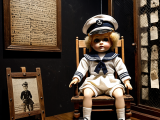
At the Fort East Martello Museum in Key West, Florida, there sits an entity known simply as Robert . At first glance, he appears to be an outdated, slightly worn mascot doll. However, he is known globally as one of the most arrogant and etiquette-driven cursed objects in existence. This sailor-suited doll, with his button eyes and textured, “pocked” face, is no mere display. He remains the master of his domain, continuing to demand absolute “respect” from every visitor who crosses his path.

The Okiku Doll: The Eerie Artifact of Living Hair

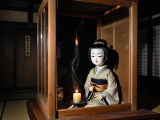
At Mannen-ji Temple in Iwamizawa, Hokkaido, sits an artifact that houses the soul of a young girl. Standing approximately 40 centimeters tall, the Okiku Doll appears to be a typical, aged Ichimatsu doll. However, those who focus on its hair invariably feel a cold shudder down their spine. Originally trimmed to shoulder length, the doll’s jet-black hair has grown steadily over the decades, now reaching down to its waist. This is not a curse of malice, but a manifestation of a powerful, bittersweet attachment left behind by a life cut short.

The Hope Diamond: The Deep Blue Malediction of the Elite

Behind the thick, bulletproof glass of the Smithsonian Institution, the gem sits in quiet regality, bathed in its mysterious “Hope Blue.” At 45.52 carats, it is the world’s most famous diamond, but its record of “Death and Ruin” is as vast as its brilliance. When exposed to ultraviolet light, the diamond glows a blood-red phosphorescence in the dark. While science explains this as the presence of boron atoms, former owners viewed it as the “Anger of the Goddess Sita” or the “Flames of the Curse,” watching it with trembling eyes.

The Dybbuk Box: A Digital Legend of Ancient Malice

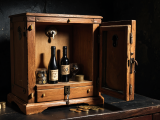
In 2003, a listing appeared on eBay that would change the landscape of modern occultism: “A Cursed Jewish Wine Cabinet.” This seemingly ordinary piece of antique furniture quickly spread through the internet’s neural pathways, evolving into one of the most infamous cursed objects in history. Allegedly designed to contain a Dybbuk —a malevolent spirit from Jewish folklore—the box was blamed for hair loss, pneumonia, and electrical failures in the homes of its owners.

Busby's Stoop Chair: The Deadly Throne of the Reaper

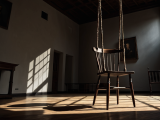
In the Thirsk Museum in North Yorkshire, England, there exists a piece of furniture that physically rejects its primary purpose. Suspended from the ceiling by thick ropes and fixed several feet above the floor is an old oak chair. This unusual display is not for aesthetic reasons. It is a necessary measure of public safety, for history suggests that anyone who dares to entrust their weight to this seat will be served a permanent eviction notice: death.

Annabelle: The Profane Will within the Innocent Doll

Annabelle is perhaps the most famous cursed object in the world. While her cinematic counterpart in The Conjuring universe is a grotesque antique doll with cracked skin, the reality is far more “inconveniently ordinary.” The actual doll, currently housed in the Warrens’ Occult Museum in Connecticut, is a simple, mass-produced Raggedy Ann doll with red yarn hair and button eyes. This stark contrast—the “cuteness” of the vessel versus the “rot” of the spirit—was the primary strategy used by the entity to infiltrate the lives of its victims.