History is always written by the winners. However, between the lines of those celebrated records lie the long shadows of “Secret Societies” —groups that have manipulated situations, accumulated unfathomable wealth, and sought to transform societal values while keeping their true intentions, and often their very names, fiercely guarded.
Some held masonic compasses in their hands to preach ‘Liberty,’ some raised the red cross to operate international ‘Banks,’ and others sought to burn down established ‘Thrones’ with the blinding light of enlightenment. They were not just isolated groups; they functioned as the hidden “OS” (Operating System) silently moving the era forward.
1. A “Privileged Network” in the Name of Secrecy
Why do people of power always seek to share secrets? Because secrecy serves as the ultimate boundary, clearly separating the “Insiders” (the chosen elites) from the “Outsiders” (the ignorant masses).
Unique occult rituals, secret handshakes, esoteric passwords, and complex grading systems—these became the foundation for a powerful, intoxicating self-consciousness of “being on the side that truly knows how the world works.” Throughout history, this closed network has repeatedly transformed into political and economic power that effortlessly crosses national borders and outlives empires.
2. “The Myth of the Order” as a Seedbed for Paranoia
When revolutions abruptly shake history or kings die under suspicious circumstances, the masses desperately seek to find an “all-powerful, invisible plan” behind the chaos.
If Freemasons spoke of liberty, the nervous crown decried it as a “devilish plot to destroy the monarchy”; if the Knights Templar amassed vast wealth through early international banking, the indebted state suppressed them by accusing them of “heresy and dark magic.” The enduring myth of the secret society is a heavy tapestry woven from layers of historical Fact and the profound Fear (Fiction) held by those who felt powerless against them.
3. Analysis: The “Fire of Enlightenment” Protected in the Shadows
It is easy to dismiss these historical secret societies as mere “villains plotting behind the curtain.” However, their retreat into the shadows and the fierce protection of their secrets was often the only way to keep alive the “Fire of Thought”—ideas of democracy, science, and humanism—that were far too dangerous to be spoken aloud under the watchful eyes of the Inquisition or absolute monarchs.
Here, we trace the genealogy of the shadow rulers behind the beautiful facade of official history—those who have, at times, accelerated the enlightenment of the world, and at other times, ruthlessly controlled it.
Exploration List of Historical Depths
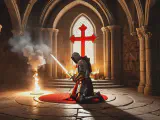
The Genealogies of Order and Wealth *Freemasonry: The Masonic Fraternity and the Secret Myths that Move the World : Investigating the architectural spiritual world of the globe’s largest and most misunderstood fraternity, from cathedral builders to founding fathers. *Knights Templar: The Fate of the ‘Divine Bankers’ who Vanished with the Holy Grail : Decoding the journey from protecting pilgrims in the Holy Land to inventing modern banking, and their fiery Friday the 13th demise.
The Shadows of Enlightenment and Revolution *The Illuminati: The Reality of the ‘Strongest Ghost’ Born of Bavarian Enlightenment : Investigating Adam Weishaupt’s short-lived order that became the eternal synonym for the New World Order and global domination.