Moon Landing Conspiracy: Was Mankind’s Greatest Feat a 'Hollywood Special Effect'?

1. “Objections” to Physics: Anomalies Hidden in the Footage
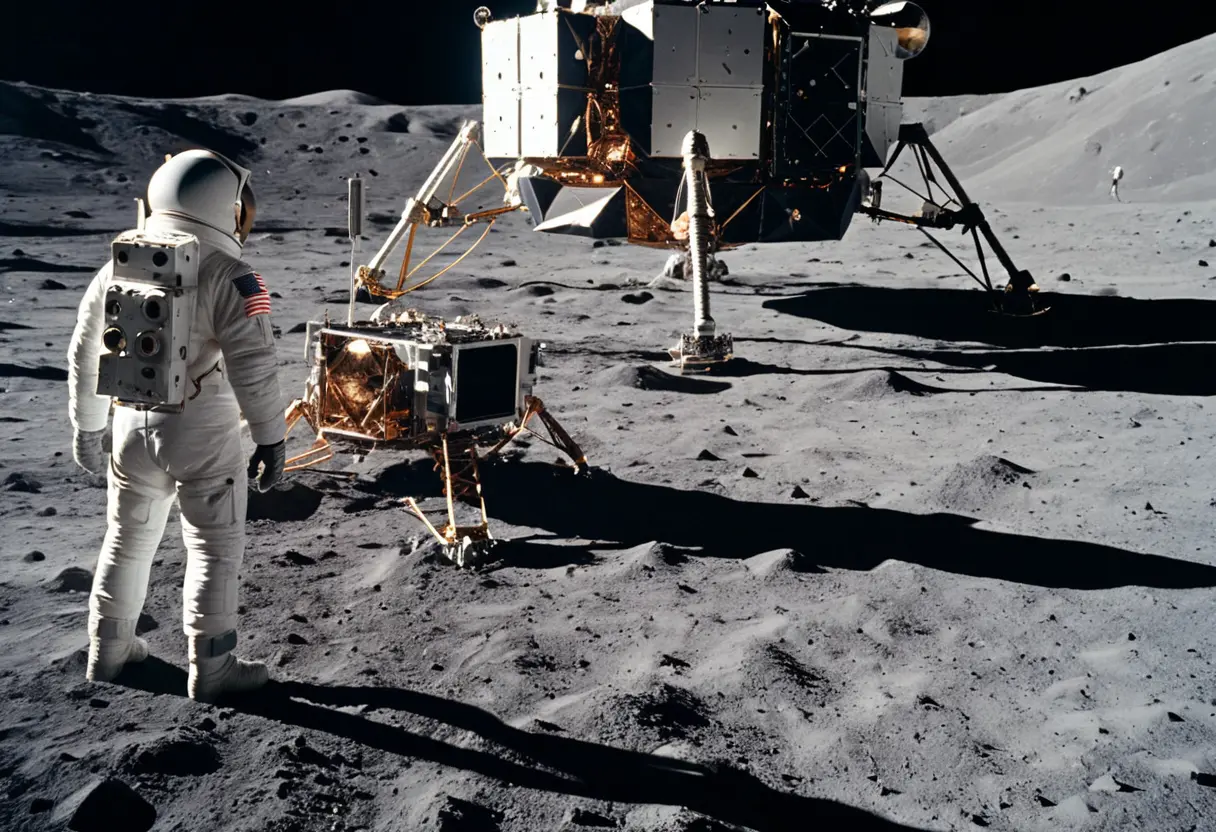
The contradictions presented by conspiracy theorists as “irrefutable evidence” have now become standard puzzles in subculture. *The Waving Flag on an Airless Moon : Why is the Stars and Stripes fluttering as if blown by the wind? Could it be a fan in the studio? (NASA counters that it is merely the vibration from the physical placement of the flag, which does not dissipate in a vacuum). *Stars that Vanished into the Pitch-Black Sky : Why are there no stars in the background despite the shoot being in outer space? (This is an optical result of the camera’s exposure settings, but in conspiracy circles, it is marked as a “set mistake”). *Intersecting Unnatural Shadows : If there were only a single light source (the sun), the shadows should be parallel. Does the fact that shadows extend in multiple directions prove the use of multi-directional studio lighting? *The Wall of the Van Allen Belts : Was it physically impossible to penetrate the intense radiation belts surrounding Earth and return alive using the fragile technology of the time?
2. The “Director” named Politics: Why was a Lie Necessary?
The most powerful counter-argument to this conspiracy theory lies not in scientific data, but in the extreme political climate of the time. *The Soviet Union as the Ultimate Observer : If the Apollo missions were faked, who would have wanted to expose them most? It would be the USSR, the rivals in the Space Race. Their radar and communication intercept networks were monitoring 24/7 to see where the signals from Apollo 11 were actually originating. The fact that the Soviet Union officially recognized NASA’s success (thereby admitting defeat) is the ultimate political proof that the landing was a fact.
3. Analysis: The Desire to Deny “Myth” and Land in Reality
Why do humans want to deny such a great achievement of their own species?
One reason is that the mission—going to the moon and returning unscathed using the technological power of half a century ago (with processing power a fraction of a modern smartphone)—is so surreal that, to modern eyes, it looks beyond a “miracle” and into the realm of “fiction.”
Furthermore, after the Vietnam War and Watergate, the public developed a cruel realism: “the government will blatantly tell organized lies to protect its own prestige.” The Moon Landing conspiracy is not distrust of space; it is an expression of endless, and perhaps justifiable, skepticism toward the “official myths created by the giant power that is the State.”
4. Professional Insight: Eternal Noise Echoing in the Sea of Silence
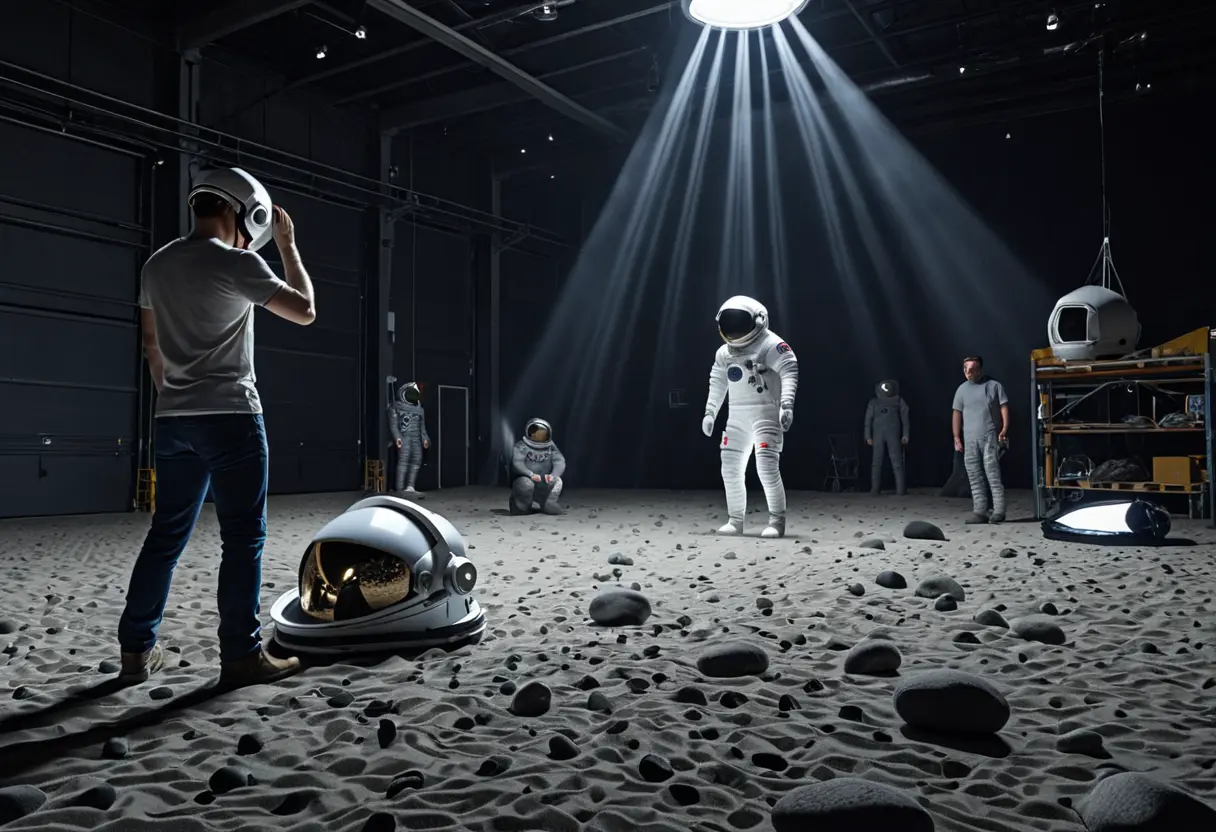
To modern people, the “technology to make one believe they went to the moon” feels more familiar and real than the fact of actually “going to the moon.” In an era where reality is easily overwritten by CG and AI, the Apollo footage serves as a litmus test for “what we define as truth.”
Whether the flag planted in the Sea of Tranquility is still there, or never existed at all—the answer is hidden not at the end of a telescope, but within our “distance of trust relative to authority.”
*Flat Earth: Full-Scale Rebellion against Science and the Globe : Investigating the extreme cosmic view beyond moon landing denial. *Area 51: The World’s Most Famous Secret Base : Exploring the candidate “filming site” for the Apollo conspiracy. *NASA: The Gatekeeper of Information and ‘Hidden Space Truths’ : Decoding the organization accused of monopolizing cosmic reality. *Stanley Kubrick: The ‘National Secret’ Entrusted to the Director : Investigating the legend that he created the greatest special effects in history. *Mars Colonization: Modern Space Race and New Seeds of Conspiracy : Investigating the recurrence of distrust and longing for space.