Investigation: Are Elves Born of Disease or Displacement? The Roots of the Fair Folk

The Elf . In modern fantasy, the image is standardized: golden-haired, pointed ears, graceful, and immortal.
This archetype, perfected by J.R.R. Tolkien in The Lord of the Rings, has become our universal definition. However, before the 20th century, the “Elf” was something far more diverse, unpredictable, and often deeply unsettling. Why did humanity create the concept of the “Neighbor”—a being so similar to us, yet fundamentally other?
We explore the origins of the Elven race through the lenses of ancient folklore and surprising medical evidence.
1. Elves of Myth: The Shining and the Hidden
The Norse “Álfr”
The word “Elf” originates from the Old Norse álfr. In Norse mythology, these beings were not a single race but were categorized by their relationship to the light: *Light Elves (Ljósálfar) : Beings fairer than the sun, residing in Álfheimr. They were nearly divine, intermediaries between gods and men. *Dark Elves (Dökkálfar) : Inhabitants of the earth, often indistinguishable from Dwarves (Dvergar). They were “blacker than pitch.”
Interestingly, these original elves were not necessarily “small.” They were elemental spirits of nature. It was only as the centuries passed that they were diminished into “garden fairies” or “shoemaker’s imps.” Tolkien’s great achievement was effectively “restoring” them to their noble, ancient stature.
The Tuatha Dé Danann: Shadow of the Displaced
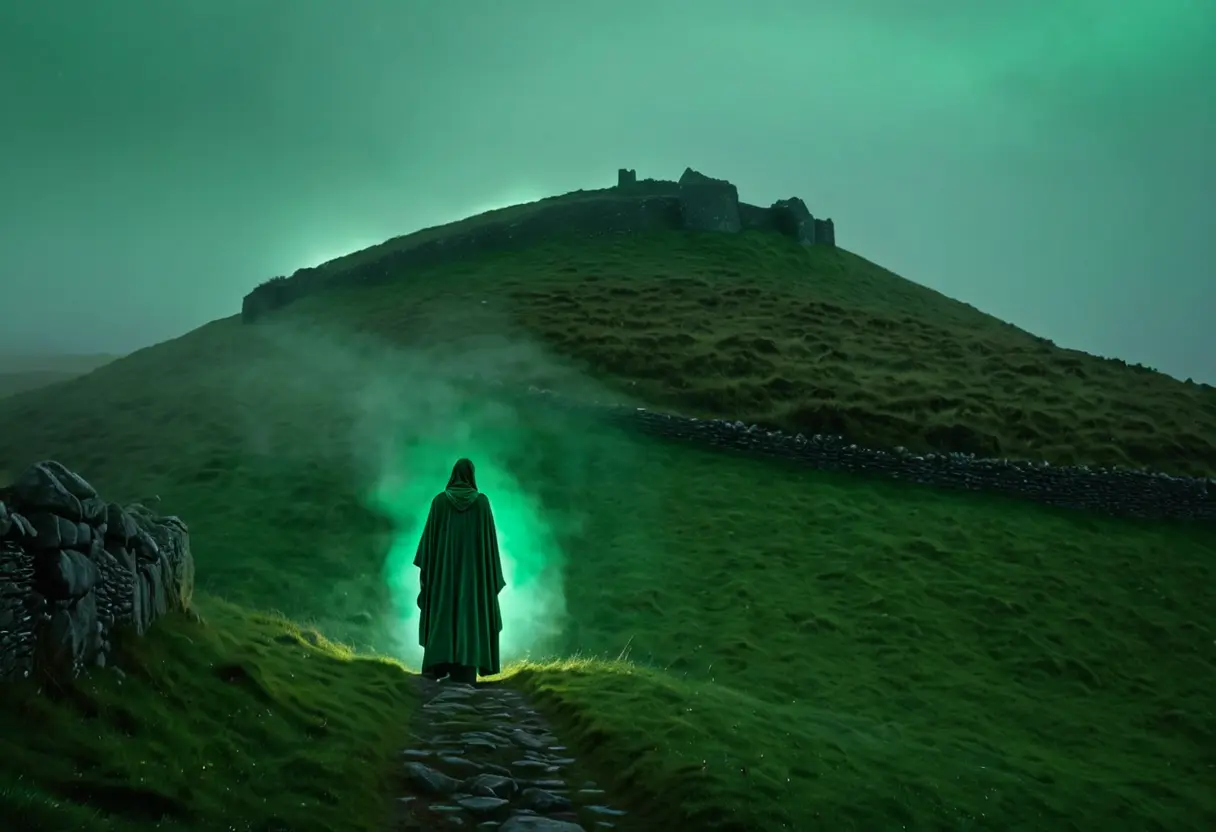
In Irish mythology, the Tuatha Dé Danann (The People of the Goddess Danu) were a race of god-like beings who possessed advanced magic. After losing a war against the ancestors of modern humans (the Milesians), they retreated into the “Otherworld,” dwelling inside the ancient mounds (Sídhe).
They became the Aos Sí —the Fair Folk. Many historians believe this legend reflects a cultural memory of the Bronze Age indigenous peoples who were displaced by iron-wielding invaders. The common folklore that fairies “fear cold iron” is a likely remnant of this technological clash between two civilizations.
2. The Medical Elf: Williams Syndrome
Beyond mythology, some researchers propose that the “Elf” and “Faerie” legends have a basis in real-world medical observations. One of the most striking theories involves Williams Syndrome .
This genetic condition, caused by a micro-deletion on chromosome 7, results in a specific set of physical and behavioral traits that align perfectly with folklore descriptions of the “Fair Folk”: *“Elfin” Facial Features : Characteristic traits include a broad forehead, upturned nose, full cheeks, and a small chin—a look that mirrors the classic “pixie” or “elf” face found in Western art. *Hyper-Sociability and Musicality : Individuals often possess a “Cocktail Party” personality—extremely friendly, fearless of strangers, and highly talkative. They also frequently exhibit a profound affinity for music and a heightened sense of hearing.
The Tragedy of the “Changeling”
In European folklore, a Changeling was an elven child left in the place of a stolen human baby. Parents would notice:
A healthy child suddenly failing to thrive or growing “slowly.” A dramatic shift in personality (extreme irritability or unexpected, uncanny friendliness).
- A change in physical appearance.
Tragically, these “Changelings” were likely children born with congenital conditions like Williams Syndrome or Autism. Lacking a scientific framework, medieval parents used the “Elf” narrative to explain the inexplicable “theft” of their child’s expected future.
Conclusion: Awe and the Architecture of the Other
Our investigation reveals that the “Elf” is a synthesis of two deep human needs:
Historical Preservation : A way to process the awe and fear felt toward the “Other” civilizations that were conquered and lost to time.
Psychological Coping : A supernatural explanation for the biological anomalies and neurodiversity that could not be understood by our ancestors.
The “Elf” is not merely a figment of imagination. It is a Ghost of Human History —a conceptual vessel for our displaced ancestors and our misunderstood neighbors. When you next encounter an Elf in fiction, remember that behind those pointed ears lies a long, complex record of human struggle and wonder.
*Elves: The Fantasy Race Guide : From the forests of Middle-earth to the dungeons of tabletop RPGs. *The Evolution of the Monster : How our fears adapt to the changing paradigms of science and society. *The Secret of the Iron Clad : Why the supernatural world continues to fear the metal of civilization.