Investigation: Are Dragons a 'Memory of Dinosaurs'? The Science of a Shared Nightmare

The Dragon . It is the undisputed apex of fantasy—the embodiment of scales, wings, and primordial fire.
From the frost-bitten peaks of Northern Europe to the mist-shrouded rivers of Ancient China, legends of “colossal reptilian monsters” exist in nearly every human civilization. How did cultures with zero contact imagine such remarkably similar beasts? Was there a time when humanity coexisted with dinosaurs, or is the dragon’s shadow cast from something deeper within our own biology?
We descend into the archives of paleontology and evolutionary psychology to find the truth.
1. Physical Origins: The Fossilized Blueprint
One of the most compelling theories is that dragons began as unsolved paleontological puzzles . Long before the birth of modern science, our ancestors were discovering “evidence” that demanded an explanation.
The Griffin and the Protoceratops
The historian Adrienne Mayor famously theorized that the Greek Griffin —a creature with the head of an eagle and the body of a lion—was born from the discovery of Protoceratops fossils in the Gobi Desert. *The Beak : The dinosaur’s sharp, parrot-like beak is strikingly avian. *The Claws : Its quadrupedal stance and talons align with the “lion-eagle” hybrid. *The Frill : The bony frill at the back of the skull could easily be misinterpreted as the base of wings or large, pointed ears.
When ancient nomads saw these stony bones emerging from the red sands, they didn’t see “extinct animals”; they saw the remains of monsters that muststill exist somewhere beyond the horizon. Similarly, in China, the discovery of massive sauropod bones (traditionally called “Dragon Bones” orLong Gu) cemented the image of the subterranean dragon that controlled the earth’s energy.
2. Psychological Origins: The Genetic Echo
But fossils cannot explain the “Dragon” in its entirety. Why does the creature almost universally possess snake-like elements, and why is our fear of it so visceral?
The Predator Hybrid Theory
In his work An Instinct for Dragons, anthropologist David E. Jones argues that the dragon is a **composite of the three predators our primate ancestors feared most.***The Snake : Scales, elongated bodies, and venom. *The Raptor : Sharp talons and the sudden attack from above (wings). *The Large Cat (Leopard) : Powerful muscles, terrifying fangs, and the roar.
For millions of years, these were the “reapers” of the primate world. Jones suggests that a “predator recognition program” is etched into the deepest, oldest layers of the human brain. The dragon is a memetic manifestation of these hardwired fears—the “Ultimate Predator” that combines every way our ancestors used to die.
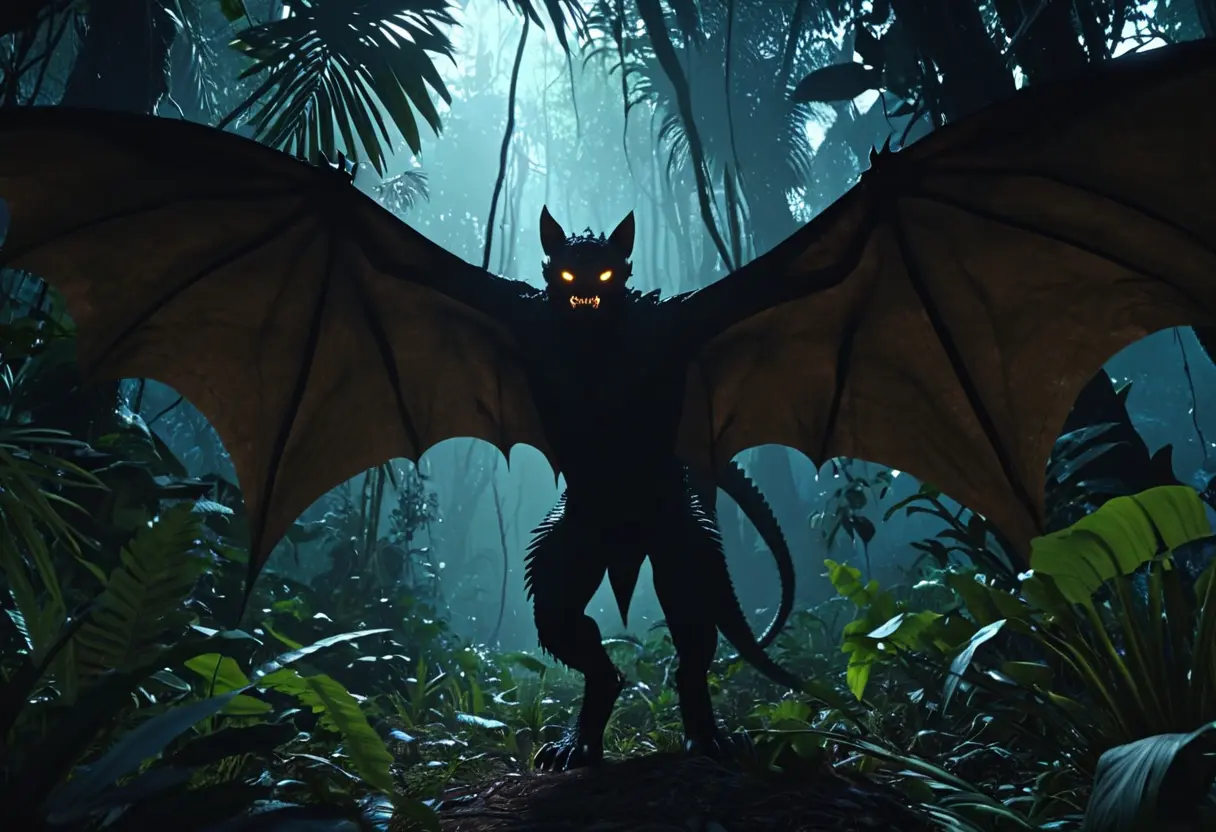
3. Cultural Divergence: The Devil vs. The Deity
While the biological “seed” of the dragon may be universal, its cultural growth followed two diametrically opposed paths: the Western Dragon and the Eastern Dragon (Long) .
| Feature | The Western Dragon | The Eastern Dragon (Long) |
| :— | :— | :— |
| Essence | Fire, Earth, Toxin | Water, Rain, Clouds |
| Temperament | Malicious, Greedy, Destructive | Divine, Benevolent, Transcendent |
| Role | The Great Foe to be Slain | The Sacred God to be Revered |
| Symbolism | Satan (The Red Dragon) | The Emperor (The Mandate of Heaven) |
The West: Conquest of the Wild
In Western tradition, particularly within Christendom, nature was something to be “subdued and ruled.” The dragon became the ultimate personification of a wild, chaotic nature that stood against God and Man. To be a Dragonslayer was a metaphor for the triumph of civilization (faith) over the pagan wilderness.
The East: Harmony with the Flow
Conversely, in the agricultural societies of the East, the dragon was the “Bringer of Rain.” Nature was not an enemy but a force to be harmonized with. The dragon was respected, not hunted; to anger it was to invite drought or flood. Thus, the dragon became a symbol of wisdom and cosmic order—a “God beyond Heaven.”
Conclusion: The Wings of Shared Dreams
The dragon is more than a monster; it is a biological reality filtered through cultural hope and terror. It is the synthesis of “Dragon Bones” (paleontology) and “Primal Nightmares” (evolutionary psychology).
But there is a final element. We do not only fear dragons; we are fascinated by them. In the dragon’s wings, we see our own longing for freedom. In its fire, we see our own destructive potential. We keep the dragon alive because it is the only creature large enough to hold all the “greatness” of the human imagination.
*The Bahamut Mythos : From the world-bearing fish to the King of Dragons. *Dragonborn: Blood of the Apex : When the power of the dragon flows through mortal veins. *Dinosaurs and Distant Memories : Further investigations into cryptozoology and fossils.