Archives of Inquiry: Investigating the Roots of Legend

Welcome to the Archives of Inquiry . While the main database provides definitions and lore, this section is dedicated to the “Why” behind the myth. Every shadow has a source, and every monster is a conceptual shadow cast by a real-world object, event, or fear.

Here, we peel back the layers of romanticized fiction to uncover the raw materials of the human imagination: the fossilized bones that became dragons, the epidemics that birthed vampires, and the tragic displacements that gave us the fair folk.


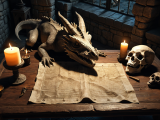
*Palaeontology meets the Paranormal.*We explore how ancient discoveries of Protoceratops fossils and massive sauropod bones provided the physical blueprint for the undisputed apex of mythology.

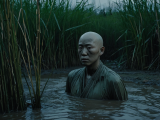
Is the Kappa a Drowned Corpse?*The Morbid Reality of the River Imp.*A disturbing look at how the physical changes of aquatic decomposition and the habits of the Japanese River Otter synthesized into one of Japan’s most famous Yokai.

The Birth of Cosmic HorrorH.P. Lovecraft and the Indifferent Universe. An investigation into how the scientific revelations of the 1930s—Pluto, the scale of the galaxy—transformed the fear of “ghosts” into the fear of a vast, uncaring void.


Ongoing Research

The archives are never complete. Our future investigations will delve into the digital shadows of the 21st century—the Slender Man, the Backrooms, and the evolution of the “Creepypasta” into modern folklore.

Stay curious. The truth is often stranger, and far more terrifying, than the fiction.

Investigation: Are Dragons a 'Memory of Dinosaurs'? The Science of a Shared Nightmare

The Dragon . It is the undisputed apex of fantasy—the embodiment of scales, wings, and primordial fire. From the frost-bitten peaks of Northern Europe to the mist-shrouded rivers of Ancient China, legends of “colossal reptilian monsters” exist in nearly every human civilization. How did cultures with zero contact imagine such remarkably similar beasts? Was there a time when humanity coexisted with dinosaurs, or is the dragon’s shadow cast from something deeper within our own biology?

Investigation: Are Elves Born of Disease or Displacement? The Roots of the Fair Folk

The Elf . In modern fantasy, the image is standardized: golden-haired, pointed ears, graceful, and immortal. This archetype, perfected by J.R.R. Tolkien in The Lord of the Rings, has become our universal definition. However, before the 20th century, the “Elf” was something far more diverse, unpredictable, and often deeply unsettling. Why did humanity create the concept of the “Neighbor”—a being so similar to us, yet fundamentally other? We explore the origins of the Elven race through the lenses of ancient folklore and surprising medical evidence.

Investigation: Is the Kappa a Drowned Corpse or a Misidentified Otter? The Morbid Truth

In the rivers and ponds of Japan dwells the Kappa —a water imp known for its turtle-shell back, its love of cucumbers, and its dangerous obsession with the shirikodama, a mythical organ located in the human rectum. While modern pop culture has turned the Kappa into a cute, mascot-like creature, the original folklore is a record of terror. Why does it possess a “plate” on its head? Why does it specifically target the entrails of swimmers?

Investigation: The Birth of Cosmic Horror: Lovecraft's Fear of the Unknown

Colossal entities with cephalopod features, malevolent deities descending from the void, and forbidden grimoires that shatter the reader’s sanity. The Cthulhu Mythos , created by H.P. Lovecraft, is the bedrock of modern horror and the dark pulse beneath much of contemporary fantasy. But what drove Lovecraft to depict a universe so relentlessly hopeless and indifferent ? To understand the Mythos, we must examine the intersection of 1930s scientific discovery and the profound, crushing solitude of the man himself.

Investigation: Is the Vampire a Metaphor for Tuberculosis? Why the Dead 'Breathe'

The Vampire . A staple of the macabre, believed to stalk the night, feast upon the living, and recoil from mirrors. While modern fiction has romanticized the Count in his velvet cape, the historical roots of the vampire are far more grounded in disease, filth, and the heartbreaking desperation of the bereaved. Why did our ancestors believe the dead could rise? Why did they drive stakes through the hearts of their loved ones?

Investigation: Is the Zombie a Fear of Eternal Labor? Slavery and Neurotoxins

The Zombie . In the modern digital age, we see them as an infectious plague—a mindless horde driven by a singular, viral hunger for flesh. However, this “Infectious Zombie” is a relatively recent invention, codified by George A. Romero in his 1968 masterpiece, Night of the Living Dead. Before the silver screen, in its birthplace of Haiti, the zombie represented a fundamentally different terror. It was not a monster that would eat you; it was a fate that would steal your soul and your rest.