The Tartarian Empire: The Mud Flood and the Erased Global Civilization
The Mud Flood: The Great Reset of the 1840s
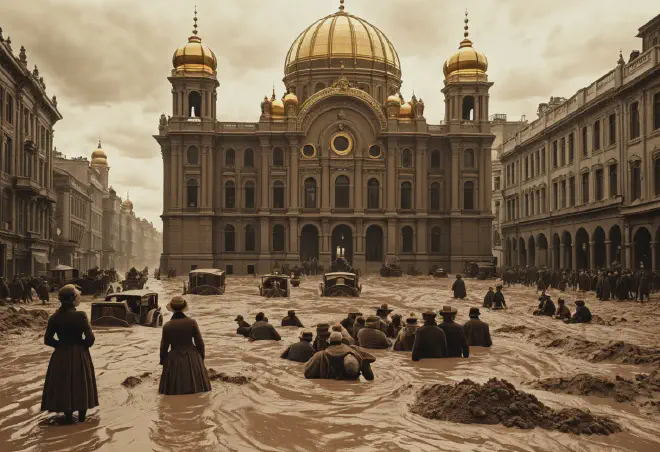
At the heart of the Tartarian theory is the concept of the “Mud Flood.” Believers argue that a massive global flood of mud and soil occurred in the mid-19th century—perhaps around the 1840s—burying the remnants of the Tartarian civilization.
The primary “evidence” cited by supporters is the ubiquity of half-buried windows in old stone buildings worldwide. From New York to Moscow, many 19th-century structures have basement windows that are partially submerged below street level. While architects explain this as light wells or structural choices, Tartaria theorists claim these were the original second floors of a civilization that was swallowed by the mud. We, the current inhabitants, simply dug out the top layers and claimed the ruins as our own.

Free Energy: The Secret of Domes and Spires
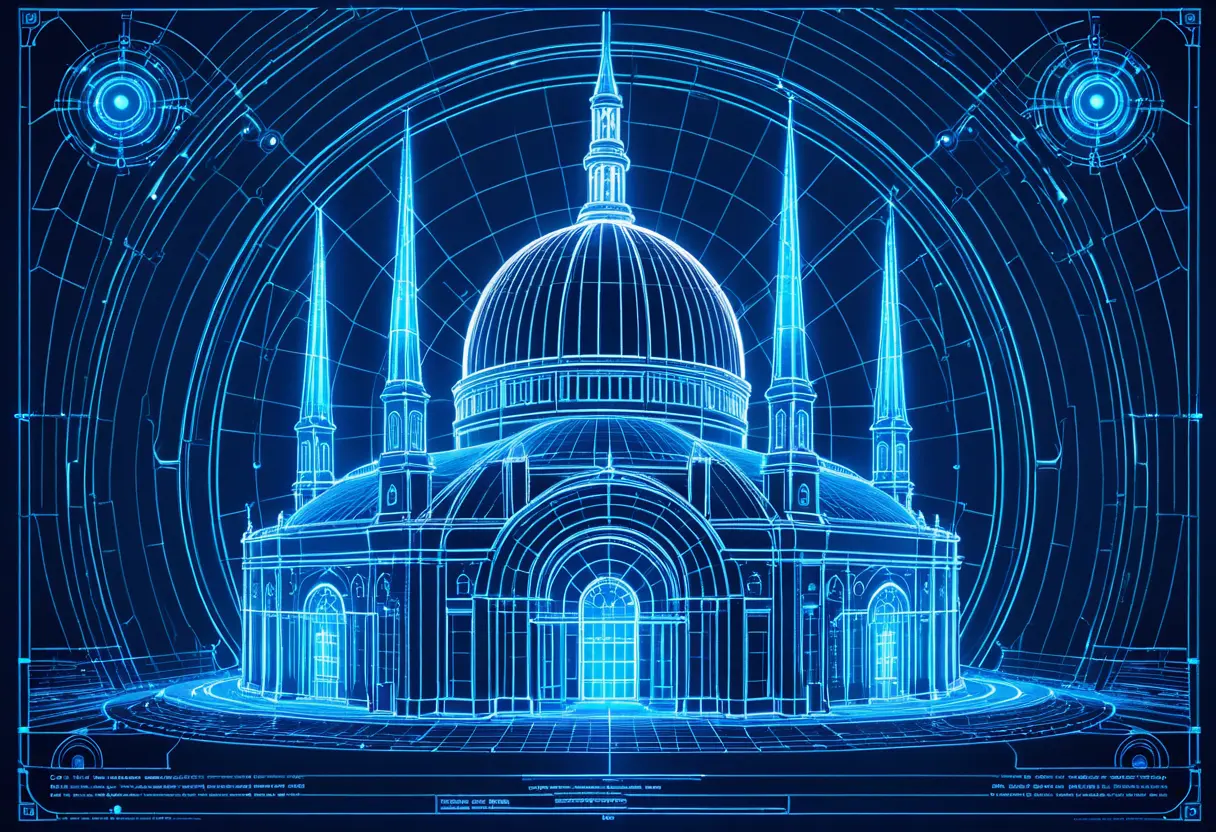
The Tartarian Empire allegedly possessed “Free Energy” technology, pulling power directly from the aether. In this worldview, the grand Victorian and Neoclassical architecture we admire was actually industrial machinery: *Domes and Cupolas : These weren’t mere decorations; they were atmospheric energy collectors (antennas). *Star Forts : The intricate, star-shaped fortifications found globally were not meant for defense, but were geometric circuits—massive piezoelectric power plants. *The World’s Fairs : Proponents claim that the grand, temporary cities of the 19th-century World’s Fairs (like the 1893 Chicago Expo) were actually existing Tartarian cities that were “showcased” and then demolished to hide the truth of their advanced tech.
Modern “Deep State” powers supposedly introduced coal and oil-based energy to establish a system of control, intentionally destroying the Tartarian wireless grid to keep humanity dependent on paid resources.
Grand Tartarie: Maps and Misinterpretations
It is a historical fact that old maps frequently label a vast region of Asia as “Grand Tartarie” or “Tartaria.” To a modern theorist, this is the “smoking gun” of a suppressed empire.
However, historians explain that “Tartary” was a general geographic term used by Europeans to describe North and Central Asia (the land of the Tatars)—much like how the term “The Orient” was used. It wasn’t a single unified state, but a collection of khanates and nomadic territories. The “erasure” of Tartaria, from an academic perspective, was simply the result of more precise cartography as the Russian and Qing Empires expanded.
The Myth of the Lost Paradise
Why does the Tartaria theory resonate so deeply today? Perhaps it is a reaction to the sterility of modern, functionalist cities. By looking at the breathtaking beauty of 19th-century architecture, we feel a sense of loss—a longing for a world where beauty and power were inextricably linked.
The Tartarian Empire is the “New Atlantis” of the digital age. It is a grand fiction that serves as a vehicle for social criticism, expressing a modern hunger to believe that once, we were capable of something more magical, more sustainable, and infinitely more grand than the world we inherited.