Ancient Astronauts: The Star-Borne Architects of Human Civilization
The Shakoki-Dogu: Jōmon Spacesuits?
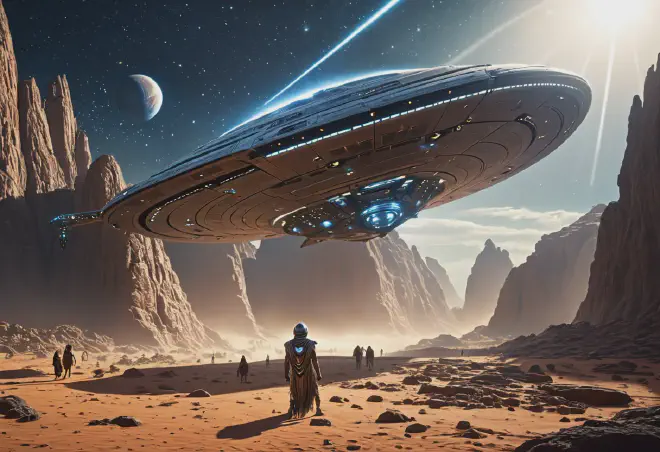
In Japan, the most iconic artifact linked to this theory is the Shakoki-dogu —clay figurines found primarily in the Tōhoku region. With their enormous, bulging eyes and intricate, armor-like body decorations, von Däniken famously argued that they were depictions of “extraterrestrials wearing goggles to protect against snow-blindness and pressurized spacesuits.” While mainstream archaeology interprets these as ritualistic effigies—symbolizing health or fertility through exaggerated features—their mechanical, asymmetrical design remains undeniably striking to the modern eye, resembling something akin to a futuristic power suit.
The Palenque Sarcophagus: The 1,300-Year-Old Rocket Pilot
Deep within the Temple of the Inscriptions at the Mayan site of Palenque, Mexico, lies the tomb of King Pakal. The relief carved onto his massive stone sarcophagus lid is one of the most controversial pieces of art in history.
The carving depicts a man leaning forward, seemingly manipulating “levers and pedals,” with “exhaust flames” billowing from the rear of the craft. Von Däniken hailed this as the “Maya Astronaut,” a literal depiction of Pakal navigating a rocket to the stars. Although modern Mayanists interpret the scene as the King’s spiritual journey into the underworld along the World Tree (corn stalk), the systematically mechanical composition continues to fuel global debate.
The Genetic Missing Link
One reason the Ancient Astronaut theory remains so persistent is its attempt to explain the “Missing Link”—the sudden, almost unnatural acceleration of human intelligence and civilization. Why did we leap from simple stone tools to massive architectural wonders and complex mathematics in such a short geological window?
Proponents suggest the answer lies in genetic manipulation . By merging extraterrestrial DNA with primitive hominids (as suggested in the Sumerian legends of the Anunnaki), these visitors “upgraded” humanity, creating a species capable of serving their cosmic interests.
A Mirror of Interpretation
From 2001: A Space OdysseytoPrometheus, the most profound works of science-fiction draw their power from the Ancient Astronaut theory. When we look at ancient relics, we are often looking into a mirror, projecting our own current technological status onto the past.
If they truly came, our myths are the first “Science Fiction Reports” in human history. And if they did not, then the human imagination was far more vast and capable of traversing time and space than we have ever dared to imagine.