The Dendera Light: Ancient Egyptian Electricity or Symbolic Ritual?
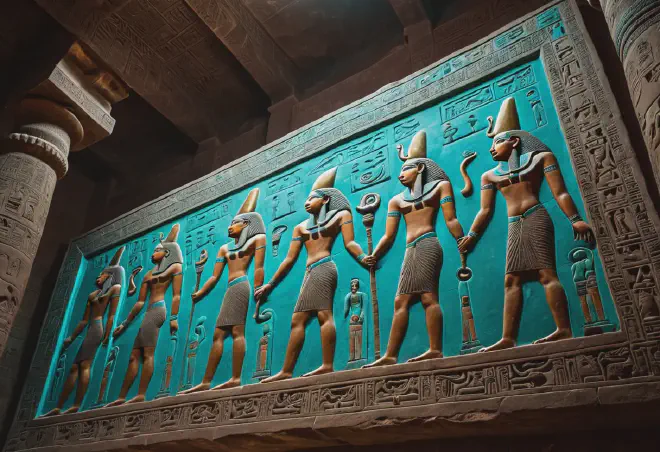
The Vacuum Tube in Stone: Components of a Mystery
In the sub-crypts of the Hathor Temple, there are reliefs that look remarkably like modern vacuum tubes or oversized light bulbs. Advocates for the “Ancient Electricity” theory interpret the symbols as follows: *The Glass Tube : The large, oblong container. They claim it is a discharge tube filled with a vacuum or noble gas. *The Filament : The serpent undulating inside the tube. Interpreted as a light-emitting element or a stream of plasma. *The Djed Pillar : Often seen as an insulator (dielectric) used to support high-voltage components. *The Cable and Power Source : The thick cord extending from the base of the “bulb” to a small “box,” interpreted as an ancient generator.
If true, this would mean the Egyptians used an early form of electrical lighting—perhaps powered by something akin to the Baghdad Battery—to work in their darkest depths.
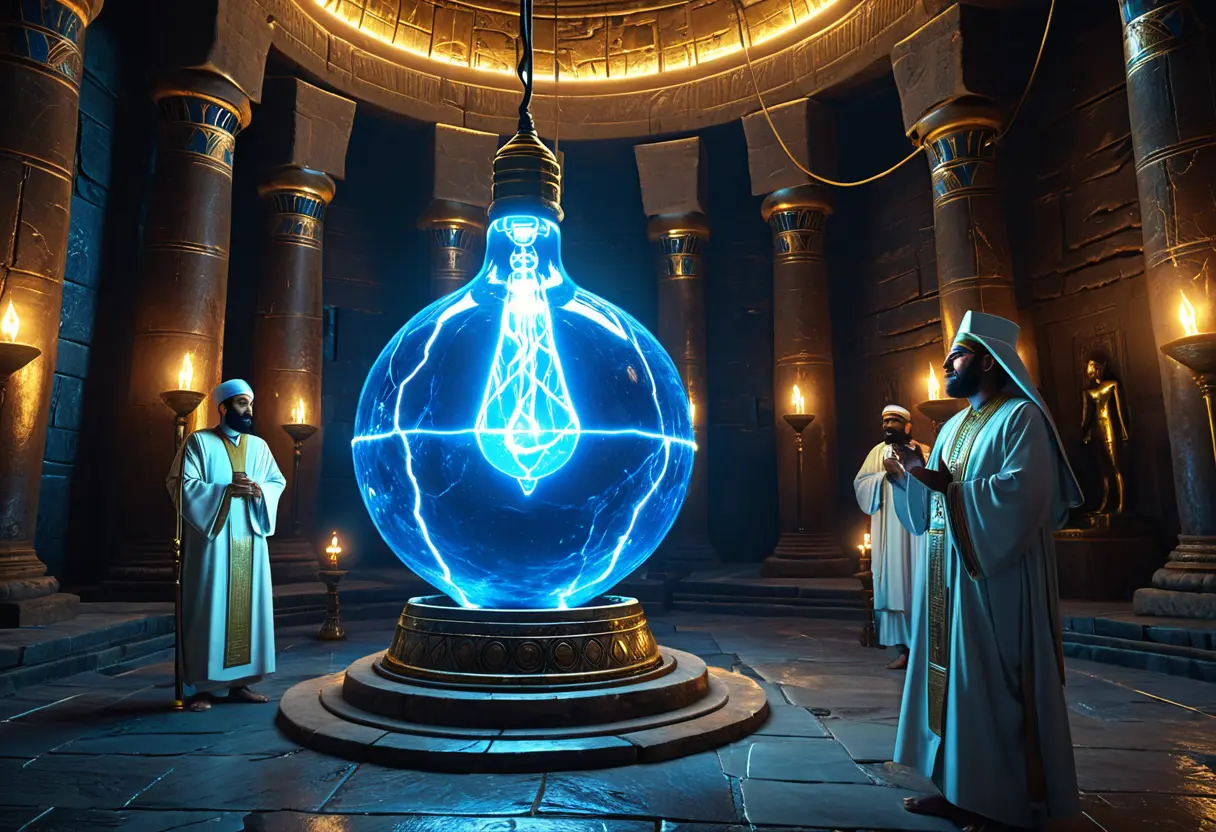
The “Soot-Free” Mystery: Scientific Counter-Arguments
Mainstream archaeology offers more terrestrial solutions to the lack of soot in Pharaonic tombs:
Smokeless Lamps : Ancient oil lamps using salt mixed with olive oil have been proven through experiments to burn brightly without producing soot.
Reflective Copper Mirrors : A series of polished bronze or copper mirrors could have channeled sunlight from the surface deep into the tunnels. However, the attenuation of light over distance makes this difficult for complex, deep structures.
Meticulous Cleaning : Workers may have cleaned the ceilings after completing the paintings, or used chemistry to absorb the smoke.
The Egyptological Consensus: The Birth of a God
Orthodox Egyptologists see a completely different story. To them, the relief is purely symbolic:
The “bulb” is actually a Lotus flower , representing the cosmic expansion of the universe. The serpent within is Harsomptus (Horus of the Two Lands), a god who is born from the lotus in the morning. The Djed pillar is a symbol of stability and the god Osiris. In this view, the relief depicts a ritual of creation and regeneration—spiritual light, not physical electricity.
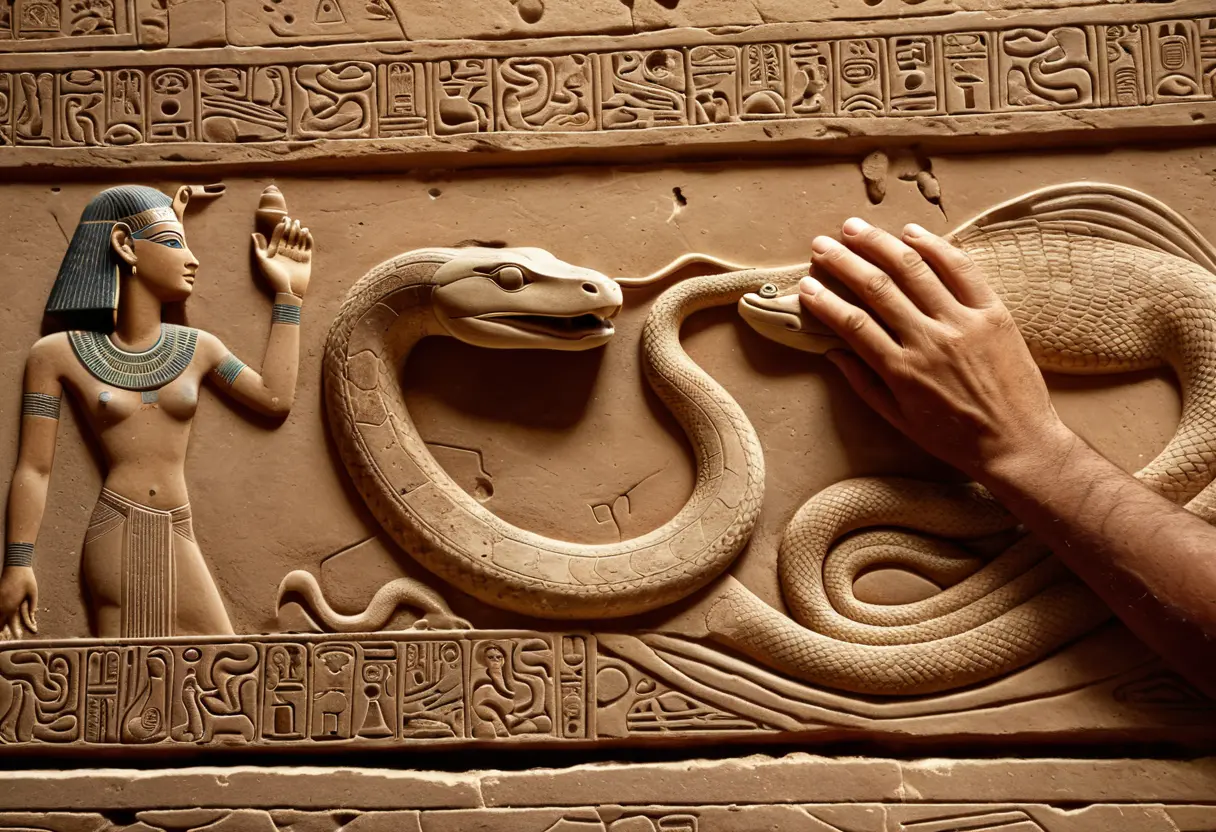
The Fire of Imagination
No physical evidence of a “bulb” or an electrical grid has ever been found in Egypt. Yet, even if the Dendera relief is purely mythological, the question of what “light” guided the master painters of the Pharaohs remains a captivating enigma.
An OOPArt is not just an object; it is a catalyst for our imagination. It forces us to re-examine the boundaries of our historical knowledge and shine a new light on the intellect and daily lives of the ancients.