Relics of an Alternative Yesterday: The OOPArts Archive

Whether pulled from the depths of a Roman shipwreck or found in a desert tomb, these relics are the ghosts of advanced engineering. They force us to ask: Is our current technology the first of its kind, or are we merely rediscovering wheels that turned thousands of years ago?


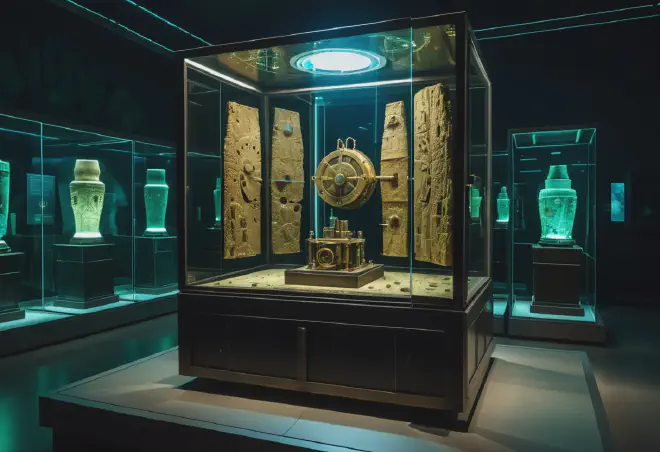
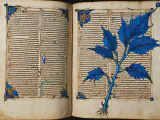
Field Notes: The Anomalies *The Antikythera Mechanism: The Analog Computer : A precision-geared machine from 2nd century BCE Greece that calculated solar and lunar cycles with frightening accuracy. *The Baghdad Battery: Ancient Sparks in the Sand : Clay jars containing the components of a functional electrical cell, predating modern batteries by two millennia. *The Voynich Manuscript: An Unbreakable Cipher : A 15th-century volume filled with non-existent botany and celestial diagrams that has defeated every decryption algorithm in history. *The Crystal Skulls: Mirrored Obsessions : Investigating the gap between the legends of Atlantean technology and the scientific reality of 19th-century craftsmanship. *The Dendera Light: Illumination of the Pharaohs : A relief that looks like a giant vacuum tube, sparking a clash between archaeological tradition and “ancient high-tech” theories.


Beyond the Linear Narrative

When we look at these artifacts, we are not just looking at “old things.” We are looking at the remnants of a future that almost was—records of a humanity that reached for the stars or manipulated the forces of electricity long before the history books say they were allowed to.

To explore OOPArts is to acknowledge that the story of our species is not a straight line, but a complex, breathing map of triumphs and collective amnesias.


The Dendera Light: Ancient Egyptian Electricity or Symbolic Ritual?

The Vacuum Tube in Stone: Components of a Mystery In the sub-crypts of the Hathor Temple, there are reliefs that look remarkably like modern vacuum tubes or oversized light bulbs. Advocates for the “Ancient Electricity” theory interpret the symbols as follows: *The Glass Tube : The large, oblong container. They claim it is a discharge tube filled with a vacuum or noble gas. *The Filament : The serpent undulating inside the tube.

The Crystal Skulls: Prisms of the Ancients or Modern Fabrication?

The Mitchell-Hedges Skull: The Peak of the Legend The most famous of these artifacts is the Mitchell-Hedges skull, reportedly found in 1924 by explorer F.A. Mitchell-Hedges in a temple in Belize. This particular skull featured a detachable jaw and internal prisms that caused the eye sockets to glow when lit from below. Legends grew around it: “Under a microscope, there are no tool marks,” “It was polished for 300 years using only sand,” “It violates the Laws of Physics.

The Baghdad Battery: The Ancient Spark that Challenges History

The Anatomy of an Ancient Cell The “Baghdad Battery,” dating to the Parthian or Sassanid period (c. 250 BCE – 220 CE), consists of three primary components: The Clay Jar : A protective outer casing. The Copper Cylinder : A rolled copper sheet capped at the bottom with a copper disc and sealed with asphalt (bitumen). The Iron Rod : Suspended in the center of the cylinder, insulated by an asphalt stopper.

The Antikythera Mechanism: An Analog Computer from the Ancient Abyss

The Cosmos in Gears: Impossible Precision The Antikythera Mechanism was not a mere clock. It was a physical manifestation of astronomical logic, embodying knowledge that scholars believed was not possessed for another thousand years. *Solar and Lunar Tracking : It calculated the real-time position of the Sun and Moon, even simulating lunar phases. *Predicting Eclipses : Based on the 18-year Saros cycle, it could accurately forecast solar and lunar eclipses years into the future.

The Voynich Manuscript: The Unbreakable Cipher of an Unknown Realm

The Weight of the Authentic The Voynich Manuscript cannot be dismissed as a modern forgery. Radiocarbon dating has confirmed that the vellum was produced in the early 15th century (between 1404 and 1438). This means that six centuries ago, someone invested a staggering amount of time and expensive materials to create a 240-page book written in a language that officially does not exist. Sections of a Botanical Hallucination The manuscript is divided into several “chapters” based on its surreal illustrations: *The Botany Section : Precision-drawn plants with unnaturally twisted roots and leaves.