Mu and Lemuria: The Motherlands of the Deep Pacific and Indian Oceans
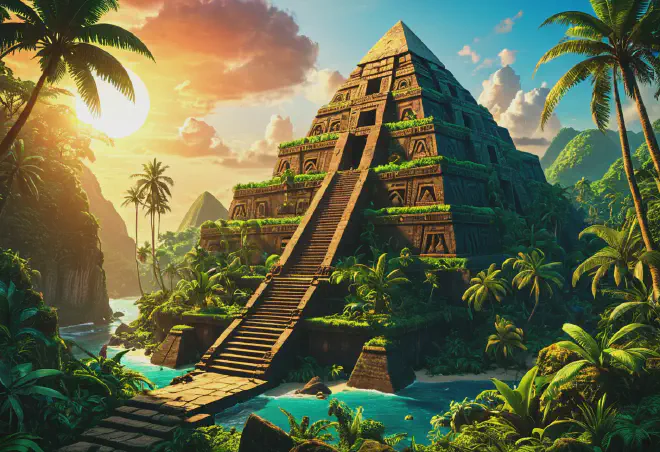
The Empire of Mu: The Motherland of Humanity
The legend of Mu was popularized by James Churchward, a retired British Army colonel. He claimed to have deciphered the “Naacal Tablets” —ancient inscriptions found in a hidden temple in India. According to Churchward, Mu was a massive continent that spanned 7,000 kilometers across the central Pacific, existing from 50,000 to approximately 12,000 years ago.
Churchward described Mu as the “Motherland” of all major civilizations, asserting that Ancient Egypt, the Maya, and even Pre-Imperial Japan were its colonies. While geological evidence shows that the Pacific seafloor is covered in thick oceanic crust (not continental crust that could sink), his grand narrative of a peaceful, high-culture paradise remains a powerful archetype of the lost utopia.
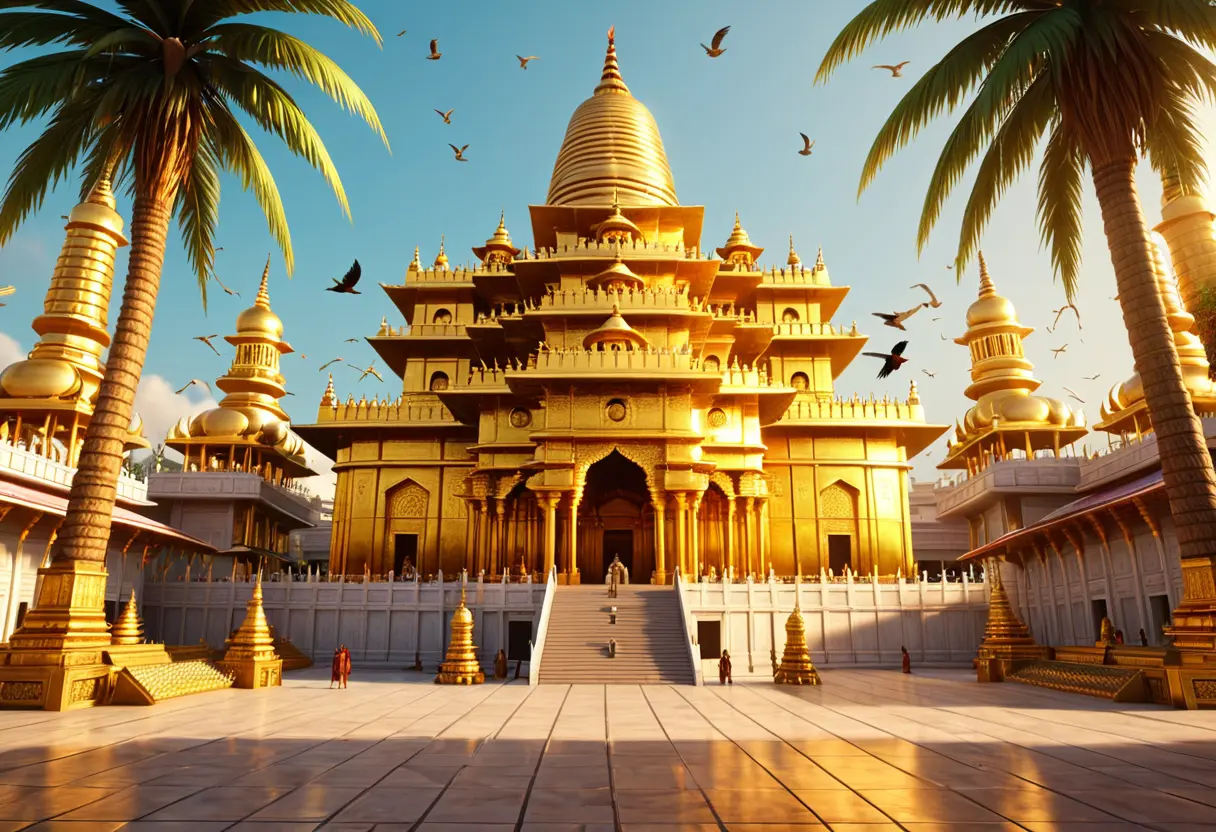
The Japanese Reception: Mu and the ‘Old History’
Mu found a particularly fertile ground in early 20th-century Japan. Churchward’s theories were imported and blended with indigenous “Koshinto” (Old Shinto) documents like the Takenouchi Documents. This synthesis suggested that the ancient Emperors of Japan was the rightful heir to the Mu dynasty, and that Japan was the spiritual center of the world before the great deluge.
This “Mu-based Hyper-History” became a pillar of nationalistic pride for some, but post-war, it transformed into the bedrock of Japanese subculture. The name “Mu” itself became the title of Japan’s most famous occult magazine, and the concept of the “Sunken Pacific Empire” became a recurring trope in anime and manga—a symbol of a power that lies sleeping beneath the waves.
Lemuria: From Lemurs to High-Dimensional Beings
Unlike Mu, Lemuria began as a serious scientific hypothesis. In the mid-19th century, zoologist Philip Sclater noticed that lemurs existed in both Madagascar and India but not in the intervening lands. To explain this, he proposed a lost land bridge he called “Lemuria.”
Before the theory of Plate Tectonics (Continental Drift) was established, this was the most logical explanation for biodiversity. When the science evolved, Lemuria was discarded by biologists, but it was immediately adopted by Theosophists like Helena Blavatsky. They transformed it from a land bridge into a spiritual realm inhabited by the “Third Root Race”—beings of high spiritual frequency. Today, Lemuria is often viewed not as a physical place, but as a “vibrational memory” of a time when humans were more connected to the divine.
Searching for the Invisible Shore
There is no geological proof that Mu or Lemuria existed as continents. And yet, their stories persist. We look to the horizon of the Pacific or the Indian Ocean not just for the sea, but for the “Motherland” we feel we have lost.
These legends are the projections of our collective “Memory of the Deep.” They remind us that the roots of our civilization may go beyond the tangible history books, into a realm where high-technology and deep spirituality once walked hand-in-hand. Mu and Lemuria are the silent calls for a return to a simpler, more sacred existence.