Atlantis: The Sovereign of the Sunken Sovereignty and the Echo of Pride
Orichalcum and the Concentric City: The Golden Age
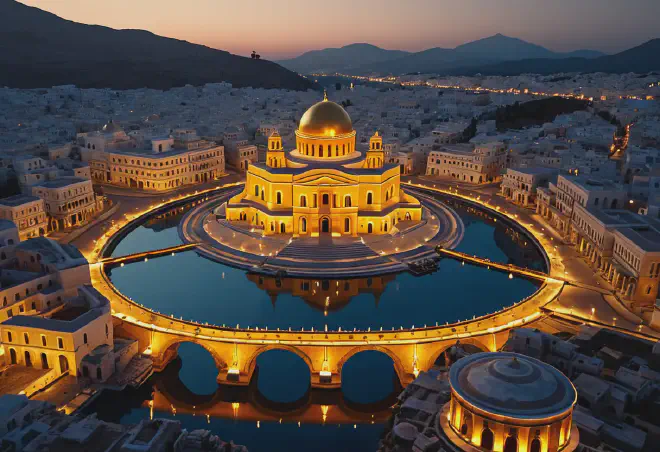
According to Plato, Atlantis was founded by the god Poseidon and ruled by ten powerful kings. The capital was an engineering marvel: a Circular City consisting of concentric rings of water and land, connected by bridges and tunnels. This design perfectly separated naval traffic from the sacred inner sanctum.
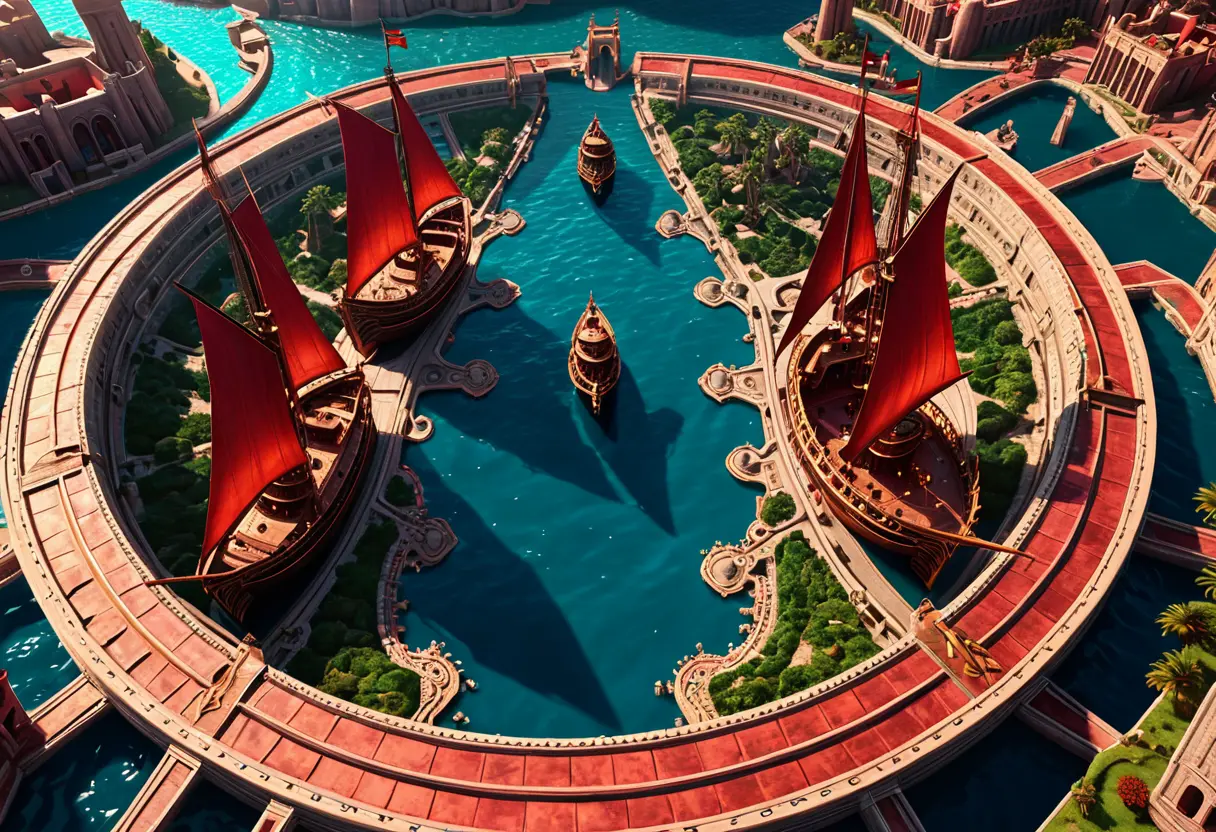
The civilization thrived on a mysterious red metal called Orichalcum , second only to gold in value. It was said to glow with a fire-like radiance and was used to coat the walls of the city’s inner rings. With a fleet of 1,200 ships and a military that conquered the Mediterranean, Atlantis was a sovereign power that seemed invincible.
The Price of Hubris: A Single Day and Night
Athens and Atlantis eventually clashed in a titanic struggle for the soul of the world. But the fall of Atlantis came not from an external enemy, but from within. Plato writes that as generations passed, the “Divine Portion” in the Atlanteans’ blood became diluted by human greed and the lust for power.
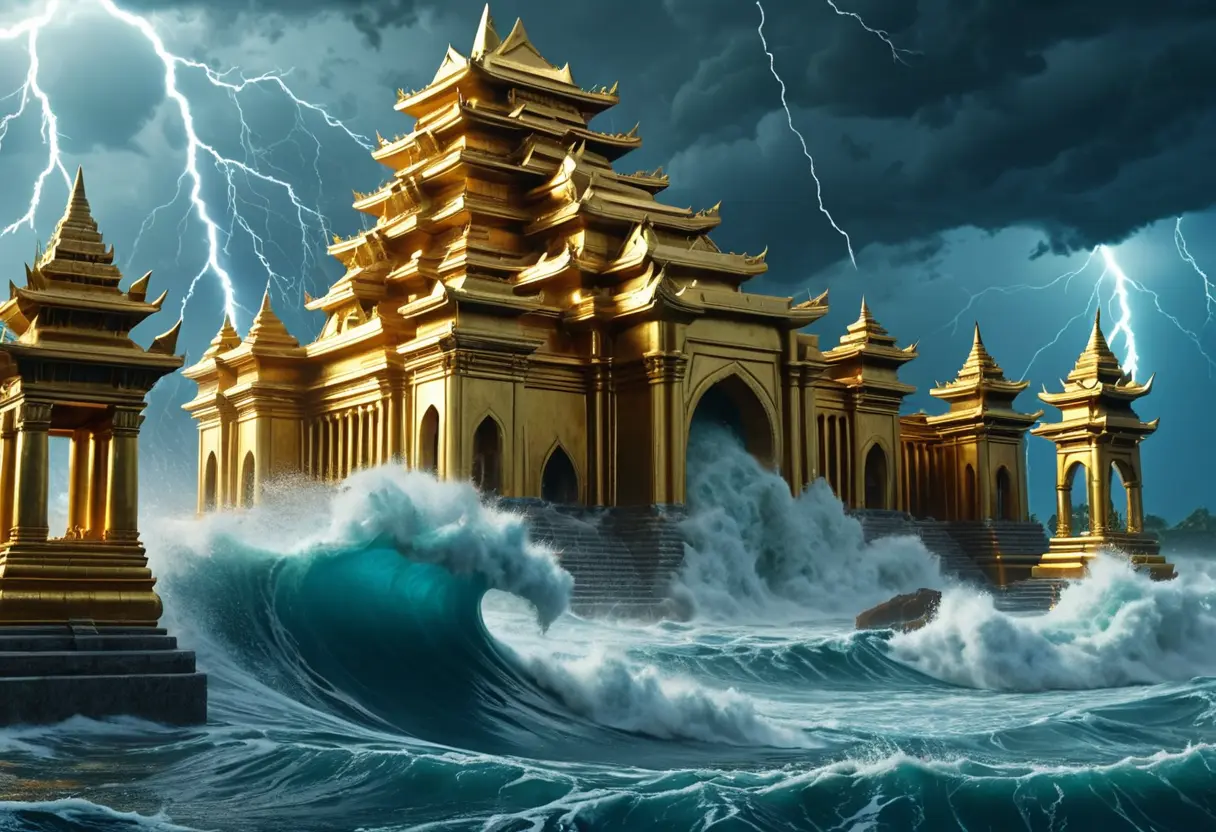
Seeing their corruption, Zeus, the King of Gods, resolved to punish the empire. In approximately 9,000 BCE, a series of violent earthquakes and floods struck the island. “In a single day and night of misfortune,” the entire empire was swallowed by the sea. All that remained was a shallow, unnavigable sea of mud—a literal and metaphorical end to the dream of the perfect state.
The Hunt for the Truth: From Santorini to the “Eye of Africa”
Modern researchers have never stopped searching for the “Real Atlantis.” While geological data shows no evidence of a continent sinking in the middle of the Atlantic, several candidates stand out:
The Minoan Civilization (Santorini) : A massive volcanic eruption around 1600 BCE destroyed the advanced Minoan culture. Many believe the memory of this catastrophe reached Plato via Egyptian priests.
The Richat Structure (Mauritania) : Also known as the “Eye of Africa.” This massive concentric geological formation strangely matches the size and shape of Plato’s circular city. If the Sahara was once a lush, water-connected region, this could be the terrestrial ghost of the empire.
The Azores : Proponents argue that these islands are actually the mountaintops of a sunken mid-Atlantic continent.
Why We Still Look for Atlantis
Atlantis persists not because it is a place, but because it is a Warning .
The story of a highly advanced society that destroyed itself through arrogance resonates deeply in our age of nuclear energy, ecological collapse, and AI ethics. Atlantis is not hidden at the bottom of the ocean; it is hidden in our own reflection. It serves as a permanent architectural ghost in the human psyche, reminding us that even the most brilliant civilizations are only one “single day and night” away from silence.