Jack the Ripper: The Myth in the Fog
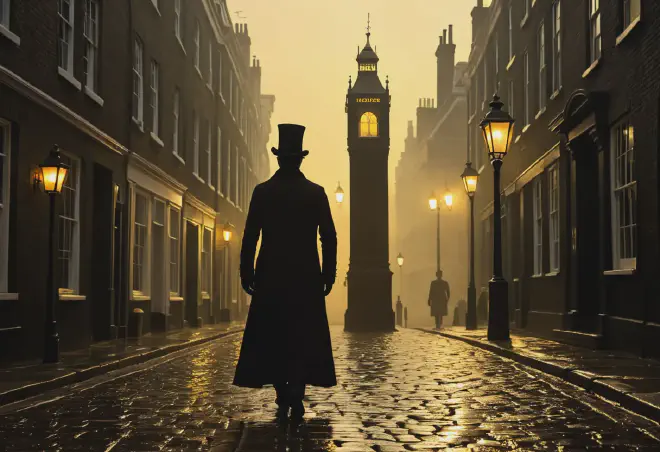
1. Whitechapel: The Labyrinth of Despair
Late Victorian London was a city of extreme contrasts. While the West End prospered, the East End—specifically Whitechapel—was a rotting maze of overcrowded slums, where the fog from the Thames mixed with the coal smoke to create a thick, “pea-souper” shroud.
This environment was the Ripper’s perfect accomplice. He knew the twisting passages and blind corners, allowing him to vanish within seconds of his brutal work. He was the first truly “modern” criminal, utilizing the reach of the news media to taunt the police and amplify the public’s terror.
2. “From Hell”: The Mythology of the Message
The Ripper’s legacy is inseparable from the letters he supposedly wrote. The most famous, the “From Hell” letter, was accompanied by half a human kidney, claiming he had “fried and ate” the other half.
Whether these letters were the work of the killer himself or the inventions of sensation-seeking journalists, they successfully transformed a local murderer into a global archetype. Jack became a symbol of the “Darkness within the Empire”—a manifestation of the social inequality and hidden violence lurking beneath the veneer of Victorian morality.
3. The Suspects: A Century of Shadows
Over 130 years later, the list of suspects has grown to over a hundred names, including: *Aaron Kosminski : A Polish-Jewish barber whom modern DNA tests on a victim’s shawl allegedly point towards, though the methodology remains hotly debated. *The Royal Conspiracy : A popular theory in fiction suggesting Prince Albert Victor (the grandson of Queen Victoria) was involved, and the murders were a cover-up by the Freemasons or the government. *The Invisible Man : The idea that the Ripper was someone so “ordinary”—a doctor, a butcher, or a local resident—that he could walk through blood-soaked streets unnoticed.
4. Melting into the Fog
Jack the Ripper was never caught. After the final, gruesome murder of Mary Jane Kelly in November 1888, the killings simply stopped. Did the Ripper die? Was he institutionalized? Or did he simply achieve his goal of becoming an immortal myth?
By vanishing into the fog, Jack ensured he would never be humanized by a trial or a hanging. He remains the faceless ghost of the Industrial Age, reminding us that some monsters are born not from the supernatural, but from the very streets we build.