The Moai of Easter Island: The Silent Watchers of a Collapsed Dream
The Eyes of Mana: Looking Inward
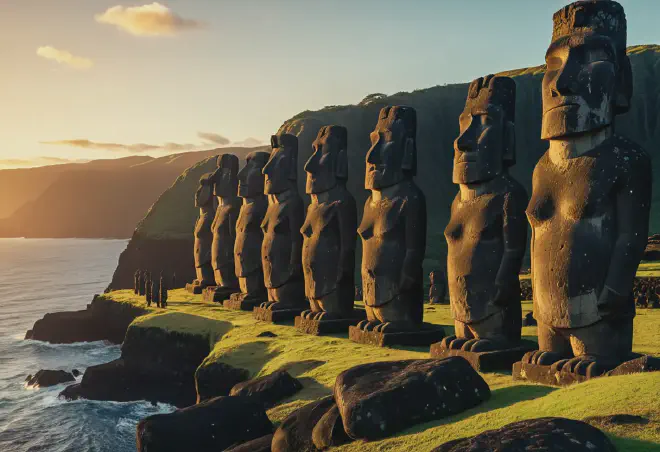
A common misconception is that the Moai were built to guard the island from the sea. In reality, with only seven exceptions, the Moai face inland , toward the villages they were meant to protect.
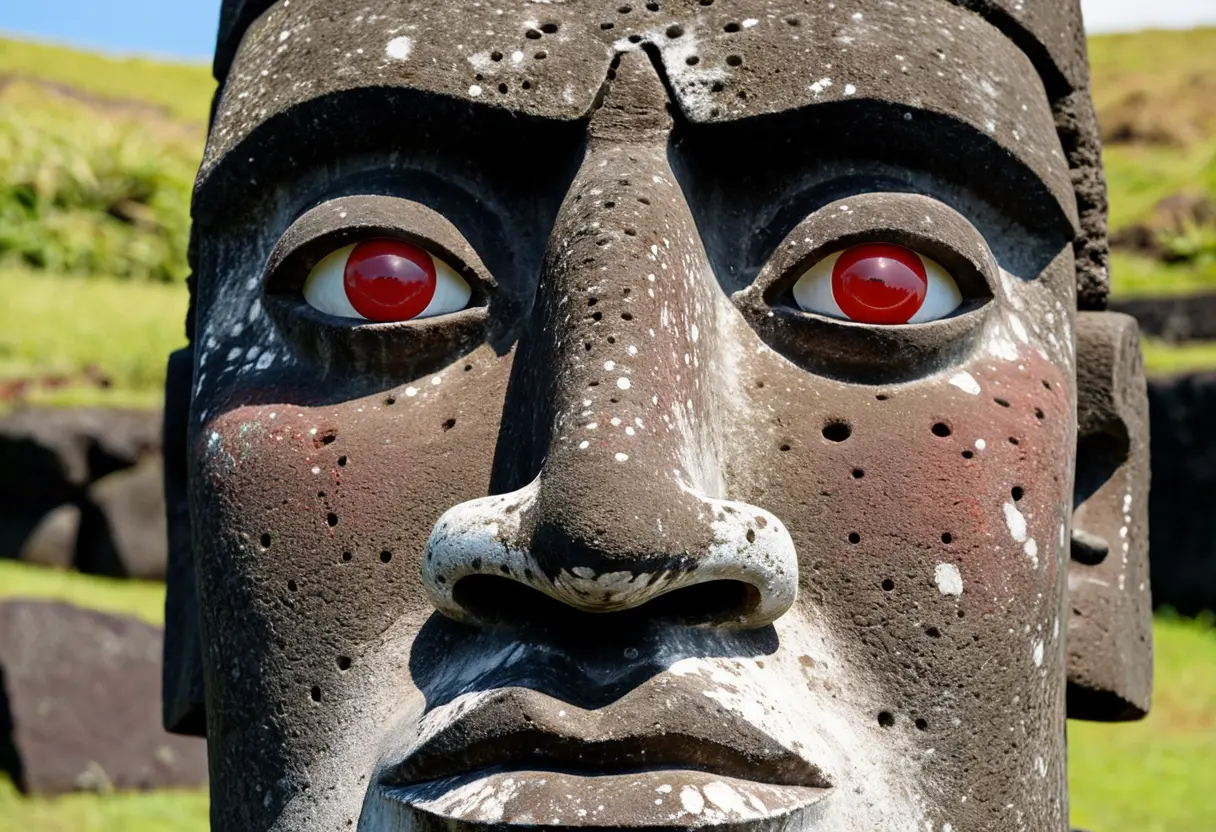
The Moai were considered the incarnations of Aringa Ora (living faces) of great ancestors. They were designed to harbor “Mana” —a supernatural energy of prosperity and protection. When a statue was completed, researchers believe it was fitted with eyes made of white coral and red scoria. These “active” eyes were the switches that channeled Mana from the spirit world into the mundane, bathing the tribal lands in the gaze of deceased kings.
The Walking Monoliths: Engineering the Impossible
For centuries, researchers were baffled: how did a people without wheels, pulleys, or beasts of burden transport these massive stones across miles of rugged terrain? The local oral tradition offered a cryptic clue: “The Moai walked to their positions using the power of Mana.” In a stunning blend of archeology and physics, modern experiments have shown that this legend was literal. The Moai were carved with a base that leaned slightly forward. By attaching three ropes and rocking the statue from side to side in a rhythmic motion, a small team could “walk” the massive stone—much like moving a heavy refrigerator. This “bipedal transport” was a triumph of Rapa Nui ingenuity, transforming the relocation of the dead into a holy, percussive dance.
The Price of Authority: Ecological Collapse
However, the competition for prestige between tribes reached a tipping point. Building taller, more elaborate Moai became a proxy for success. To move these ever-larger statues, the islanders consumed the island’s palm forests for rollers and sleds and cleared land for the thousands of workers required for the projects.
Without trees, the soil eroded, agriculture failed, and the source of wood for canoes—their only escape from the isolated rock—vanished. The island became a prison. As famine gripped the population, the faith that built the Moai shattered. This led to the “Huri Moai” (Statue-Toppling War) , a period of violent tribal warfare where the statues were intentionally pulled down, facedown, to break their Mana and blind the gaze of the ancestors.
A Miniature Earth in the Pacific
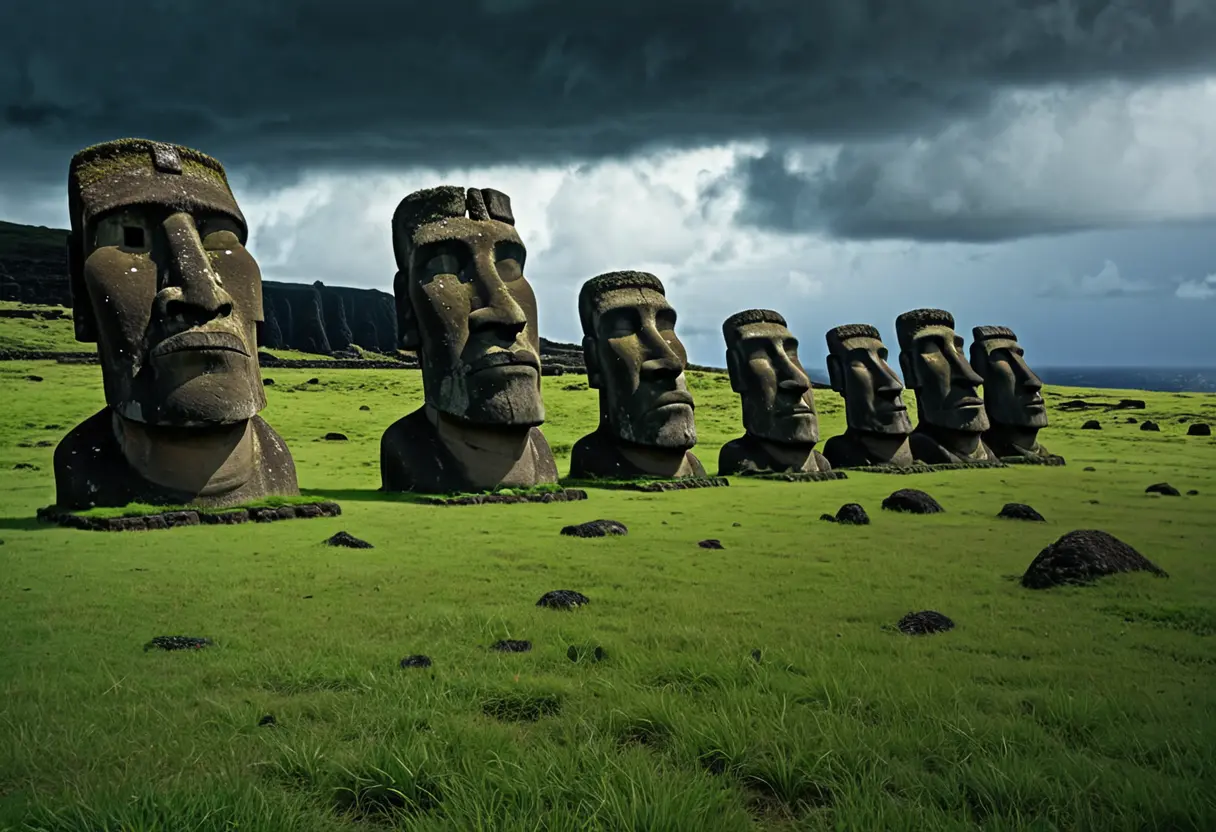
The tragedy of Rapa Nui is often cited as a microcosm of our planet. A closed system with finite resources, driven to exhaustion by the demands of cultural competition and a refusal to see the “Tipping Point” before it was too late.
The Moai that remain today, some restored to their platforms and others still half-buried in the slopes of the quarry, are silent observers. They watch our modern world from their deep, hollow eye sockets, a stark reminder that the more we focus on building monuments to our own significance, the easier it is to ignore the foundation upon which those monuments stand.