Ancient Structures: The Megalithic Void

In this archive, we move beyond the simplistic labels of “tombs” and “temples” to investigate the structural logic, astronomical mechanics, and potential high-technology of our distant past.

A collage of ancient structures around the world.


Chronicles of the Megalithic Era

Explore the distinct nodes of the ancient world that continue to defy explanation.

Looking into the “Machine” theory. Investigating the precision engineering, the pi-ratio alignments, and the possibility that the pyramids were massive energy resonators rather than mere burial sites.

Etched into the Peruvian desert, these giant figures can only be fully grasped from the sky. Explore the “Vertical Cosmology” of the Nazca and the latest discoveries found through AI analysis.

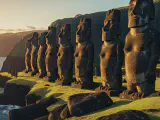
The tragedy of Rapa Nui. How a people dedicated their entire environment to building stone sentinels, only to watch their world collapse into ecological ruin. Understanding the “Walking Statues” and the power of Mana.

A riddle beneath the waves of Japan. Is it a freak of nature or the ruins of a 10,000-year-old city? Investigating the traces of a pre-ice-age civilization that was erased by the rising tides.


The Echo of the Stones

These structures serve as a stark reminder that the history of humanity is not a linear climb. Every stone block and geoglyph is a question mark addressed to the modern world, challenging us to reconsider our place in the long, dark timeline of civilizational rise and fall.


Other Gateways to Mystery *Ancient Mysteries: The Global Archive : Returning to the main gate of the unknown. *Egyptian Mythology: The Architecture of Eternity : The spiritual blueprints that fueled the builders of Giza. *Lost Continents: Mu, Atlantis, and Lemuria : (Coming Soon) Searching for the source civilizations of these global anomalies.


The Yonaguni Monument: The Sunken Fortress and the Battle with Nature

Professor Kimura’s Passion: The 10,000-Year-Old City Professor Masaaki Kimura of the University of the Ryukyus has dedicated his career to proving the structure is an “Ancient Sunken City.” Through hundreds of dives, Kimura has documented what he believes are clear signs of human intervention: drainage channels, post-holes for supporting buildings, entrances to temples, and even a relief carved in the shape of a turtle. His theory posits that during the last Ice Age—some 10,000 years ago when the Ryukyu Islands were still connected to mainland Asia—this was a thriving coastal center.

The Moai of Easter Island: The Silent Watchers of a Collapsed Dream

The Eyes of Mana: Looking Inward A common misconception is that the Moai were built to guard the island from the sea. In reality, with only seven exceptions, the Moai face inland , toward the villages they were meant to protect. The Moai were considered the incarnations of Aringa Ora (living faces) of great ancestors. They were designed to harbor “Mana” —a supernatural energy of prosperity and protection. When a statue was completed, researchers believe it was fitted with eyes made of white coral and red scoria.

The Nazca Lines: Geoglyphs Meant for the Heavens

Maria Reiche: The Guardian of the Calendar The world owes much of its understanding of Nazca to Maria Reiche, a German mathematician who dedicated her life to the desert. She proposed the Astronomical Calendar Theory , suggesting that the lines were a massive tool for tracking celestial movements. According to Reiche, many of the straight lines and geometric shapes aligned with the positions of specific stars or the rising sun on solstices—essential data for a civilization dependent on agriculture in a harsh environment.

The Pyramids of Giza: The Mathematics of Infinity and the Silent Void

Machine-Grade Precision: The Labyrinth of Math The base of the Great Pyramid is aligned to True North with an error of only 0.05 degrees—a feat that modern architects struggle to replicate without laser-level technology. Furthermore, the ratio of its height to the perimeter of its base corresponds exactly to 2π (Pi) , while the slope angle hides the Golden Ratio (Phi) . How did a civilization that supposedly hadn’t yet invented the wheel achieve such results?