The Witch Trials: Three Hundred Years of Terror
Crisis and the Search for a Scapegoat
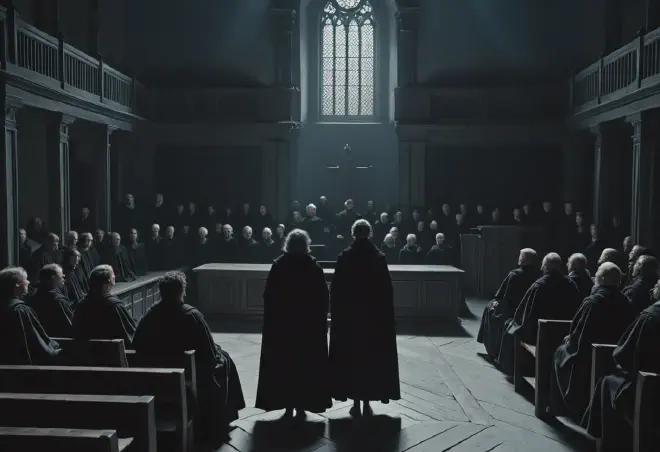
Why did this hysteria last so long? The answer lies in the extreme anxiety of the age. Europe was besieged by overlapping crises: *The Little Ice Age : Unpredictable weather led to recurring famines. *The Black Death : Plagues continued to strike communities with terrifying frequency. *Religious Wars : The conflict between Catholics and Protestants tore social fabrics apart.
People needed a reason for their inexplicable suffering. They required a “culprit” they could physically destroy. The target was almost always the vulnerable: the isolated elderly, the “Wise Women” with herbal knowledge, and anyone on the edges of society who lacked protection.

‘Malleus Maleficarum’: The Manual for Persecution
The theoretical and legal justification for this violence was solidified in 1487 with the publication of Heinrich Kramer’s ‘Malleus Maleficarum’ (The Hammer of Witches).
This book provided a “logical” (by the standards of the time) framework for identifying witches, detailing how they supposedly contracted with the devil and providing instructions on how to extract confessions through torture. Because of the newly invented printing press, this “Hammer” became a bestseller, accelerating the persecution into a continental explosion.
The Cruel Paradox: The Ordeals
Witch trials employed absurd “ordeals” to prove guilt—tests where survival was nearly impossible. *Ordeal by Water : The accused was bound and thrown into a river. If they sank, they were “innocent” (though they risked drowning); if they floated, the water was said to have rejected them as unholy, and they were executed as a witch. *Pricking the Mark : Moles or birthmarks were labeled “The Devil’s Mark.” Inquisitors would prick these areas with needles; if the accused felt no pain or did not bleed, it was proof of their pact. In many cases, “trick needles” with retractable blades were used to ensure a guilty verdict.
The Awakening of Reason
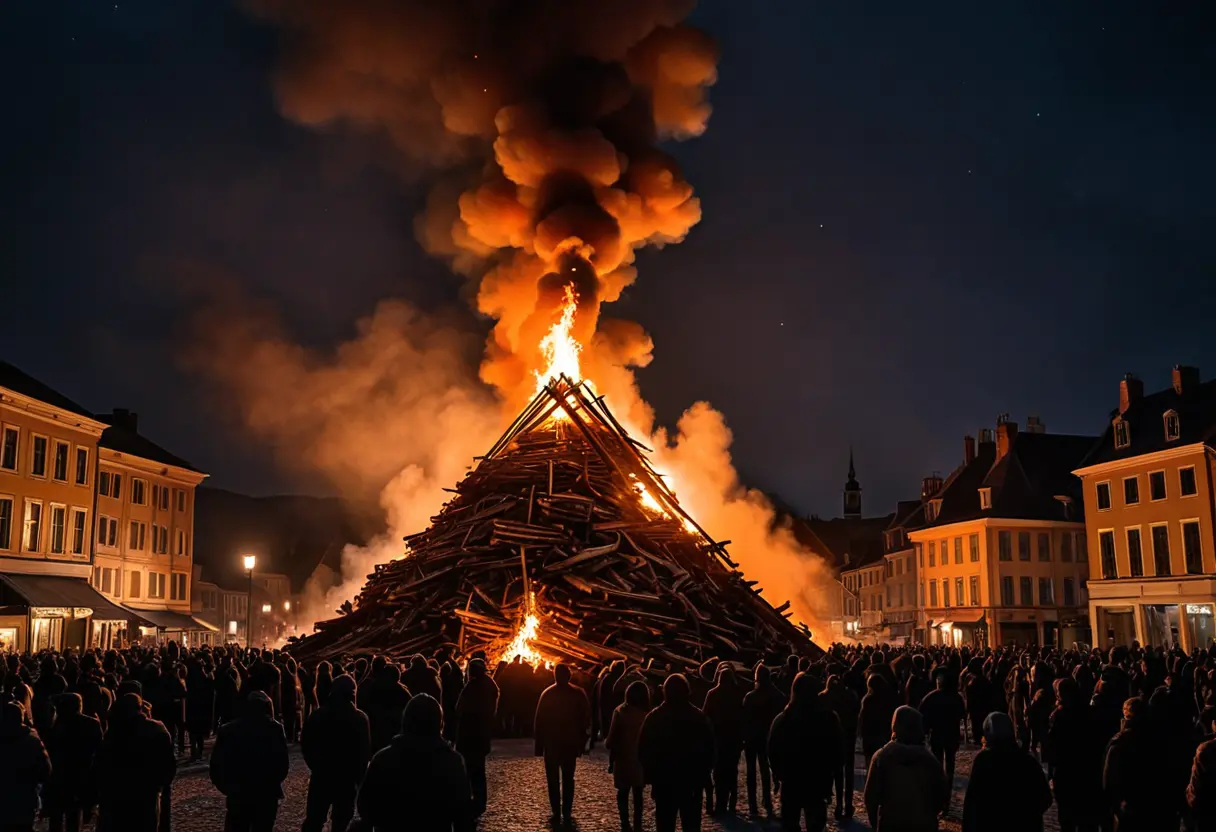
By the late 17th century, the Witch Trials finally began to end. The stabilization of society, the professionalization of the judiciary, and the rise of Enlightenment thought allowed people to see that “justice” had been fueled by nothing more than baseless fear. The “Witch” had never been a threat to God; she had been a victim of Man’s own inability to face the unknown.