Nicolas Flamel: The Immortal Clerk of Paris

The Historical Flamel: A Scribe’s Success
In the historical record, Flamel was known for his integrity and unusual wealth. Alongside his wife, Perenelle , he founded hospitals for the poor, built houses for the destitute, and gave massive donations for the restoration of churches.
It wasn’t until over a century after his death in 1418 that rumors began to swirl: How could a simple bookseller amass such a fortune? He must have discovered the secret to turning lead into gold. This public envy and speculation birthed one of history’s most enduring legends.
The Book of Abraham the Jew
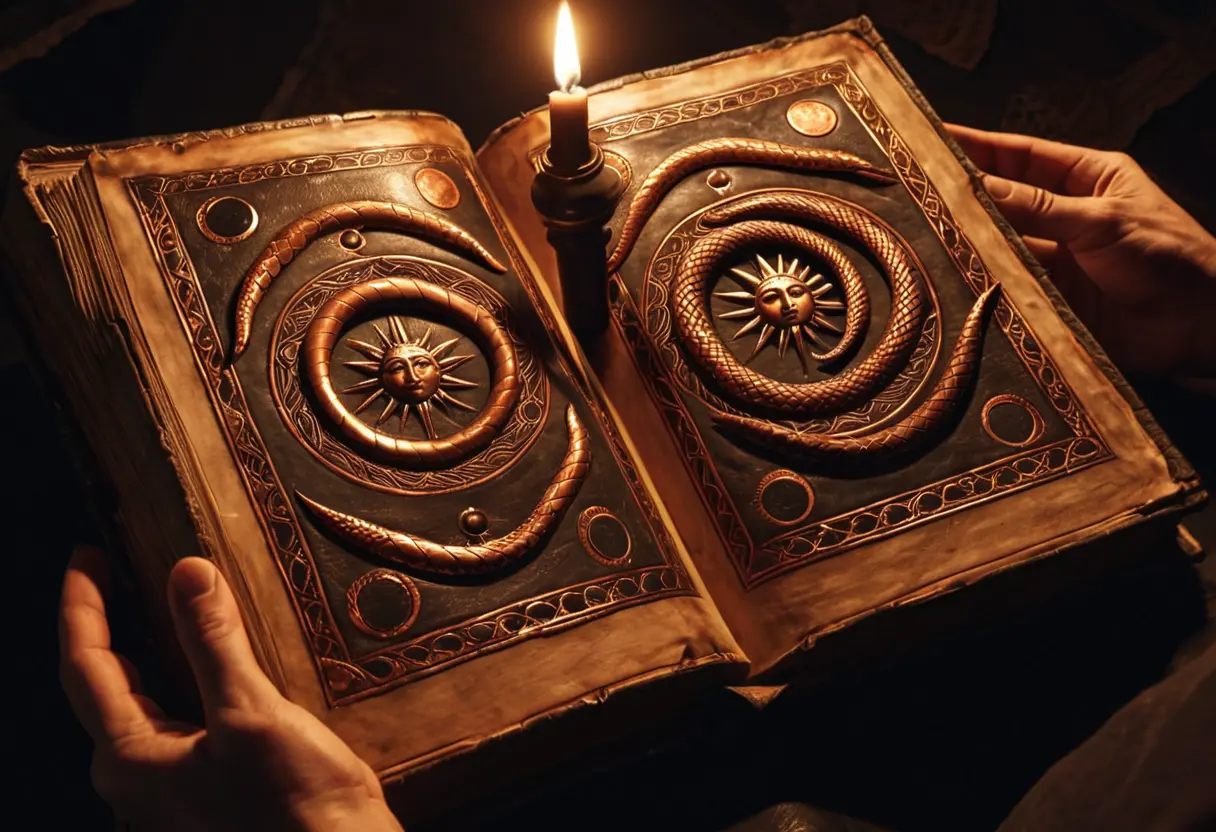
According to the legend, Flamel was visited in a dream by an angel who showed him a strange book filled with ancient symbols. Days later, he found that exact book in a local shop—the “Book of Abraham the Jew.” He reportedly spent 21 years attempting to decode its cryptic diagrams. In 1382, alongside Perenelle, he allegedly succeeded in transmuting mercury into gold and, ultimately, in creating the legendary Philosopher’s Stone .
The Empty Coffin: Faking Death
The legend of the Flamels takes a surreal turn after their documented deaths. It is said that when Flamel passed away, his tombstone was carved with complex geometric symbols and allegories. Later, when grave robbers supposedly opened his tomb, they found no body—only an empty coffin. The story goes that Nicolas and Perenelle used the Elixir of Life to achieve immortality and fled to the East, possibly India or Tibet. Over the centuries, “sightings” of Flamel continued to be reported, with witnesses in the 17th and 18th centuries claiming to have met the immortal clerk in the streets of Paris or at the opera.
Footprints in Modern Paris
Even today, Flamel’s presence is felt in Paris. At 51 Rue de Montmorency , the house he built in 1407 remains the oldest stone house in the city, currently operating as the Auberge Nicolas Flamel. Its walls are etched with old script and symbols, continuing to draw seekers and dreamers to the threshold of the man who supposedly traded his mortal life for the Great Work.